

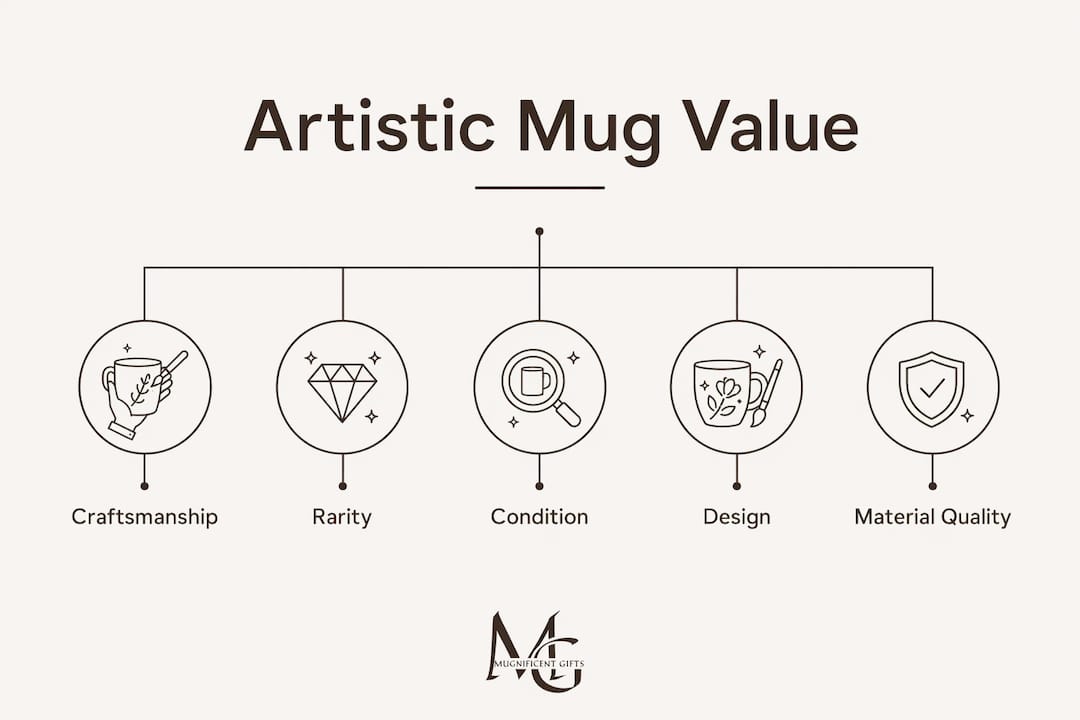
Artistic mug value is defined as the combined worth of a mug's craftsmanship, design originality, material quality, and market desirability. In the ceramics world, this concept sits within the broader field of decorative arts appraisal, where collectors and enthusiasts assess both functional and aesthetic merit. Handmade artistic mugs range from £20 to over £120, with premium pieces commanding significantly more depending on the artist's reputation and the complexity of the work. Understanding what is artistic mug value means looking beyond the price tag to the story, skill, and rarity embedded in every piece.
What factors influence the price and perceived value of artistic mugs?
The price of an artistic mug reflects the full cost of its creation, not simply the materials used. Raw materials, kiln firings, studio overheads, and labour all contribute significantly to the final figure. A single handmade mug passes through multiple stages before it reaches your hands.
Ceramic production involves shaping, drying, firing, glazing, and tooling, a process that can span several weeks per piece. That time investment alone separates handmade work from factory output. When a potter spends four hours on one mug, the labour cost is built into every curve and glaze layer.
Key factors that drive the value of artistic mugs upward include:
- Material quality. Stoneware and porcelain clays cost more than earthenware and produce more durable results. Specialist glazes, including reactive and crystalline finishes, add further expense.
- Artist reputation. A mug by a recognised studio potter or a maker with an established exhibition history commands a premium. Collectors pay for provenance as much as the object itself.
- Limited editions. A run of ten mugs carries more weight than a run of five hundred. Scarcity creates demand, and demand creates value.
- Design complexity. Hand-carved textures, slip-trailing, sgraffito decoration, and multi-fire techniques each add hours and skill to the process.
- Comparison with mass production. A factory mug costs pennies to produce. An artistic mug costs the maker real time, real skill, and real overhead. That gap in production cost explains the gap in price.
Pro Tip: When assessing the value of artistic mugs, ask the maker directly about their firing process and clay body. A potter who can explain their choices with confidence is usually one whose work holds its worth.
The quality markers that justify higher prices include consistent finishing, ergonomic design, and balanced weight. These are not luxuries. They are the evidence of genuine craft.
How do collectible aspects affect the worth of vintage and limited-edition artistic mugs?
Collectible mug worth operates on a different logic from everyday purchase value. A mug that cost £15 in 1985 can fetch hundreds of pounds today if the right conditions are met. Rare vintage artistic mugs have reached £800 to over £1,500 at auction, driven by rarity, branding, and documented provenance.
The core factors collectors assess are:
- Maker marks and signatures. A clearly stamped studio mark or a signed base confirms authenticity and links the piece to a known artist or pottery.
- Rarity. Limited production runs, discontinued patterns, and one-off studio pieces all carry scarcity value.
- Provenance. A mug with a documented history, such as one from a notable exhibition or a known collection, carries more weight than an identical piece without that paper trail.
- Condition. Damage dramatically decreases collectible value. Even a hairline crack or a small chip on the rim can reduce a mug's auction estimate by a significant margin.
- Original packaging. Retaining original packaging can double or triple a collectible mug's resale value. Boxes, certificates, and accompanying literature all matter to serious buyers.
Pro Tip: Store collectible mugs away from direct sunlight and never stack them. UV exposure fades glazes over time, and stacking risks rim chips that permanently reduce value.
A common misconception among new collectors is that age alone confers value. Collectors emphasise name, rarity, and condition, not simply age. An old mug from an unknown maker in poor condition is worth very little. An old mug from a celebrated studio in perfect condition with its original box is worth a great deal.
| Factor | Impact on collectible mug worth |
|---|---|
| Maker mark present | Confirms authenticity, increases value |
| Limited edition run | Scarcity raises demand and price |
| Mint condition | Preserves full market value |
| Original packaging | Can double or triple resale price |
| Documented provenance | Adds credibility and collector interest |
What practical qualities should buyers assess to judge an artistic mug's lasting value?
Artistic mug appraisal goes beyond surface beauty. A mug that looks striking but sits awkwardly in the hand, or one whose glaze crazes after six months of use, loses value quickly in practical terms. Functional quality is a direct indicator of long-term worth.
Assess these qualities in this order when evaluating any artistic mug:
- Handle ergonomics. Grip the handle with two or three fingers and check for comfort. A well-designed handle sits naturally without forcing the wrist into an awkward angle. Experts check handle ergonomics and balance full weight as a primary quality indicator.
- Weight and balance. Pick the mug up empty, then imagine it full. A well-thrown mug feels balanced at both states. Excessive weight in the base or walls suggests inefficient throwing technique.
- Foot ring finish. Run a finger along the foot ring at the base. A smooth, trimmed foot ring shows attention to detail and prevents scratching of surfaces. A rough or uneven foot ring is a sign of rushed finishing.
- Glaze quality and safety. Food-safe, lead-free glazes are non-negotiable for any mug intended for use. Look for an even surface without pinholes, crawling, or bare clay patches. Practical usability cues include smooth foot rings and food-safe glaze clarity.
- Subtle variations as artist marks. Slight variations in handmade mugs are intentional artist marks, not defects. A small asymmetry or a shift in glaze colour from one side to another is the fingerprint of the maker's hand. Treat these as features, not faults, unless they affect safety or usability.
A mug that scores well across all five points is one that holds both practical and artistic value over time. Collectors who understand thoughtful mug design recognise that function and beauty are not competing qualities. They reinforce each other.
How does the value of handmade artistic mugs compare with mass-produced alternatives over time?
The upfront cost of a handmade artistic mug is higher than a factory equivalent. That much is obvious. What is less obvious is the cost per year of ownership, which tells a very different story.
Handmade mugs carry a cost per year of approximately £7.80 when measured over their typical lifespan, compared to £8–£16 per year for mass-produced mugs that need regular replacement. A well-fired stoneware mug can last decades. A factory mug often chips, crazes, or simply loses its appeal within a year or two.
| Attribute | Handmade artistic mug | Mass-produced mug |
|---|---|---|
| Upfront cost | Higher (£20–£120+) | Lower (£3–£15) |
| Estimated lifespan | 10–20 years or more | 1–3 years typical |
| Cost per year | Lower over time | Higher due to replacement |
| Emotional and cultural value | High, personal, unique | Low, generic |
| Resale or collectible potential | Present, especially limited editions | Negligible |
Beyond cost, there is a cultural and emotional dimension to buying handmade. Each artistic mug carries the maker's decisions: the clay they chose, the glaze they mixed, the temperature they fired to. That specificity is absent from mass production. As one ceramics writer put it:
"Handmade pottery carries the values of slowness, story, and connection. These are not abstract ideas. They are the reason people keep certain mugs for thirty years and throw others away in thirty days."
Sustainability also plays a role. Buying a handmade mug from an independent studio supports a single maker's livelihood directly. It reduces the demand for factory production, which typically involves lower-grade materials and higher waste volumes. For collectors who care about meaningful mug ownership, the ethical dimension adds a layer of value that no price guide can fully capture.
Key takeaways
Artistic mug value is determined by craftsmanship, rarity, condition, and functional quality, with handmade pieces consistently outperforming mass-produced alternatives in long-term worth and emotional significance.
| Point | Details |
|---|---|
| Craftsmanship drives price | Multi-stage production, material costs, and labour all justify higher prices for handmade mugs. |
| Condition is critical for collectors | Even minor damage reduces collectible mug worth significantly at resale or auction. |
| Functional quality signals lasting value | Handle comfort, glaze safety, and foot ring finish are reliable indicators of a well-made piece. |
| Handmade mugs cost less per year | Over a full lifespan, handmade mugs are more cost-effective than mass-produced replacements. |
| Provenance and packaging matter | Original boxes and documented history can multiply a collectible mug's resale value considerably. |
Why I think most collectors undervalue what is right in front of them
I have spent years around ceramics, and the pattern I see most often is this: collectors obsess over rarity and auction records while overlooking the mugs they already use every morning. The mug you reach for first, the one that sits right in your hand and whose glaze catches the light in a particular way, that is already telling you something about value.
The ritual of using an artistic mug is itself a form of appreciation. You are not just drinking coffee. You are in contact with a maker's decision-making, their material knowledge, and their sense of form. That is not sentimental. It is a real and transferable quality that distinguishes craft from commodity.
What I find genuinely underappreciated is the sustainability argument. Buying one well-made mug instead of three cheap ones is a concrete, measurable choice. It supports a maker, reduces waste, and gives you an object worth caring about. The financial case and the ethical case point in the same direction.
My honest view is that artistic mug appraisal should start with use, not with auction catalogues. Hold the mug. Fill it. Live with it for a week. If it improves that experience, it has value. Everything else, the provenance, the maker mark, the limited edition status, is context that either confirms or adds to what you already felt.
— Lasse
Music-themed artistic mugs worth collecting at Mugnificentdeals
For collectors and enthusiasts who want artistic mugs with genuine design intent, Mugnificentdeals offers a range that sits at the intersection of craft and personality.

The personalised music mugs collection features designs built around musicians and music lovers, from detailed instrument illustrations to wry, knowing humour that earns its place on the side of a mug. Each design is considered rather than generic. These are not mass-produced prints applied to blank stock. They are pieces that carry a point of view. For collectors seeking gifts with real character, the best personalised music mugs for gifts selection offers pieces that feel personal without being over-stated. Browse the full range and find something worth keeping.
FAQ
What is artistic mug value based on?
Artistic mug value is based on craftsmanship quality, material choice, artist reputation, design complexity, and rarity. Functional qualities such as handle ergonomics and glaze safety also contribute to long-term worth.
Are handmade artistic mugs a good investment?
Handmade artistic mugs from recognised studio potters can appreciate in value, particularly limited editions in excellent condition. Even without financial appreciation, their lower cost per year of use makes them a sound practical choice.
How do I assess collectible mug worth before buying?
Check for a maker mark, assess the condition carefully for chips or cracks, and research the artist's exhibition or production history. Original packaging significantly increases resale value, so retain it wherever possible.
What makes a vintage mug valuable to collectors?
Rarity, documented provenance, a clear maker mark, and flawless condition are the primary drivers of vintage mug value. Age alone does not confer worth without these supporting factors.
How do subtle variations in handmade mugs affect their value?
Slight asymmetries and glaze shifts are the natural result of hand production and are considered marks of authenticity, not defects. They reduce value only if they compromise safety or usability.