
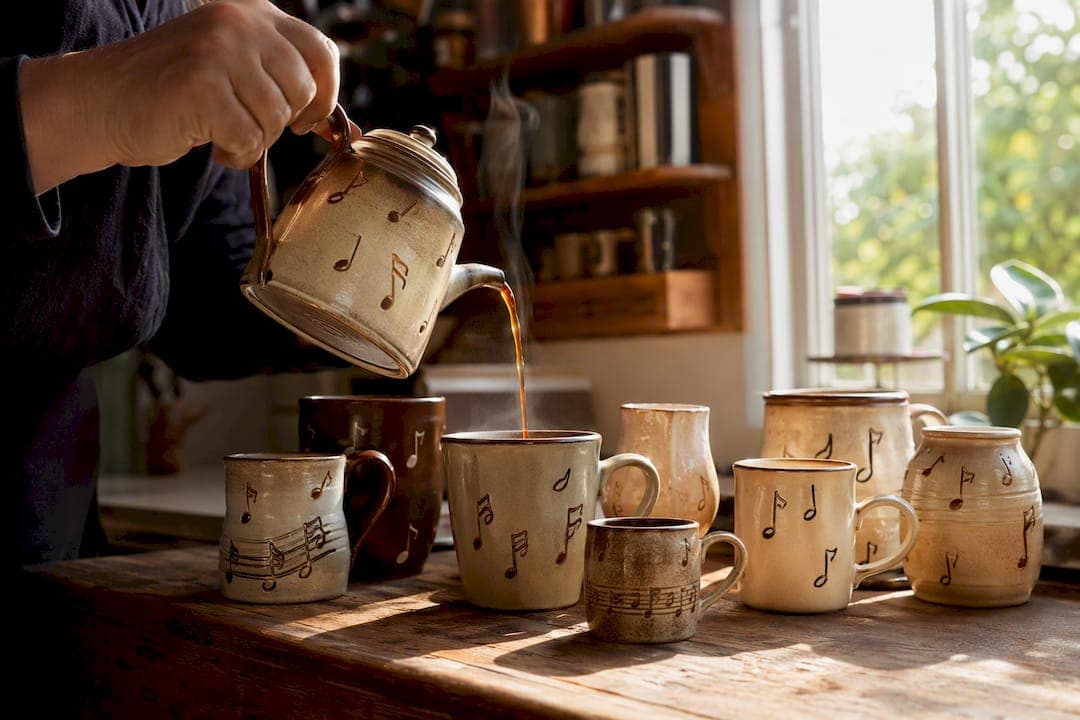
One US fluid ounce equals roughly 29.57 ml, so a "standard" mug, the kind most people reach for each morning, holds about 240 to 350 ml, or 8 to 12 fl oz. That single conversion factor unlocks every mug measurement you'll ever need: an 8 oz mug holds about 237 ml, a 10 oz mug about 296 ml, a 12 oz mug about 355 ml, and a 16 oz travel mug about 473 ml.
- 8 fl oz ≈ 237 ml
- 10 fl oz ≈ 296 ml
- 12 fl oz ≈ 355 ml
- 16 fl oz ≈ 473 ml
Worth knowing before you buy: a mug's labelled capacity often means filled to the brim, not the amount you'd actually pour in without scalding your fingers or watching foam spill over. The usable volume is usually a touch less than the number printed on the box.
Key Takeaways
Mug capacity converts cleanly from ounces to millilitres using the 29.57 ml factor, and most everyday mugs fall between 240 and 350 ml regardless of what the label claims to the brim.
| Point | Details |
|---|---|
| Core conversion | 1 fl oz equals roughly 29.57 ml, the basis for every mug size conversion. |
| Standard mug range | Everyday mugs typically hold 240 to 355 ml, or 8 to 12 fl oz. |
| Measure it yourself | Use a measuring jug or kitchen scales (1g water ≈ 1ml) for an accurate reading. |
| Brim versus usable volume | Labelled capacity often means filled to the rim, not comfortable drinking volume. |
| Gifting sweet spot | 11 to 15 oz mugs balance drink capacity with room for personalised designs. |
Table of Contents
- Mug capacity in ounces and ml: the full size chart
- What 8 oz, 11 oz and 15 oz mugs actually mean
- How to measure a mug's capacity yourself
- Choosing the right mug size for your drink
- Mugnificentdeals: how we size our personalised mugs
- Why the "standard mug" question misses the point
- Sources
Mug capacity in ounces and ml: the full size chart
Here's a chart worth bookmarking. It maps the sizes you'll actually encounter, whether you're comparing an espresso cup to a travel tumbler or trying to work out what "11 oz" really means in millilitres.
These figures come from the standard conversion of 1 fl oz to 29.5735 ml, rounded to the nearest whole millilitre for everyday use, and they broadly match industry size charts used across the coffee trade.
Don't be surprised if two mugs both marked "12 oz" hold slightly different amounts. Retailers measure to different points, some to the very rim, others to a safe fill line below it, so treat the chart as a strong guide rather than gospel for any single product.
What 8 oz, 11 oz and 15 oz mugs actually mean
Mug sizing isn't standardised the way, say, a shoe size is. Manufacturers pick numbers that suit their moulds and their market, which is why you'll see so much variation between an "8 oz" mug from one brand and a "12 oz" from another that looks almost identical.
- 8 oz (≈237 ml): a compact mug, often used for espresso-based drinks or a short black coffee. Good for someone who prefers smaller, more frequent refills.
- 10 to 12 oz (≈296 to 355 ml): the everyday workhorse. This range covers most household mugs and sits comfortably within the typical mug capacity of 250 to 350 ml.
- 14 to 16 oz (≈414 to 473 ml): built for milky drinks like lattes, or for anyone who simply wants fewer trips to the kettle.
- Novelty and travel sizes (20 oz+): designed for portability or for iced drinks that need extra headroom.
Retailers and designers gravitate towards 11 oz and 15 oz specifically because they strike a compromise between drink volume and printable surface area, giving a design enough canvas without making the mug unwieldy.
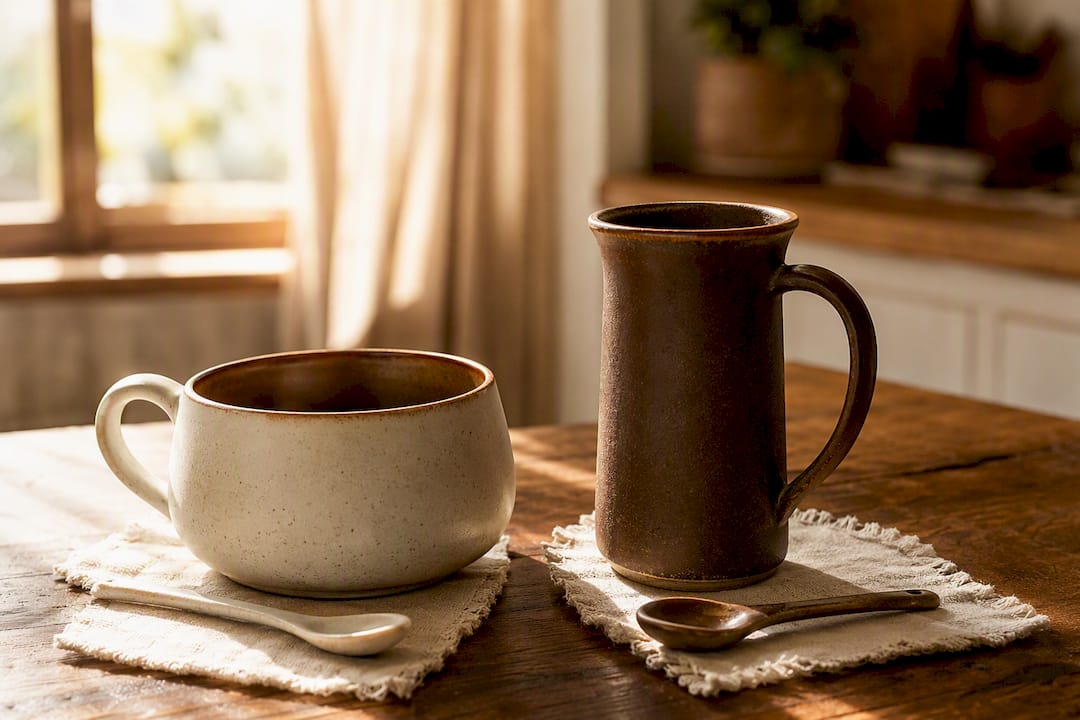
Pro Tip: Check the mug's shape, not just its ml figure, before buying. A tall, narrow mug and a short, wide one can share the same labelled capacity yet feel completely different to drink from.
How to measure a mug's capacity yourself
Online listings don't always agree with what lands on your doorstep, so it helps to know how to check for yourself.
- Use a measuring jug. Fill the mug to the rim, pour the water into the jug on a level surface, and read the ml mark. A jug with a narrow spout gives a cleaner pour and a more accurate reading.
- Use kitchen scales. Tare an empty mug, fill it with water, and weigh it, since 1 gram of water equals roughly 1 ml. This method is particularly reliable for oddly shaped or curved mugs where a jug is fiddly to use.
- Check the labelled capacity against usable volume. If a listing says 12 oz, assume the comfortable fill line sits a little below that, especially for hot drinks that need headroom to avoid spilling.
Before buying online, look for both ml and fl oz listed together, note whether the seller means "to the brim" or "usable capacity," and compare product photos to judge the shape.
Choosing the right mug size for your drink
Matching mug size to drink type isn't just about aesthetics. It genuinely affects temperature retention, foam behaviour, and how enjoyable a drink feels to finish.
- Espresso (2–3 oz): concentrated and small by design, so a larger cup only lets it cool faster.
- Cappuccino (5–6 oz): enough room for espresso, steamed milk, and a proper layer of foam.
- Americano or drip coffee (8–12 oz): the sweet spot for most home coffee drinkers.
- Latte (12–16 oz): milk-forward drinks need the extra volume, and a bit of headroom stops froth from tipping over the edge.
- Travel or iced drinks (16–24+ oz): ice takes up space, and commuters generally want fewer refills.
For personalised gifts, 11 to 15 oz tends to be the go-to range for retailers, balancing a generous drink volume with a handle and body that sit comfortably in the hand. If you're shopping for someone who drinks a lot of milky coffee, lean towards the larger end so foam and milk don't crowd out the coffee itself. For a deeper look at brew ratios and serving sizes if you're matching a mug to a specific brewing method rather than a generic "coffee" category.
Mugnificentdeals: how we size our personalised mugs
Mugnificentdeals designs most of its personalised ceramic mugs in the 11 to 15 oz range, and that's not an arbitrary choice. It's the size that gives a hand-drawn instrument illustration, a music quote, or a name enough room to read clearly, while still holding a proper mug's worth of coffee or tea for daily use.
Before any personalised mug goes out, we look at three things:
- Glaze evenness across the surface, since patchy glaze can distort a printed design.
- Handle comfort, checking it sits well for different grip styles rather than just looking good in photos.
- Print placement, making sure a design wraps naturally around the curve instead of warping near the handle.
For the full breakdown of what to check before you buy, our guide on how to check mug quality covers all three in more depth. If you're ready to browse, the personalised music mugs collection is a good place to start.
Why the "standard mug" question misses the point
Most guides treat mug sizing as a solved problem: convert the ounces, print the chart, done. That undersells how much shape and labelling practice actually shift what a number means in your hand. Two mugs stamped "12 oz" can differ by a genuine mouthful of coffee once you account for brim measurement versus usable fill, and nobody selling mugs online is especially forthcoming about which one they mean.
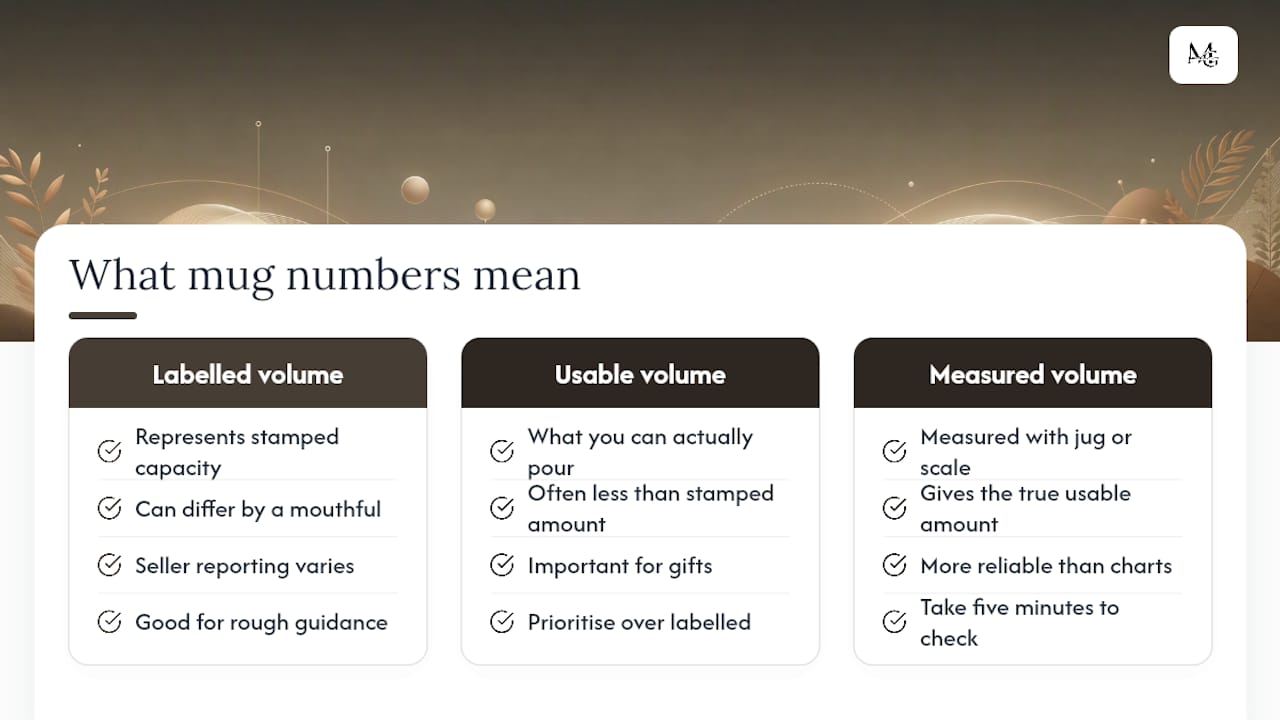
The conventional advice, "just check the ml figure", assumes every seller measures the same way. They don't. That's why the measuring jug and kitchen scale methods matter more than any chart, including the one above. A chart gets you in the right neighbourhood; five minutes with a jug tells you the truth about the specific mug you're holding.
If there's one thing worth prioritising, it's usable volume over labelled volume, particularly for gifts. A beautifully designed 15 oz mug that only comfortably holds 12 oz of coffee isn't a flaw. It's just something the recipient should know before their first Monday morning pour.
— Lasse
Sources
- Mug — Wikipedia
- The complete coffee cup sizes chart — Manufacturer Tumbler
- Coffee mug is how many ounces — Summer Stirs
- Different sizes of ceramic mugs — SourceEC