

A mug commission is a bespoke design service where a client hires an artist or designer to create a unique, personalised illustration specifically for a mug. Unlike buying a ready-made product off the shelf, a commission is a collaborative process built around your exact brief, your chosen style, and your intended use. The industry term for this is a "custom art commission," and it applies equally to printed merchandise as it does to canvas or digital work. Understanding how the process works, what you will pay, and who owns the final design will save you time, money, and frustration before you place a single order.
What is a mug commission and how does it differ from buying ready-made?
A mug commission is defined as a paid agreement between a client and a creator to produce an original design that does not exist until the client requests it. That distinction matters enormously. A pre-made mug carries a design the artist chose. A commissioned mug carries a design you shaped together. The result feels personal because it genuinely is.
Custom mug commissions sit at the intersection of art, merchandise, and gifting. A musician who wants their instrument illustrated in a specific style, a couple who want a shared inside joke printed on ceramic, or a band that needs branded merchandise for a tour: all of these are commission scenarios. The co-creative approach is standard practice in artist commissions, placing communication and trust at the centre of the process.
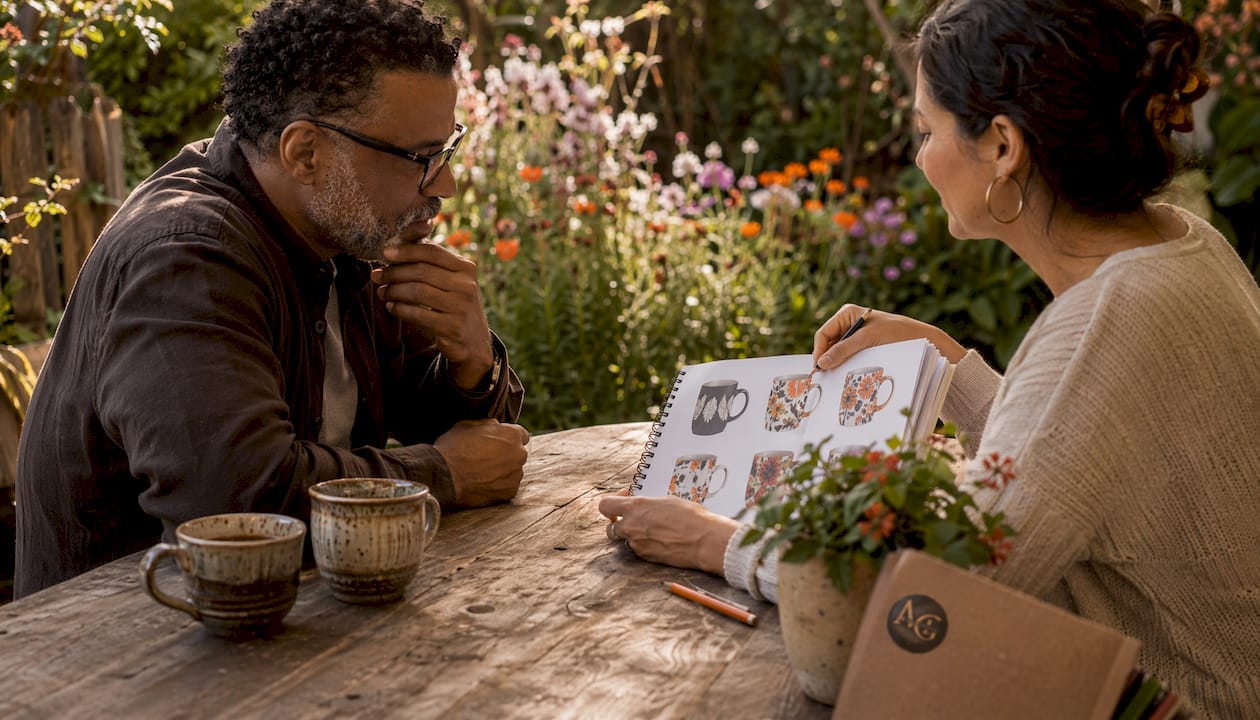
The practical difference also shows up in timelines and pricing. A ready-made mug ships within days. A commissioned design requires briefing, sketching, revisions, and production. That depth of involvement is precisely what makes the end result worth having.
How does the mug commission process work step by step?
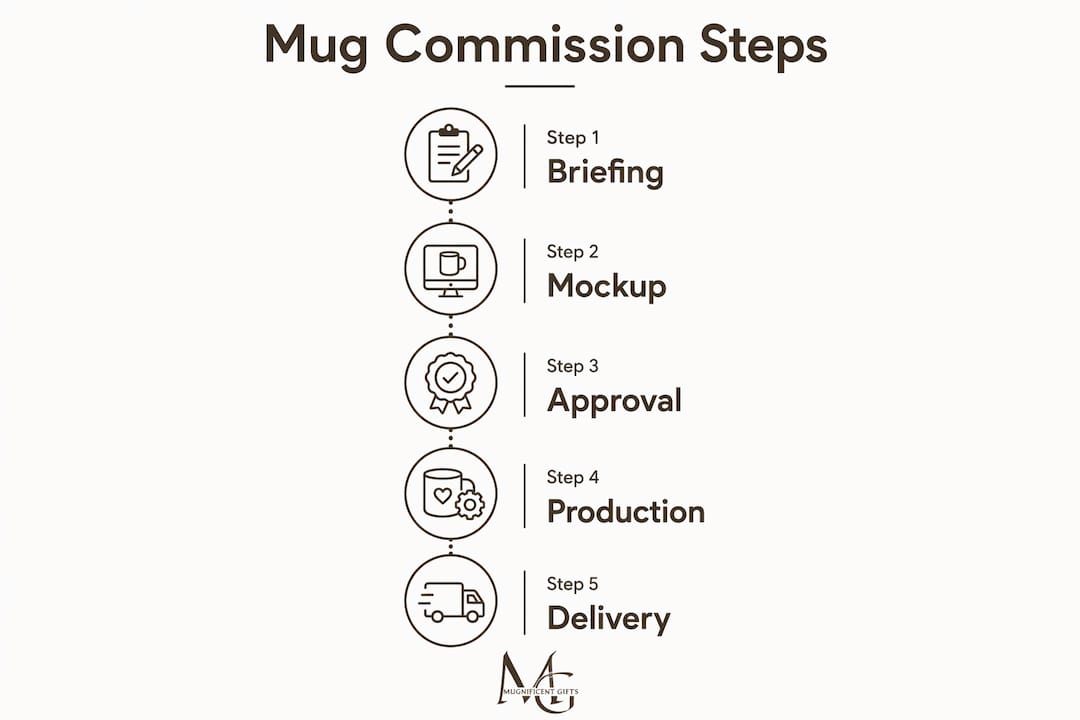
The commissioning workflow follows a clear sequence. Each stage builds on the last, and skipping any one of them tends to create problems later.
- Initial brief. The client provides a written description of the design they want. This covers subject matter, colour palette, style references, and the intended use of the mug (personal gift, commercial merchandise, or event giveaway).
- Consultation. The artist reviews the brief and asks clarifying questions. This fact-finding phase is where clear briefs reduce revisions and costs. The more specific the client is at this stage, the fewer rounds of changes follow.
- Sketches or digital mock-ups. The artist produces initial concepts. These are rough working documents, not finished designs. The client reviews them and provides structured feedback.
- Revision rounds. Most commission agreements include a fixed number of revision rounds, typically two or three. Changes beyond that number may incur additional fees.
- Final approval. The client signs off on the completed design. No production begins until written approval is received.
- Production and delivery. The approved design goes to print. The standard timeline from initial brief to final delivery for custom-designed merchandise in the UK is 4–6 weeks. Rush orders are possible but typically carry a premium fee.
Pro Tip: Set a firm 24–48 hour window for approving mock-ups at every stage. Fixed approval windows are the single most effective way to prevent production delays in custom merchandise projects.
The most common cause of missed deadlines is not the artist running late. It is the client taking too long to approve proofs. Treat each approval request as a time-sensitive task, not an optional to-do.
What pricing and payment structures are common for mug commissions?
Pricing for custom mug commissions varies based on complexity, the artist's experience, and whether the design is for personal or commercial use. Commercial use, such as selling mugs bearing the design or using it in brand marketing, commands a significantly higher fee than a one-off personal gift.
Payment structures follow a consistent pattern across the UK creative industry:
- Upfront deposit. A 30%–50% deposit is standard to secure the booking and cover initial creative work.
- Milestone payments. Larger projects may split the remaining balance across two or more stages, such as after sketch approval and after final design delivery.
- Final balance. The remaining amount is due before the finished files or physical product are released to the client.
- Grace periods. Professionals often pause work if invoices remain unpaid after a 7–14 day window.
- Refund conditions. Deposits are typically non-refundable once creative work has begun. Agreements should specify exactly when this threshold is crossed.
Written agreements protect both parties. A clear contract removes ambiguity around what happens if a client cancels mid-project or requests changes that fall outside the original scope.
Pro Tip: Before you pay anything, ask the artist for a written summary of their payment terms, refund policy, and what happens if you need more revisions than the agreement covers. A short email confirmation is far better than a verbal understanding.
Understanding the personalised gift creation process also helps clients appreciate why deposits exist. Artists invest time in research, concept development, and materials before a single line is drawn. The deposit compensates that early labour.
Who owns the design and copyright in a mug commission?
Copyright ownership is the most misunderstood aspect of custom mug commissions. The assumption that paying for a design means owning it outright is wrong in UK law.
In UK law, copyright automatically remains with the creator unless there is a written and signed assignment transferring those rights to the client. Payment alone does not transfer ownership, and it does not grant the right to mass-produce or commercialise the design.
This distinction separates two very different legal positions: a licence to use and a full assignment of copyright.
| Arrangement | What the client receives | What the artist retains |
|---|---|---|
| Personal use licence | Right to print and use the design privately | Full copyright and commercial rights |
| Commercial use licence | Right to sell or market products bearing the design | Copyright ownership |
| Full copyright assignment | Complete ownership of the design | Nothing; all rights transfer |
The practical implication is significant. A client who commissions a mug design for a personal birthday gift and later decides to sell that design on merchandise has likely breached the original agreement. Clients must explicitly negotiate assignment of copyright for commercial use to avoid future restrictions on altering or reselling designs.
A commission agreement should always cover scope, timing, fees, the approval process, and IP ownership. Even informal agreements made via email or social media can be considered legally binding, but they carry high risk because the terms are rarely precise enough to prevent disputes.
The safest approach is a short written contract signed by both parties before any work begins. It does not need to be lengthy. It needs to be clear.
What practical tips help clients get a successful mug commission?
Getting the most from a mug commission comes down to preparation and communication. Clients who arrive with a clear brief and realistic expectations consistently report better outcomes than those who leave the brief open-ended.
- Write a detailed brief. Include the design style you want (line drawing, watercolour, digital illustration), the colour palette, the subject matter, any text to be included, and the intended use of the mug.
- Share reference images. Visual references communicate style far more accurately than written descriptions. A mood board of three or four images removes ambiguity instantly.
- Confirm revision limits upfront. Know how many rounds of changes are included in the fee before work begins.
- Approve proofs promptly. Delays at the approval stage push back the entire production schedule.
- Clarify rights before you pay. If you plan to sell the mug or use the design commercially, negotiate that in writing before the deposit is paid.
- Agree on cancellation terms. Understand what happens to your deposit if you change your mind after work has started.
Pro Tip: If you are commissioning a mug as a gift with a fixed date, add two weeks to your target delivery date when briefing the artist. Build the buffer in at the start, not after a delay has already occurred.
The personalised drinkware gifting process works best when clients treat the artist as a creative partner rather than a production service. Share context about the recipient, the occasion, and the feeling you want the mug to convey. That information shapes better creative decisions at every stage.
Key takeaways
A mug commission is a bespoke, collaborative design process governed by clear briefs, written payment terms, and explicit copyright agreements that protect both the client and the artist.
| Point | Details |
|---|---|
| Define the brief clearly | Include style, colours, subject matter, and intended use before any work begins. |
| Expect a 4–6 week timeline | Standard UK custom merchandise commissions run 4–6 weeks from brief to delivery. |
| Pay a deposit upfront | A 30%–50% deposit is standard; confirm refund conditions in writing before paying. |
| Copyright stays with the artist | Payment does not transfer ownership; negotiate a written assignment for commercial use. |
| Approve proofs promptly | Fixed 24–48 hour approval windows prevent the most common cause of production delays. |
Why I think most clients underestimate the legal side of mug commissions
Most people who commission a mug design focus entirely on the creative outcome. They think about colours, style, and whether the artist's portfolio matches their vision. That is the right instinct for choosing an artist. It is the wrong instinct for protecting your investment.
The legal side of a commission is not complicated, but it is consistently overlooked. I have seen clients receive a beautiful finished design and then discover they cannot use it on their website, sell it on merchandise, or even reprint it without going back to the artist and renegotiating. That situation is entirely avoidable with one short conversation before work begins.
The other thing clients consistently underestimate is how much the brief shapes the outcome. An artist working from a vague instruction like "something music-related in blue" will make creative choices that may not match what the client imagined. An artist working from a brief that says "a line drawing of a cello in navy and white, with the name 'Sarah' in a serif font, for a personal birthday mug" has almost no room to go wrong. The brief is not a constraint on creativity. It is the foundation that makes creativity possible.
My honest recommendation: treat the brief and the contract as the two most important parts of the entire process. Get both right, and the creative work tends to take care of itself.
— Lasse
Mugnificentdeals and custom mug commissions
Mugnificentdeals brings the spirit of a mug commission to every design in its collection. Each mug is built around a specific identity: musicians, music lovers, and the people who understand that a cello drawing or a drumstick joke says more than a generic slogan ever could.
The personalised music mug collection at Mugnificentdeals covers instruments, humour, and personal touches that make each piece feel genuinely thought-out. Whether you are looking for a gift for a violinist or a drummer who takes themselves slightly too seriously, the range offers designs that feel commissioned in character, without the weeks-long wait. For gifting inspiration, the best personalised music mugs collection is a strong starting point.
FAQ
What is a mug commission in simple terms?
A mug commission is a paid agreement where you hire an artist to create an original design specifically for your mug, rather than buying a pre-existing product.
How long does a mug commission take in the UK?
The standard timeline from brief to delivery for custom merchandise in the UK is 4–6 weeks, though rush orders are available at a premium.
Do I own the design after paying for a mug commission?
Not automatically. In UK law, copyright remains with the creator unless a written assignment transfers those rights to you. Always confirm ownership terms before paying.
How much deposit do I need to pay for a mug commission?
Most artists require a 30%–50% upfront deposit to begin work, with the balance due before the final design or product is released.
Can I sell mugs made from a commissioned design?
Only if your agreement explicitly grants commercial rights or assigns copyright. Personal use licences do not cover selling or marketing products bearing the design.