

A commissioned mug is a custom-made ceramic vessel created through a direct, collaborative process between a customer and an artist or studio, tailored entirely to a specific design brief. Unlike a standard customised coffee mug produced via an online template, a commissioned mug involves genuine human craft, consultation, and creative input at every stage. All commissioned mugs are custom, but not all custom mugs are commissioned. That distinction matters enormously when you are searching for a truly unique mug gift rather than a name printed on a stock ceramic.
What is a "commissioned" mug and how does it differ from a custom one?
The industry term for what most people call a "commissioned" mug is a bespoke ceramic mug. The word "bespoke" signals that the piece was made specifically for one person, not adapted from a pre-existing template. Industry experts distinguish between automated personalisation, where software places your name on a design, and artisanal commissioning, where a maker builds the design around your vision from scratch.

Standard customised mugs are typically produced in days. They come in common sizes such as 11oz and 15oz, and the design process takes minutes using drag-and-drop tools. Commissioning a mug is a fundamentally different experience. It requires weeks of back-and-forth, design proofing, and skilled production. The result is a piece that carries the maker's hand and your story in equal measure.
The practical difference shows up in three areas: design ownership, production method, and emotional weight. A template mug shares its design DNA with thousands of other mugs. A commissioned piece is, by definition, one of a kind. Studios such as Heath and Sea Pottery and Star Pottery build their entire offering around this principle, treating each commission as a distinct creative project rather than a fulfilment task.
How do commissioned mugs compare to standard personalised mugs?
The clearest way to understand the gap is to look at what each process actually involves.
Standard personalised mugs rely on:
- Online design tools with fixed templates
- Sublimation printing onto polymer-coated ceramics
- Automated production with minimal human involvement
- Turnaround times measured in days
- Lower cost per unit, suited to bulk orders
Commissioned or bespoke ceramic mugs involve:
- A design consultation where the client shares their brief, references, and preferences
- A collaborative design phase where the artist develops original artwork
- A proofing stage where the client reviews and approves the design before production
- Artisanal production using hand painting, screen printing, or kiln-fired decals
- Longer lead times, typically 4–5 weeks or more depending on complexity
The collaboration is the product. When you commission a mug, you are not buying a vessel with your name on it. You are co-creating an object with someone who has a craft.
Pro Tip: Before approaching any studio, prepare a short brief: the occasion, the recipient's personality, any colours or imagery you love, and your budget. A clear brief shortens the consultation phase and produces better results.
What techniques and materials define a quality commissioned mug?
The materials and methods used in commissioning a mug determine both its appearance and its longevity. Quality matters here far more than it does with a sublimation photo mug.
-
Kiln-fired ceramic construction. The base material is stoneware or earthenware clay, shaped by hand or on a wheel and fired at high temperatures. Kiln firing between 650°C and 880°C permanently fuses ink into the glaze, producing a surface that resists fading and chipping over years of daily use.
-
Screen printing. A traditional method that applies ink through a mesh screen, producing sharp, consistent lines. Screen-printed and kiln-fired decals withstand 250+ dishwasher cycles without fading. That durability is simply not achievable with sublimation printing.
-
Hand painting. The most artisanal technique, where the maker applies glaze or ceramic paint directly to the surface. Each brushstroke is unique. Hand-painted mugs from studios like Star Pottery carry visible evidence of the maker's hand, which is precisely their appeal.
-
Kiln-fired decals. Custom artwork is printed onto a special transfer paper, applied to the glazed mug, and then fired in a kiln. This method allows Pantone-accurate colour matching and fine detail reproduction, making it popular for personalised mug designs that include portraits, logos, or intricate illustrations.
-
Sublimation printing. This technique is worth understanding because it is what most online personalisation services use. Photo mugs require polymer-coated ceramics and sublimation, which produces vivid initial results but is less durable over time. Sublimation is not typically used in true commissioned work.
The choice of technique directly affects what designs are possible. Hand painting suits organic, illustrative styles. Kiln-fired decals suit detailed, graphic designs. Screen printing suits bold, typographic work. A skilled studio will recommend the right method for your brief.
How to commission a mug: from idea to finished piece
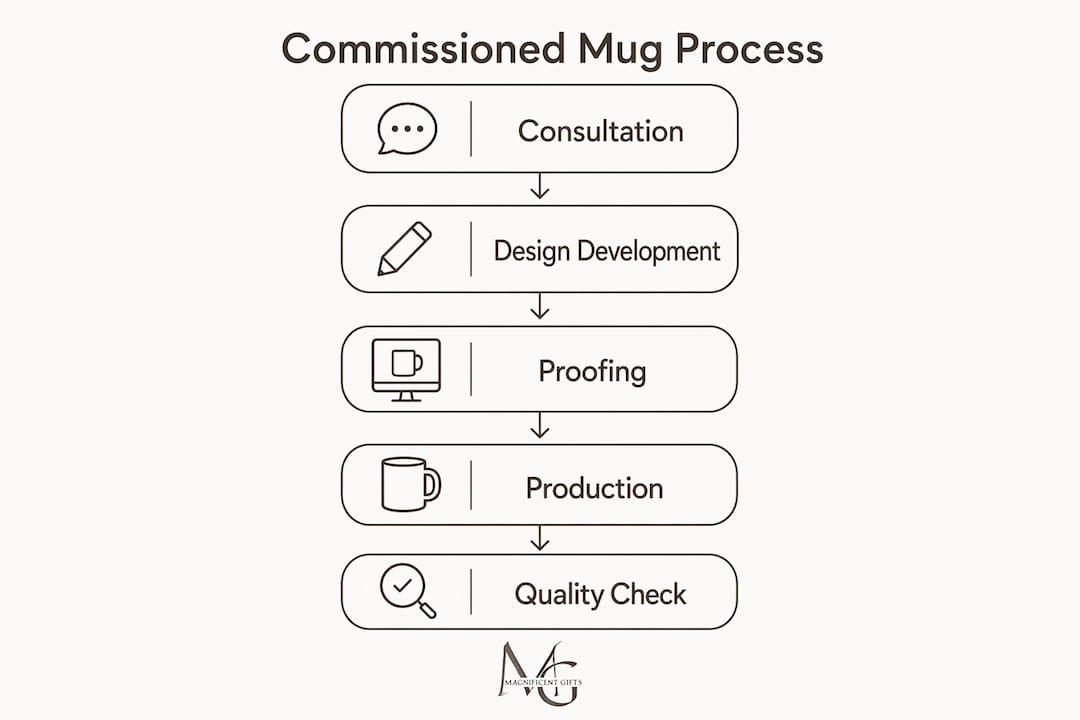
The process of mug commissioning follows a clear sequence. Understanding each stage removes the uncertainty and helps you get the best result.
Stage 1: Initial consultation and design brief
Contact the studio or artist with a written brief. Include the occasion, the recipient, any imagery or text you want, preferred colours, and your budget. Design consultation and client proofing are critical to the commissioning process. Studios use this stage to assess feasibility and quote accurately.
Stage 2: Design development
The artist creates initial concepts based on your brief. This may involve sketches, digital mockups, or both. You review the work and provide feedback. Most studios include one or two rounds of revisions within their standard fee.
Stage 3: Proofing and approval
Before production begins, you sign off on the final design. This is your last opportunity to request changes. Once approved, the design moves to production and alterations become costly.
Stage 4: Production
The mug is made using the agreed technique. Kiln firing alone requires multiple sessions. The commission process generally takes 4–5 weeks or more, depending on the studio's schedule and the complexity of the design. Rush orders are rarely possible with artisanal work.
Stage 5: Quality check and delivery
The finished piece is inspected before dispatch. Reputable studios photograph the completed mug and share images with the client before shipping.
| Stage | What happens | Typical duration |
|---|---|---|
| Consultation | Brief submitted, quote agreed | 1–3 days |
| Design development | Artwork created and shared | 1–2 weeks |
| Proofing | Client review and sign-off | 2–5 days |
| Production | Firing, glazing, finishing | 2–3 weeks |
| Delivery | Quality check and dispatch | 2–5 days |
Pro Tip: Order commissioned mugs at least six weeks before the occasion. Studios with strong reputations fill their schedules quickly, and rushing a kiln-fired piece is not possible without compromising quality.
For a detailed look at how the design consultation process works in practice, Mugnificentdeals has published a step-by-step guide worth reading before you approach any studio.
When should you choose a commissioned mug as a personalised gift?
A commissioned mug earns its place when the occasion demands something that a template cannot produce. Bespoke mugs celebrate important events with hand-decorated, individual designs that carry genuine emotional weight.
The occasions where commissioned mugs excel include:
- Weddings and anniversaries. A mug featuring the couple's names, wedding date, and a hand-painted illustration of their venue is a gift that outlasts the flowers and the cake.
- Milestone birthdays. A portrait mug or a design referencing a lifelong passion, such as a musician's instrument, speaks directly to who the recipient is.
- Retirement gifts. A piece that commemorates a career, a workplace, or a defining achievement carries far more meaning than a generic "Happy Retirement" print.
- Business and brand gifts. Companies commissioning mugs for clients or staff benefit from the quality signal that artisanal production sends. A kiln-fired mug with a brand's exact Pantone colours communicates attention to detail in a way that a sublimation mug does not.
- Music lovers and musicians. A mug designed around a specific instrument, a favourite piece of music, or an inside joke shared between musicians is the kind of gift that gets used every single morning and noticed every time.
The real value in commissioned mugs lies in the handcrafted nature and creative collaboration, producing a truly unique gift unlike mass-market personalised mugs. That value is felt most acutely when the recipient understands that someone thought carefully about who they are.
Key takeaways
A commissioned mug is defined by the collaborative, artisanal process behind it, not simply by having a name or image applied to a ceramic surface.
| Point | Details |
|---|---|
| Commissioned vs custom | All commissioned mugs are custom, but custom mugs are not always commissioned. |
| Artisanal production | Kiln firing at 650°C–880°C produces durable mugs that withstand 250+ dishwasher cycles. |
| Process timeline | Commissioning typically takes 4–5 weeks from brief to delivery. |
| Best occasions | Weddings, milestones, retirements, and musician gifts benefit most from bespoke designs. |
| Design method matters | The technique chosen (hand painting, screen printing, kiln-fired decals) shapes both the look and the longevity. |
Why commissioned mugs still feel like the most honest form of gift-giving
I have spent years around personalised gifts, and I keep returning to the same conclusion: the gap between a commissioned piece and a template mug is not about price. It is about intention.
When you commission a mug, you are telling the recipient that you thought about them specifically. You described them to an artist. You reviewed designs. You waited. That process is visible in the finished object in a way that a name printed by an algorithm simply is not. The bespoke design process is the gift as much as the mug itself.
My advice to anyone commissioning for the first time: resist the urge to over-specify. Give the artist your brief, share your references, then let them work. The best commissioned pieces I have seen came from clients who trusted the maker's instincts rather than trying to direct every brushstroke. The result always surprised them, and always in the right way.
Mass customisation has its place. But for the gifts that actually matter, the ones that sit on a desk for years and get pointed out to visitors, commissioning is the only honest answer.
— Lasse
Mugnificentdeals: personalised music mugs with a commissioned spirit
Mugnificentdeals sits in a rare position: a mug brand that thinks like a studio. Every design in the collection is built around a specific musical identity, from hand-drawn instrument illustrations to wry musician humour that lands because it is true.
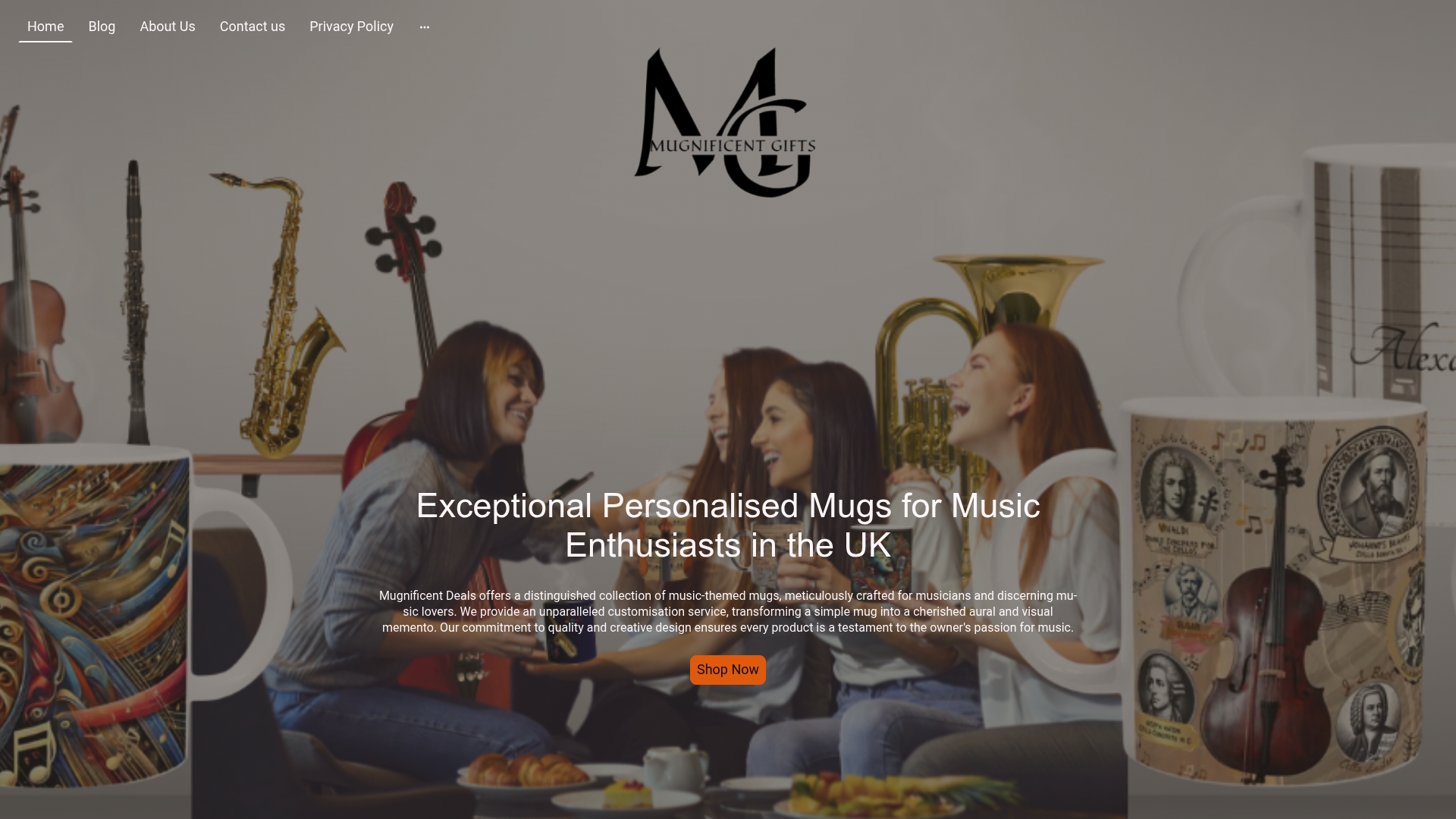
The personalised music mugs at Mugnificentdeals carry the spirit of commissioned work: thought-out, personal, and made for someone specific rather than everyone in general. Whether you are looking for a gift for a violinist, a drummer, or the person who treats every kitchen moment as a performance, the collection offers designs that feel chosen rather than generated. For gifts that need to say something real, it is a genuinely good place to start.
FAQ
What is the difference between a commissioned and a custom mug?
A custom mug uses a template and automated tools to add a name or image to a stock design. A commissioned mug is created through a collaborative process between the client and an artist, producing an original piece made specifically for one person.
How long does commissioning a mug take?
The process typically takes 4–5 weeks from the initial consultation to delivery, depending on the studio's schedule and the complexity of the design.
Are commissioned mugs dishwasher safe?
Kiln-fired commissioned mugs are highly durable. Screen-printed and kiln-fired decal mugs withstand over 250 dishwasher cycles without fading, making them suitable for everyday use.
What occasions suit a commissioned mug as a gift?
Weddings, anniversaries, milestone birthdays, retirements, and gifts for musicians or passionate hobbyists are all occasions where a bespoke mug carries genuine emotional value over a standard personalised option.
How much does commissioning a mug cost?
Pricing varies by studio, technique, and design complexity. Commissioned mugs cost more than template-based custom mugs because they involve original artwork, skilled production, and multiple consultation stages. Most studios provide a quote after reviewing the brief.