
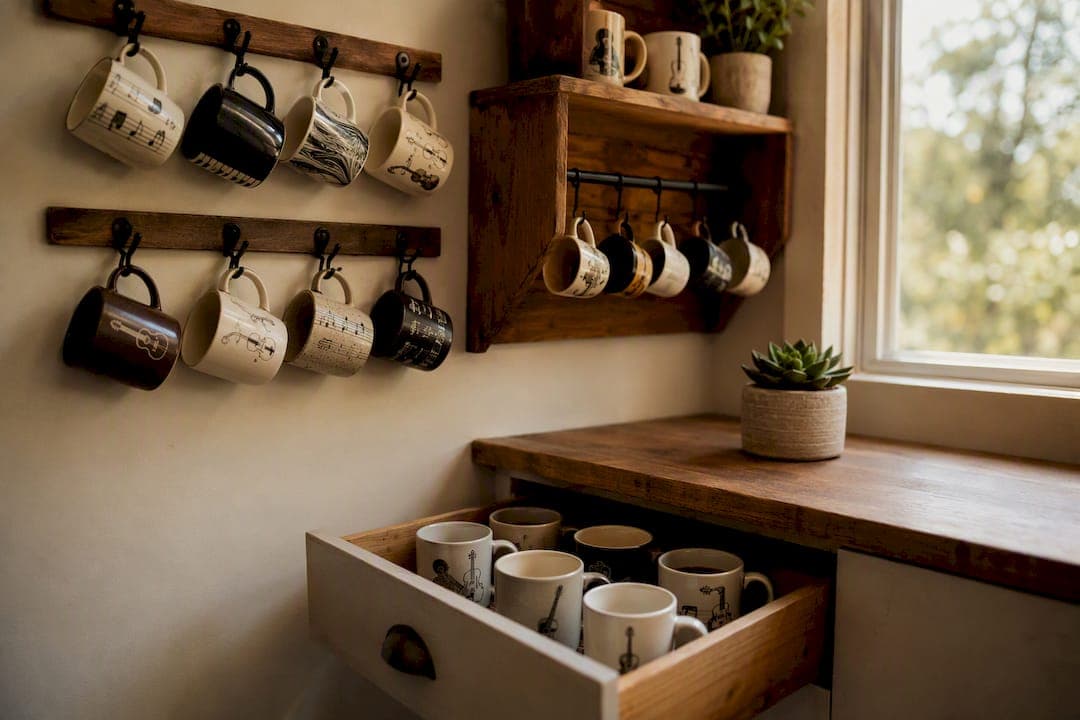
The easiest all-round solution mixes three things: under-shelf hooks for daily-use mugs, adjustable shelf risers for depth, and a shallow drawer lined with non-adhesive grip mat. Hooks free up cupboard space and keep favourites within reach. Risers make a crowded shelf readable at a glance. A lined drawer protects delicate pieces and suits renters who can't drill a single hole.
TL;DR:
- Floating shelves with underneath hooks should be mounted on studs and pre-drilled to prevent shelf damage and ensure safety.
- Drawer liners with dividers protect delicate mugs from chipping and allow clear visibility and easy organization by size and handle shape.
- Tiered risers and lazy Susans maximize deep cabinet storage by creating visible, accessible mug rows, especially in cluttered or corner cupboards.
- Display collections should be limited to four to eight mugs for practicality, with personal or seasonal pieces placed at eye level as focal points.
Table of Contents
- Mug display ideas for every kitchen type
- Hooks and rails: reclaim the dead space under shelves
- Floating shelves with hooks: the dual-purpose display
- Drawer storage with liners for safer, tidier mugs
- Shelf risers, tiered organisers and lazy Susans for deep shelves
- Mug trees, countertop stands and cake-stand tiers
- Pegboards and cubby shelving for real collections
- Keeping your mug display tidy and safe
- Designer's notes: styling personalised mugs for display
- Why fewer mugs on display beats a full cupboard
- Another way to build your display: start with a mug worth showing
- Sources
Mug display ideas for every kitchen type
Matching the method to your space matters more than chasing the prettiest Pinterest photo. A tiny galley kitchen needs different logic to a dedicated coffee corner with room to spare.
- Small kitchens: under-shelf hooks or a lined drawer reclaim space you're already paying rent on.
- Display lovers: floating shelves or a pegboard turn mugs into wall art rather than clutter.
- Large collections: cubby shelving or stacked risers keep dozens of mugs visible without a jumble.
- Renters: slide-on hooks and freestanding mug trees need zero drilling and travel with you.
A one-bed flat with a small number of mugs and a music teacher's staffroom shelf filled with many mugs need completely different answers, and that's fine.
Hooks and rails: reclaim the dead space under shelves
Under-shelf hooks screw into the underside of an existing shelf, turning wasted air into hanging storage without losing an inch of surface space. They're one of the fastest upgrades for anyone short on cupboard room, and they keep the mugs you reach for daily right at eye level instead of buried behind a stack of bowls.
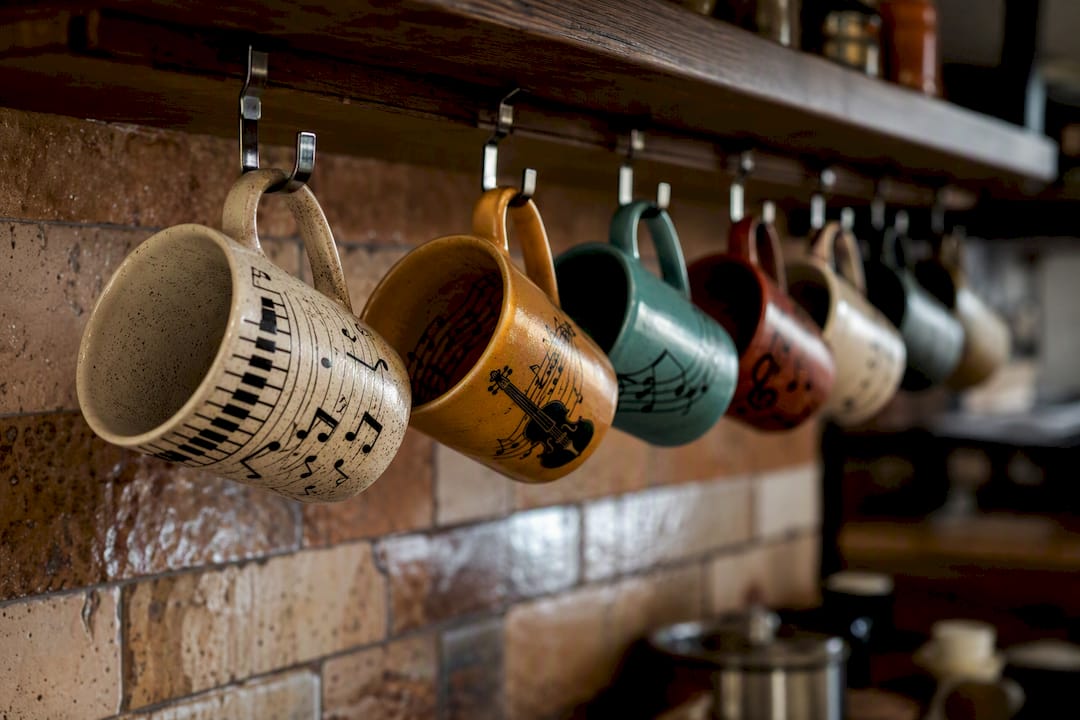
Wall-mounted rails work the same way but double as decor; a row of hooks along a blank wall reads as intentional styling rather than storage. As a rule of thumb, don't overload a single hook; a small number of standard mugs per hook keeps the rail looking tidy and prevents warping over time.
Renters aren't shut out here. Slide-on hooks that clip over an existing shelf lip, or adhesive-free hook strips rated for a few kilograms, deliver the same look without a single screw. Just check the manufacturer's weight limit before hanging heavier stoneware.
Pro Tip: Hang your most-used mugs closest to the kettle or coffee machine. It shaves seconds off your morning routine and keeps the busiest hooks nearest the action.
Floating shelves with hooks: the dual-purpose display
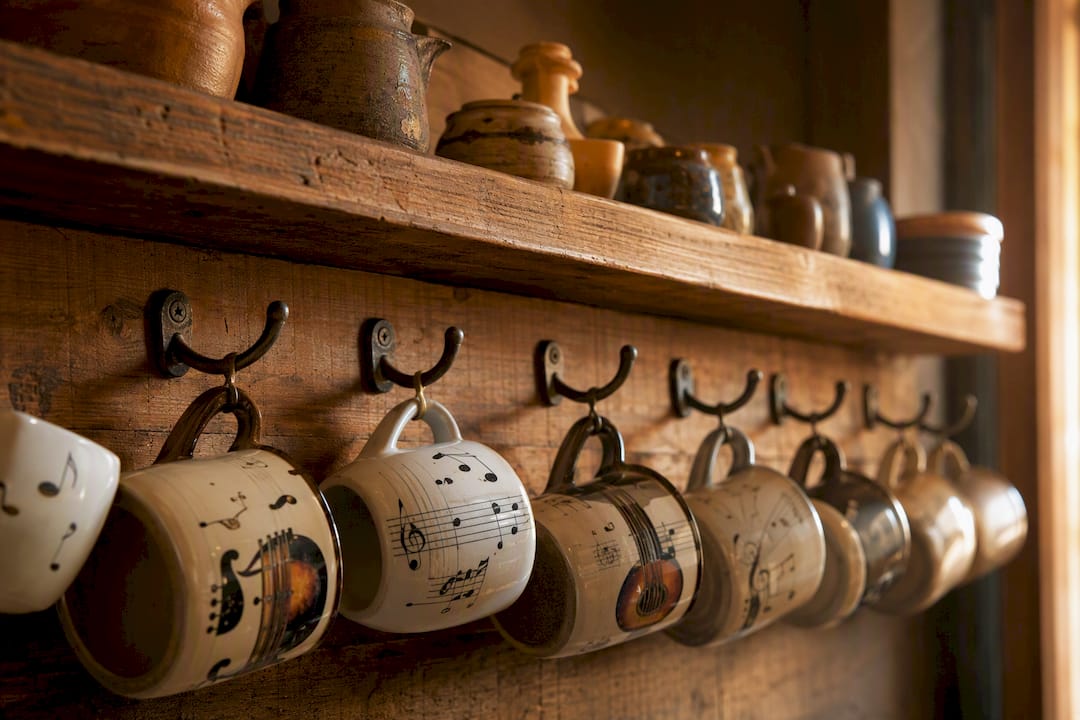
A floating shelf fitted with small hooks underneath does two jobs at once, it holds smaller items on top and hangs mugs by the handle below. This combination is one of the most efficient uses of wall space in the whole mug-storage toolkit.
Before you fit anything, locate the studs and pre-drill pilot holes rather than relying on adhesive strips, which aren't rated for the weight of ceramic mugs once a few are hanging at once.
- Position shelves above the coffee machine or over a worktop where mugs get grabbed most often.
- Space hooks far enough apart so handles don't knock together.
- Choose a shelf rated for the combined weight of everything you plan to hang, not just what sits on top.
- If you're renting, a tension-mounted shelf or a freestanding ladder shelf skips the wall entirely.
Pilot holes matter more than most people assume, driving a screw straight into wood without one is the single most common cause of split shelving.
Drawer storage with liners for safer, tidier mugs
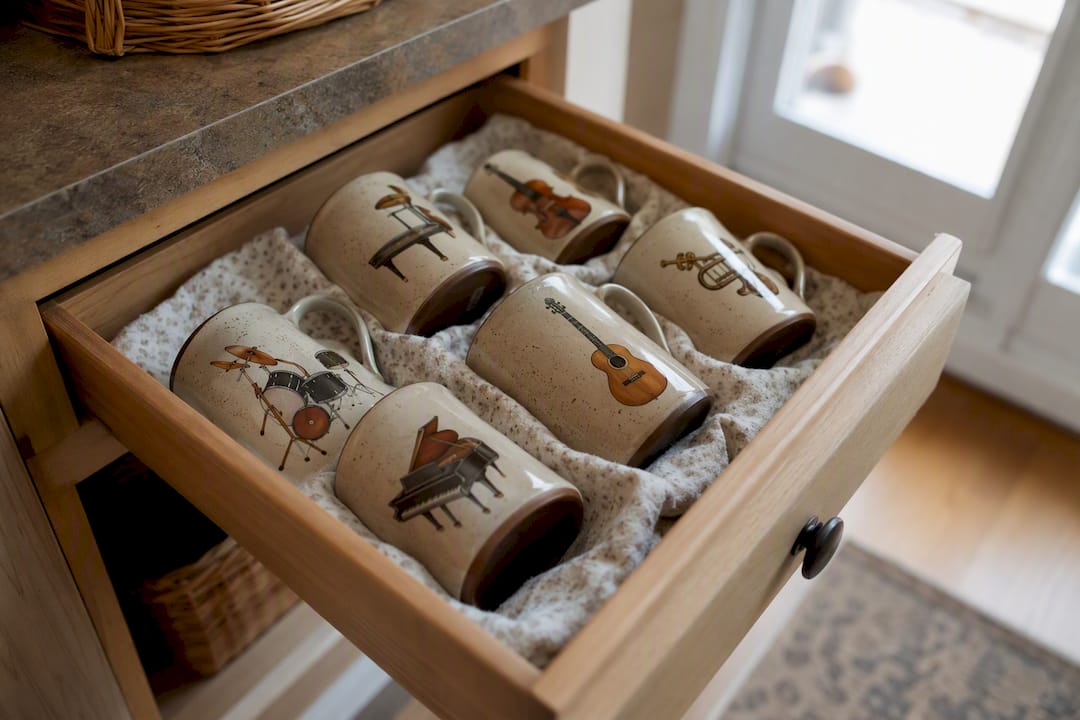
Kitchen drawers are one of the more overlooked options in mug storage, and arguably one of the smartest. A shallow drawer keeps every mug visible at a glance from above, unlike a high cabinet where the back row disappears, and a non-adhesive grip liner stops mugs sliding and chipping every time the drawer opens.
Add simple dividers to stop mugs knocking together, and arrange by size: sturdier, larger mugs go at the bottom, delicate or patterned pieces sit on top where they won't take the weight. Storing a few mugs upside down also keeps dust out between uses.
- Line the drawer base with a grip mat, not tape or adhesive backing.
- Group by size or handle shape so nothing wedges awkwardly.
- Reserve the deepest drawer for oversized mugs that never fit neatly on a shelf.
Combining risers, under-shelf hooks and a lazy Susan can double or even triple your usable storage without adding a single new cupboard.
Shelf risers, tiered organisers and lazy Susans for deep shelves
Deep cabinets are where mugs go to disappear, which is why best kitchen storage solutions for busy homes often include clever risers and organizers to keep mugs visible and accessible. A back row hidden behind a front row is functionally useless, which is exactly what tiered risers and lazy Susans solve. Risers create a stepped, visible row so every mug is seen instead of guessed at, and adjustable models flex to fit shelves of different heights.
Lazy Susans solve a different problem: instead of raising mugs, they rotate the whole collection towards you, useful in deep corner cupboards where reaching the back means kneeling on the worktop.
- Measure your shelf's height and depth before buying, risers vary widely and a too-tall model won't fit under the shelf above.
- Choose bamboo or acrylic risers for lighter loads and metal wire for heavier stoneware collections.
- A 24 to 30 centimetre lazy Susan suits most standard cupboard depths.
- Both options are entirely renter-friendly since nothing attaches to the cabinet itself.
Mug trees, countertop stands and cake-stand tiers
A mug tree earns its countertop space when you've got a small, high-rotation collection of everyday mugs you use daily and don't want buried in a cupboard. It's a quick way to grab a mug one-handed while the kettle's still boiling.
For anyone with a slightly larger or more decorative collection, a cake stand repurposed inside a cupboard creates an instant tiered surface, adding a second visible level without any hardware.
- Pros: instant access, no drilling, doubles as counter decor.
- Cons: takes up worktop real estate and might look cluttered with a larger number of mugs.
Pegboards and cubby shelving for real collections
Once a mug collection grows past a dozen pieces, pegboards and cubbies turn storage into a gallery, and that shift in mindset changes how the whole kitchen feels.
- Plan your pegboard spacing first. Standard peg hooks sit 2.5 centimetres apart on most boards, giving you room to adjust as your collection grows.
- Mix hook types. Single hooks suit narrow-handled mugs; double-prong hooks support heavier or wider handles without tipping forward.
- Use cubbies for standout pieces. A single mug per cubby turns a favourite into a mini display case, ideal for rotating seasonal or gifted pieces.
- Group by colour or motif. Clustering by shade or theme, black-and-white illustrated mugs together, for instance, creates a cohesive look rather than a random jumble.
Pro Tip: Rotate your cubby display by season. A summer arrangement of pastel mugs swapped for deep, warm tones in winter keeps the display feeling fresh without buying anything new.
Keeping your mug display tidy and safe
A display only works if it's usable, not just photogenic. Professional organisers consistently point to one simple rule: keep four to eight everyday mugs on show and store the rest, rotating in favourites as the mood or season shifts.
- Face all handles the same direction, it looks intentional and makes grabbing a mug faster.
- Stack no more than two or three mugs high, and slip a saucer between stacks for stability.
- If a mug hasn't been used for a significant time and isn't sentimental, consider donating it.
Designer's notes: styling personalised mugs for display
Personalised, music-themed mugs work harder than plain ones in a display because they're built to be focal points, a hand-illustrated violin or a name mug commissioned as a gift naturally draws the eye first. Pairing that piece with a matching saucer, a trick borrowed from professional stylists, adds stability to a stack and a café-quality finish.
- Match mug size to shelf depth so a tall mug doesn't crowd the shelf above it.
- Place your one or two personalised pieces at eye level, centre of the display.
- Rotate seasonal or gifted mugs into the front row to keep the arrangement feeling current.
For more on how these designs come together, Mugnificentdeals's notes on the role of creativity in mug design and choosing ceramic versus porcelain for daily use both go further into material and design choices.
Why fewer mugs on display beats a full cupboard
Displaying everything you own isn't the goal, choosing the handful that mean something is. A shelf with six mugs you actually reach for says more than a cupboard packed with forty you never touch. Curate first, then let the daily ritual of picking one out do the rest.
— Lasse
Another way to build your display: start with a mug worth showing
Every method above solves the "where" of mug storage. Mugnificentdeals solves the "what", a personalised, music-themed mug designed from the start to be the piece your eye lands on first, not just another item filling a shelf. Where a plain stoneware set blends into a stack, a custom illustration of an instrument or a name-and-quote design becomes the anchor your whole arrangement builds around.

If you're planning a shelf, a pegboard, or even just one hook by the coffee machine, browse the personalised music mugs collection and pick the piece that deserves the best spot in the display.
Sources
- Why kitchen drawers can be an ideal mug storage solution
- 16 clever cabinet storage hacks
- How to organise coffee mugs, according to pro organisers
- Coffee mug storage: floating shelves and hooks