

Unique design is defined as a deliberate visual or sensory choice that sets a product apart from its category in a way buyers find meaningful. Research confirms this distinction drives real commercial outcomes. 73% of EU consumers say they are willing to pay more for better-designed products, and 31% rate design as very or extremely important when buying. That is not a marginal preference. It is a structural advantage for any entrepreneur who treats design as a core business decision rather than an afterthought. Understanding why unique designs attract buyers, and how to calibrate that uniqueness correctly, is one of the most practical things a small business owner can do in 2026.
How does perceived uniqueness influence buyer willingness to pay a premium?
Perceived uniqueness is the term researchers use to describe a buyer's sense that a product stands apart from what is commonly available. It is distinct from novelty for its own sake. The mechanism that connects uniqueness to purchase behaviour runs through brand identification, the degree to which a buyer sees the brand as an expression of who they are.
A 2025 marketing study of 320 consumers found that perceived uniqueness drives premium willingness through brand identification acting as a partial mediator. The chain works like this: a buyer encounters a product that looks or feels distinct, they begin to associate that distinctiveness with their own identity, and they become willing to pay more because the product now carries personal meaning. Price resistance drops when a product feels like it belongs to you.

This mechanism explains why generic products struggle even when they are functionally identical to premium alternatives. A plain white mug and a hand-illustrated musician mug may hold the same volume of coffee. The illustrated mug, however, signals something about the person drinking from it. That signal is worth money to the right buyer.
The three-step pathway is worth committing to memory:
- Perceived uniqueness: The buyer notices the product is visually or conceptually distinct from alternatives.
- Brand identification: The buyer connects that distinctiveness to their own self-concept, values, or community.
- Premium willingness: The buyer accepts a higher price because the product now carries identity value, not just functional value.
Uniqueness also satisfies what researchers call the need for differentiation. Buyers want to feel individual, and design that signals identity gives them a socially legible way to do that without explanation.
Pro Tip: When designing a new product, ask yourself which community or identity it speaks to before you ask whether it looks good. A design that answers "who am I?" converts better than one that simply answers "what is this?"
What is the optimal balance of uniqueness for attracting buyers?
Uniqueness is not a dial you turn to maximum. Harvard Business School researchers analysed nearly 482,000 Airbnb listing images and found that visual uniqueness has a sweet spot. Too bland and buyers scroll past. Too bizarre and buyers feel uncertain, which raises perceived risk and reduces bookings. The same principle applies directly to product and packaging design.
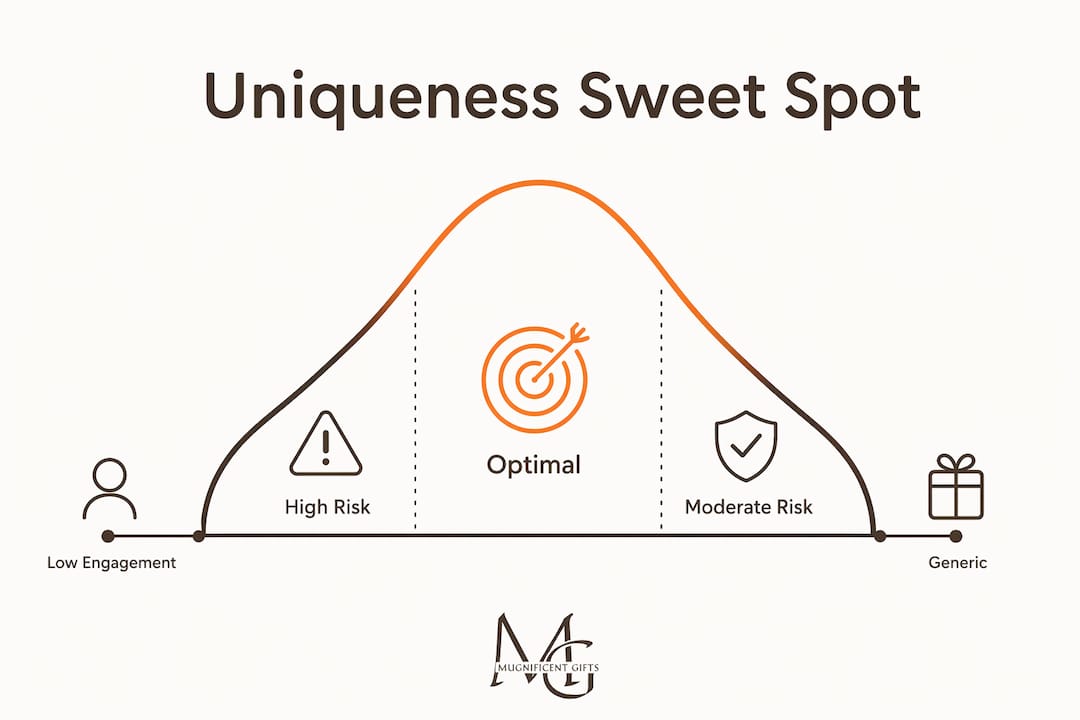
Buyers respond best to distinctiveness that is legible. A design can be unusual in its subject matter, its colour palette, or its illustration style, and still feel safe and trustworthy if it is executed with clarity. The problem arises when uniqueness tips into confusion. A buyer who cannot quickly understand what a product is, or who it is for, will not take the risk of purchasing it.
| Design approach | Buyer response | Risk level |
|---|---|---|
| Generic, category-standard design | Low engagement, price-driven decisions | Low perceived risk, low differentiation |
| Calibrated uniqueness (sweet spot) | High engagement, premium willingness, identity connection | Moderate perceived risk, high differentiation |
| Excessive uniqueness (chaotic or alien) | Confusion, avoidance, increased perceived risk | High perceived risk, low conversion |
The practical implication for entrepreneurs is that uniqueness should be tested regularly with real buyer signals rather than set once and forgotten. A/B tests on product images, packaging variations, and landing page visuals give you data on where your designs sit on that spectrum. Gut instinct is a starting point, not a finishing line.
Pro Tip: Run two versions of your product photography with different levels of visual distinctiveness and measure click-through rates over two weeks. The data will tell you where your buyers' sweet spot sits far more reliably than internal opinion.
What benefits do unique designs provide beyond initial attraction?
The role of design in sales does not end at the first click. Unique design creates a series of downstream benefits that compound over time, building the kind of customer relationship that sustains a small business through competitive pressure.
According to Fast Company's 2026 analysis of brand design, visceral design creates trust early in the buyer journey, before a customer has read a single word of copy. Sensory clarity, consistent visual language, and recognisable craft signals communicate reliability faster than any rational argument. A buyer who trusts the design trusts the brand.
The benefits of unique designs that extend beyond first impressions include:
- Reduced purchase friction. A design that immediately communicates quality and identity removes the hesitation that kills conversions. Buyers spend less time deliberating and more time purchasing.
- Brand loyalty. When a product becomes part of how a buyer expresses themselves, they return. The product is no longer interchangeable with a cheaper alternative.
- Repeat purchase intention. Research published in 2026 confirms that customised product value drives repeat purchases through self-expressiveness. Buyers who feel a product reflects who they are come back for more.
- Word-of-mouth referrals. Distinctive products get noticed and shared. A mug with a clever music illustration gets photographed and posted. Generic products do not.
- Premium price sustainability. Unique design justifies a higher price point over time, not just at launch. Buyers who identify with a brand do not abandon it when a cheaper option appears.
The importance of unique designs for long-term business health is therefore not just about attracting new buyers. It is about keeping the buyers you already have.
How can entrepreneurs leverage unique design to attract and retain customers?
Small business owners often treat design as a one-time decision made at launch. The evidence suggests it should be treated as an ongoing process of calibration, testing, and refinement. The following strategies reflect what the research actually supports.
-
Anchor design to buyer identity, not personal taste. The most effective unique designs speak to the buyer's self-concept. A musician does not just want a mug. They want a mug that says something true about being a musician. Design choices should start with the question: what does my buyer want to signal about themselves?
-
Use customisation as a uniqueness multiplier. Customer participation in customisation enhances perceived uniqueness and self-expressiveness, which increases both perceived value and purchase likelihood. Offering name personalisation, instrument-specific options, or inside-joke references turns a product into something the buyer helped create.
-
Test before you commit at scale. A/B testing on imagery, packaging, and product descriptions is the most reliable way to find the uniqueness sweet spot for your specific audience. What feels bold to you may feel chaotic to your buyer, or vice versa.
-
Maintain visual consistency across all touchpoints. Coherent, human-centred design systems signal craftsmanship and avoid the sameness that AI-generated imagery produces. Every product, every social post, and every piece of packaging should feel like it came from the same creative hand.
-
Combine visual distinctiveness with story and social proof. Design alone does not convert. A distinctive visual paired with a clear story about who the product is for, and evidence that other buyers love it, creates the full identity signal that drives purchase decisions.
Pro Tip: Build a one-page design brief that defines your buyer's identity in three sentences, your brand's visual rules in five bullet points, and your uniqueness boundaries. Share it with every designer or collaborator you work with. Consistency is the compounding interest of good design.
The role of creativity in mug design illustrates this well. A design that combines a specific instrument illustration with a personalised name and a wry caption is not just visually distinctive. It is identity-relevant, customised, and legible. That combination sits squarely in the sweet spot.
Key takeaways
Unique design attracts buyers by triggering brand identification, which converts perceived distinctiveness into premium willingness, repeat purchases, and lasting loyalty.
| Point | Details |
|---|---|
| Uniqueness drives premium willingness | Perceived uniqueness leads buyers to pay more by connecting design to personal identity. |
| Calibrate, do not maximise | Too much uniqueness raises perceived risk; test regularly to find your buyers' sweet spot. |
| Design builds trust before words do | Sensory clarity and consistent visual cues create trust faster than copy or rational arguments. |
| Customisation multiplies value | Allowing buyers to personalise a product increases perceived uniqueness and repeat purchase intention. |
| Consistency compounds the advantage | A coherent design system across all touchpoints signals craftsmanship and sustains brand loyalty. |
Why I think most entrepreneurs underestimate design as a long-term asset
Most small business owners I have observed treat design as a cost to minimise rather than a variable to optimise. They commission a logo, choose a colour palette, and consider the matter closed. The research tells a different story entirely.
The EUIPO finding that 38% of consumers aged 18–24 say design affects their purchase decisions is not just a demographic footnote. It signals that the buyers entering the market right now are more design-literate than any previous generation. They notice generic. They reward distinctive. And they share what feels personal to them.
What I find most underappreciated is the identity mechanism. Entrepreneurs focus on making products look good. The more powerful goal is making products feel like the buyer. A design that a customer would describe as "so me" is worth more than one they would describe as "nice." That shift in framing changes every design decision you make.
The uncomfortable truth is that uniqueness requires ongoing investment. The sweet spot moves as markets change and competitors catch up. Brands that treat their design system as a living asset, tested and refined against real buyer behaviour, consistently outperform those that treat it as a fixed cost. Design is not a one-time decision. It is a discipline.
— Lasse
Mugnificentdeals: where unique design meets music identity
The principles in this article are not abstract. Mugnificentdeals applies them in a specific and deliberate way, building a product range where every design decision serves a clear buyer identity.
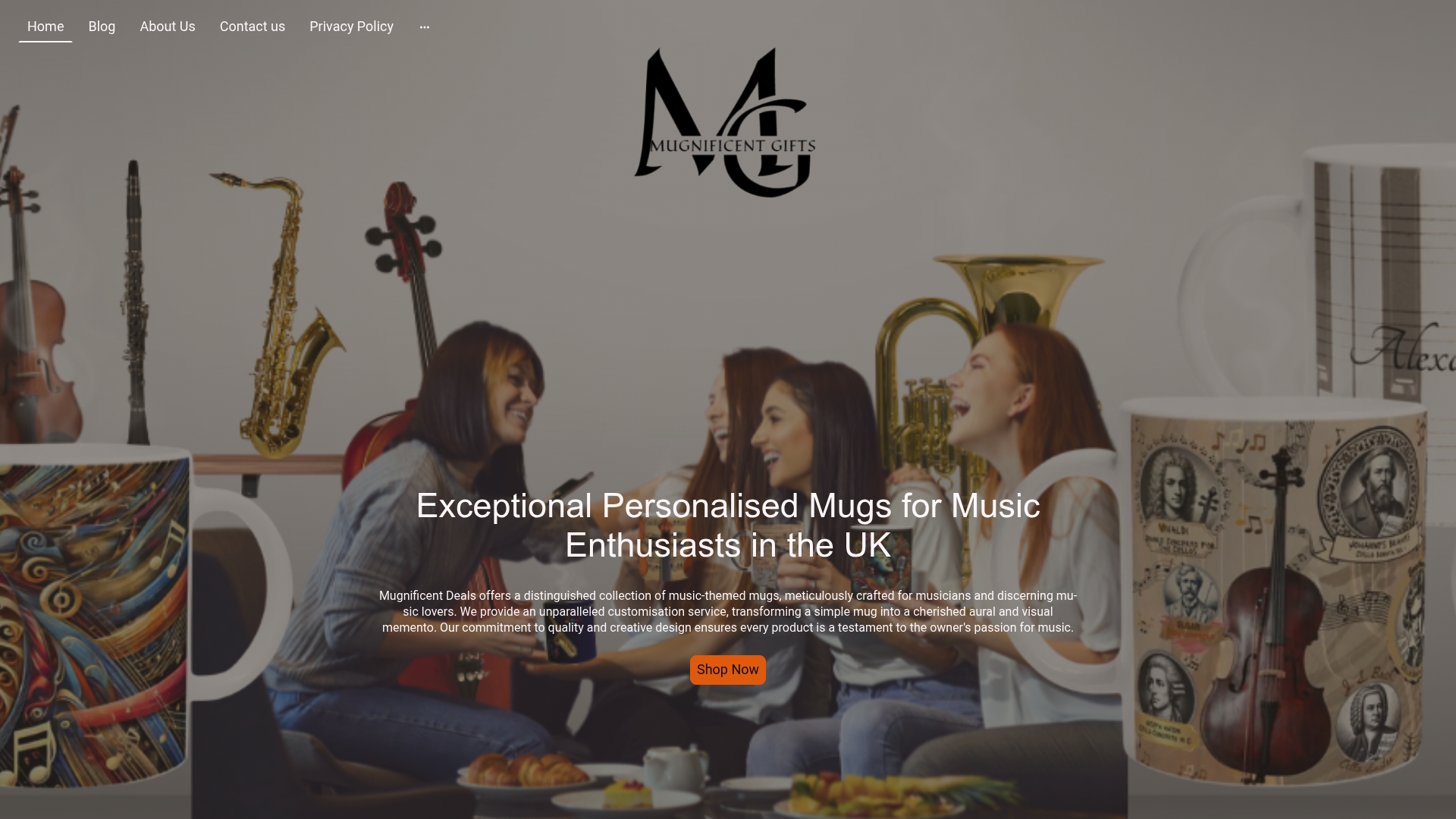
Each mug in the Mugnificentdeals range is built around the identity of a musician or music lover, combining hand-drawn instrument illustrations with personalisation options and humour that earns a smile rather than demanding one. The result is a product that sits in the uniqueness sweet spot: instantly legible, deeply personal, and worth giving as a gift. If you are looking for a practical example of how unique design converts, the personalised music mugs collection shows exactly what calibrated, identity-driven design looks like in practice. For gift-focused options, the best personalised music mugs for gifts collection is worth a look too.
FAQ
Why do unique designs attract buyers more than generic ones?
Unique designs trigger brand identification, which means buyers connect the product to their own identity and become willing to pay more. Generic designs offer no identity signal, so buyers default to choosing on price alone.
What is the uniqueness sweet spot in product design?
The sweet spot is the point where a design is visually distinct enough to stand out but legible enough that buyers feel confident rather than confused. Harvard Business School research on Airbnb listing images confirms that both extremes, too bland and too bizarre, reduce buyer engagement.
How does customisation affect perceived uniqueness?
Customer participation in customisation increases perceived uniqueness and self-expressiveness, which raises both perceived value and the likelihood of repeat purchases. Personalisation options such as names or instrument choices give buyers a sense of co-creation.
Does unique design influence younger buyers more than older ones?
Design is particularly influential among buyers aged 18–24, with 38% saying it affects their purchase decisions according to EUIPO research. That said, the broader finding that 73% of EU consumers across all ages will pay more for better-designed products shows design matters across the full buyer spectrum.
How often should entrepreneurs review their design choices?
Design should be reviewed continuously using real buyer signals such as click-through rates, conversion data, and customer feedback. The uniqueness sweet spot shifts as markets evolve, so treating design as an ongoing process rather than a fixed decision produces better long-term results.