
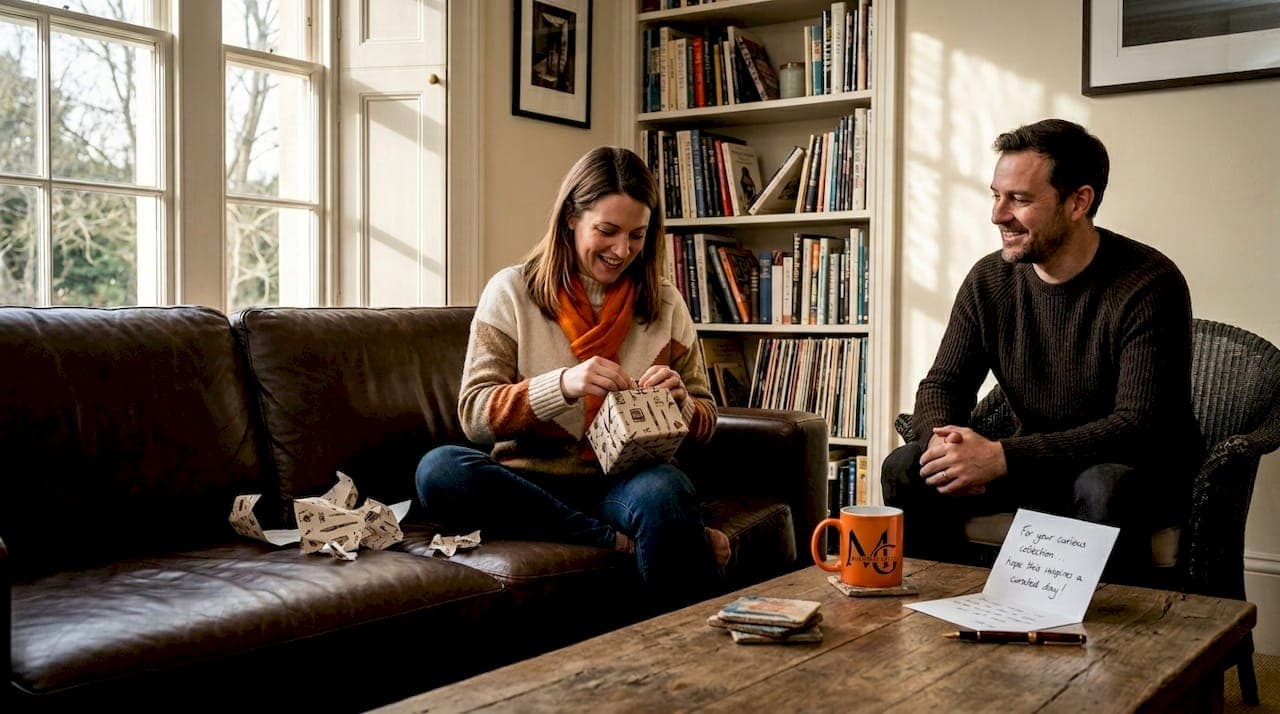
There is a quiet moment that happens when someone unwraps a gift and realises it was made specifically for them. Not bought in a hurry or chosen from a shelf, but thought about. That moment is why custom gifts feel special in a way that money simply cannot replicate. Most people assume the value of a gift lives in its price tag or its size. The truth, as psychology and neuroscience increasingly confirm, is far more interesting. The emotional power of a personalised gift comes from what it communicates, not what it costs.
Table of Contents
- Key takeaways
- Why custom gifts feel special: the psychology of vicarious pride
- The neuroscience of bonding through personalised gifts
- When personalisation misses the mark
- How custom gifts create lasting memories
- How to choose personalised gifts that genuinely land
- My honest take on why custom gifts matter
- Give the gift they will actually remember
- FAQ
Key takeaways
| Point | Details |
|---|---|
| Personalisation triggers vicarious pride | Recipients feel emotionally uplifted because they infer the giver invested genuine thought and effort on their behalf. |
| Oxytocin drives lasting connection | Custom gifts stimulate sustained oxytocin release, creating deeper trust and bonding compared to generic alternatives. |
| Authenticity determines impact | Superficial or formulaic personalisation often fails to land emotionally; sincerity and relevance are what make it work. |
| Custom gifts become memory anchors | Personalised items embed themselves into daily routines, reinforcing emotional bonds long after the giving moment passes. |
| Telling the "why" amplifies meaning | Explicitly sharing the intention behind a custom gift significantly heightens its emotional resonance for the recipient. |
Why custom gifts feel special: the psychology of vicarious pride
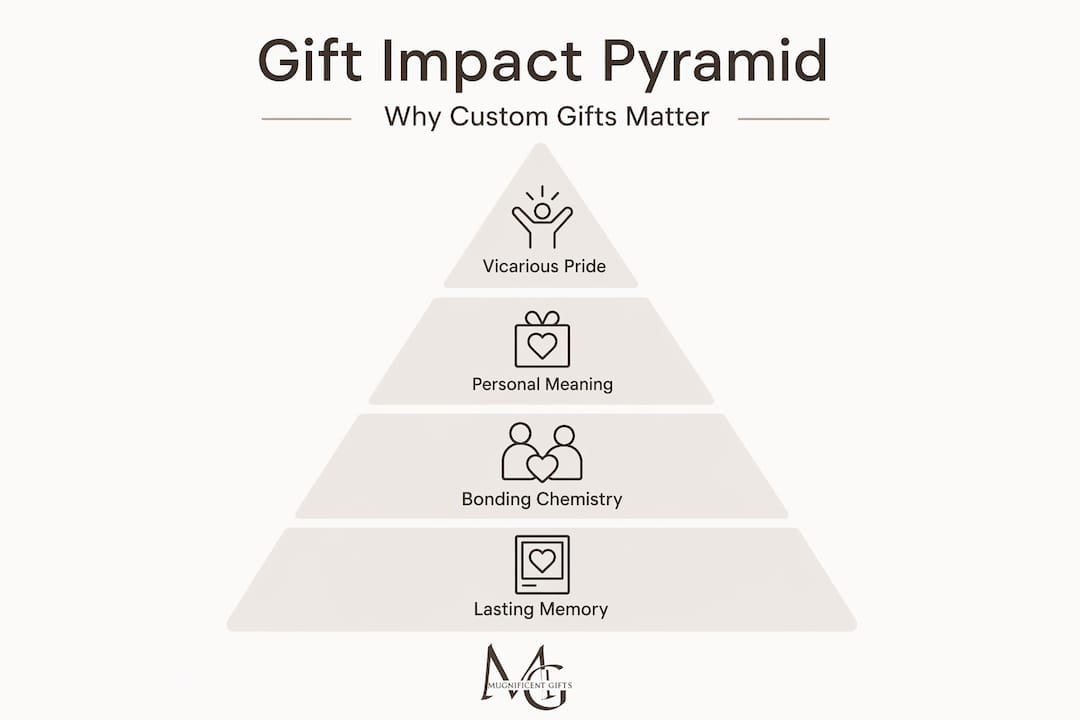
The reason a personalised gift hits differently than a generic one is not sentiment alone. There is a precise psychological mechanism at work. When you receive a gift made specifically for you, you experience something researchers call vicarious pride: the warm, affirming sense that someone saw you, understood you, and acted on that understanding.
A 2025 study on customised gift appreciation found a clear mediation effect linking customisation to increased gift appreciation through state self-esteem, with a bootstrapped mediation effect of b = 0.5001. In plain terms, receiving a personalised gift makes you feel better about yourself because you recognise it as evidence that someone values you enough to pay attention.
Several factors influence how powerfully this effect lands:
- The perceived effort of the giver. The more thought a recipient believes went into a gift, the stronger the emotional response. A name printed on a mug means less than a mug designed around a specific passion, an inside joke, or a shared memory.
- The relevance of the personalisation. Accuracy matters. A gift that reflects who you actually are carries far more weight than one that gestures vaguely in your direction.
- The recipient's relationship context. People with lower relationship anxiety tend to receive the full emotional benefit of a custom gift more readily, as they are more open to reading the gesture positively.
The gift's emotional specialness derives largely from the recipient's inferred pride that the giver invested unique thought and effort. That inference is the engine. Everything else is decoration.
Pro Tip: When giving a personalised gift, do not let the item speak entirely for itself. A brief note explaining what inspired the choice will double its emotional impact.
The neuroscience of bonding through personalised gifts
If psychology explains the feeling, neuroscience explains the chemistry. Gift giving and receiving are not merely social rituals. They are neurochemical events.
Oxytocin increases generosity by 80% in controlled conditions, according to research by neuroscientist Paul Zak, and the same bonding hormone is triggered when we give or receive something that signals genuine understanding. This is the chemical thread that connects meaningful gifting to lasting trust.
The contrast with generic gifts is worth examining:
| Gift type | Primary neurochemical response | Duration of emotional effect |
|---|---|---|
| Generic or mass-produced gift | Dopamine spike (novelty) | Short-lived, fades within hours or days |
| Personalised or custom gift | Oxytocin release (bonding) | Sustained, reinforced over time |
| Personalised gift with shared memory | Oxytocin plus emotional recall | Long-term, embedded in identity |
Personalised gifts provoke sustained oxytocin release, creating trust and connection well beyond the initial moment of unwrapping. A generic gift might produce a pleasant dopamine hit, but it rarely builds on itself. A personalised gift, by contrast, becomes a reference point for the relationship.
This is why personalised gifts signal understanding of a recipient's identity, transforming objects from material goods into meaningful messages. Think of a mug bearing a hand-drawn violin and the recipient's name. Every morning that it is used, the brain quietly retrieves the memory of being understood. That is not sentiment. That is neuroscience in daily practice.
"Customisation is a signalling act, where effort and cognitive investment convey strong relational messages beyond monetary value." — Psychology of Gifting Research
When personalisation misses the mark
Custom gifting is not without its risks. Understanding where personalisation can fail is just as useful as knowing why it succeeds.
The most common trap is the authenticity boundary. Superficially personalised items, such as a name slapped onto a generic template with no further thought, may actually fail to trigger vicarious pride. The recipient senses the difference between genuine effort and the appearance of it. When personalisation feels automated or generic, it can undermine the very impression it was meant to create.
There are several other nuances worth keeping in mind:
- Relationship anxiety reduces the effect. Research shows that high relationship anxiety dampens the emotional uplift that custom gifts normally provide. If a recipient is uncertain about the relationship, they may interpret personalisation as pressure rather than warmth.
- Professional or early-stage relationships require care. Over-personalising for a colleague you barely know, or for someone you have only recently met, can create awkwardness rather than connection. Thoughtful curation of a quality generic gift sometimes lands better in these contexts.
- Careless personalisation can backfire. Getting a detail wrong, such as misspelling a name, referencing the wrong instrument, or misremembering a shared moment, signals inattention rather than care. Authenticity and appropriateness are non-negotiable for emotional resonance.
Pro Tip: Before choosing a personalised gift, ask yourself: does this reflect something specific and accurate about the person, or just something general about their category? Accuracy is the difference between touching and forgettable.
The sentimental value of gifts depends on this accuracy. Getting it right matters more than getting it fancy.
How custom gifts create lasting memories
The true power of a personalised gift does not peak at the moment of unwrapping. It compounds over time.

Psychologists describe this through the concept of memory anchors and the endowment effect. When an object is personalised to reflect your identity, you begin to experience a sense of psychological ownership over it. Discarding it starts to feel like losing a piece of yourself. This is why personalised items are kept and referenced far longer than their generic counterparts.
Here is how this plays out in practice:
- Daily use creates repeated emotional reinforcement. A personalised mug used each morning becomes a micro-ritual, quietly recalling the person who gave it and the feeling of being known.
- Visual cues trigger memory retrieval. Seeing your name, your instrument, or an inside joke on an object you use regularly keeps the emotional significance of the gift active in your mind.
- Identity ownership increases perceived value. Because the gift reflects who you are, it feels worth more than its material cost. You would not part with it easily, and that attachment deepens over time.
- Shared context amplifies the anchor. A gift that references a shared experience, a concert attended together, a joke from a particular evening, or a musical milestone, carries layers of meaning that a generic gift simply cannot hold.
Personalised gifts work best when they become part of daily life, creating repeated positive emotional reinforcement and memory retrieval. That is the unique gifting experience at its most powerful: not a grand gesture, but a quiet, daily reminder that someone truly paid attention.
How to choose personalised gifts that genuinely land
Understanding the psychology is one thing. Putting it into practice is another. Here is how to give a custom gift that actually achieves what you intend.
Know the person specifically, not just generally. A music lover is not a monolith. A classical violinist and a jazz drummer share a passion, but they have entirely different identities within it. The more precisely you reflect someone's specific world, the stronger the effect.
Choose symbols, not categories. Instead of choosing something broadly musical, choose something that reflects their particular instrument, their sense of humour about it, or a specific moment you share. Specificity is the currency of personalised gift significance.
Consider these approaches when selecting or creating a personalised gift:
- Identify something the person references often, such as a phrase, a running joke, or a specific passion, and build the gift around that reference.
- Use their name thoughtfully, paired with something contextually meaningful rather than as the sole personalisation.
- Communicating the "why" behind your customisation enhances emotional benefits beyond the item itself. Include a short note that explains your thinking.
- Prioritise daily usability. A personalised gift that sits on a shelf is seen occasionally. One that is used every day becomes part of the person's routine and, by extension, their identity.
- Match the depth of personalisation to the closeness of the relationship. Deep personalisation for a close friend. Lighter, accurate personalisation for acquaintances.
Pro Tip: If you are unsure how personal to go, err on the side of accuracy over depth. A gift that perfectly reflects one specific true thing about a person will always outperform one that tries to capture everything and misses the detail.
The importance of personalised gifts lies not in how elaborate they are, but in how precisely they say "I see you."
My honest take on why custom gifts matter
I have given and received both kinds of gifts, and the difference in how they are remembered is not subtle. It is stark.
The generic gifts I have received over the years have largely blurred together in memory. Even the expensive ones. What I remember vividly are the small, specific ones. A mug designed around an inside joke shared with a close friend. A gift that referenced a conversation I had half-forgotten. These stayed. They still do.
What I have come to believe, having thought seriously about this, is that the importance of personalised gifts has nothing to do with effort for its own sake. It is about proof of attention. When someone gives you a custom gift that genuinely reflects who you are, they are telling you something more meaningful than any card could: "I was listening."
I have also seen it go wrong. A custom gift based on a vague assumption, or one that tries too hard to be clever without actually knowing the person, can feel hollow in a way that even a supermarket bunch of flowers would not. The wrong kind of personalisation can feel presumptuous rather than warm.
My advice: do not personalise for the sake of it. Personalise because you know something true about a person and want to reflect it back to them. That intention, when it is genuine, is what makes custom gifting so meaningful in practice.
— Lasse
Give the gift they will actually remember
If this article has clarified one thing, it is that the most memorable gifts are not the most expensive. They are the most accurate. They reflect a specific person, a specific passion, a specific truth.
At Mugnificentdeals, that principle shapes every product. Each personalised music mug is built around the idea that a gift should say something true. Whether it is a hand-drawn instrument, a musician's name paired with a clever phrase, or a design that speaks directly to a violinist's world or a drummer's sense of humour, these are not generic products with a name added. They are gifts with a point of view. Popular personalised gift categories consistently highlight music-themed options for their lasting appeal, and for good reason: daily use keeps the emotional connection alive. Browse the full range of music-themed gift options and find something that genuinely reflects the musician in your life.
FAQ
Why do personalised gifts feel more meaningful than generic ones?
Personalised gifts trigger vicarious pride in the recipient, who infers that the giver invested genuine thought and attention specifically for them. This emotional mechanism, supported by 2025 research, creates a deeper sense of being valued than any price tag can replicate.
What is the neuroscience behind the sentimental value of gifts?
Personalised gifts stimulate oxytocin release, the bonding hormone linked to trust and connection, whereas generic gifts tend to produce only a short-lived dopamine response. This neurochemical difference explains why custom gifts create more lasting emotional bonds.
Can a personalised gift ever miss the mark?
Yes. Superficial or inaccurate personalisation can feel hollow or even presumptuous, particularly in early-stage or professional relationships. The key is accuracy and sincerity: the personalisation must genuinely reflect something true about the recipient.
How do custom gifts create lasting memories?
Custom gifts become memory anchors through daily use. Each time the recipient interacts with the object, the brain retrieves the emotional context of receiving it, reinforcing the bond over time and deepening the gift's perceived value.
Does it help to explain the reasoning behind a personalised gift?
Absolutely. Explicitly communicating the intent behind a custom gift, through a note or a brief conversation, significantly enhances its emotional impact by confirming the thought and care that went into the choice.