
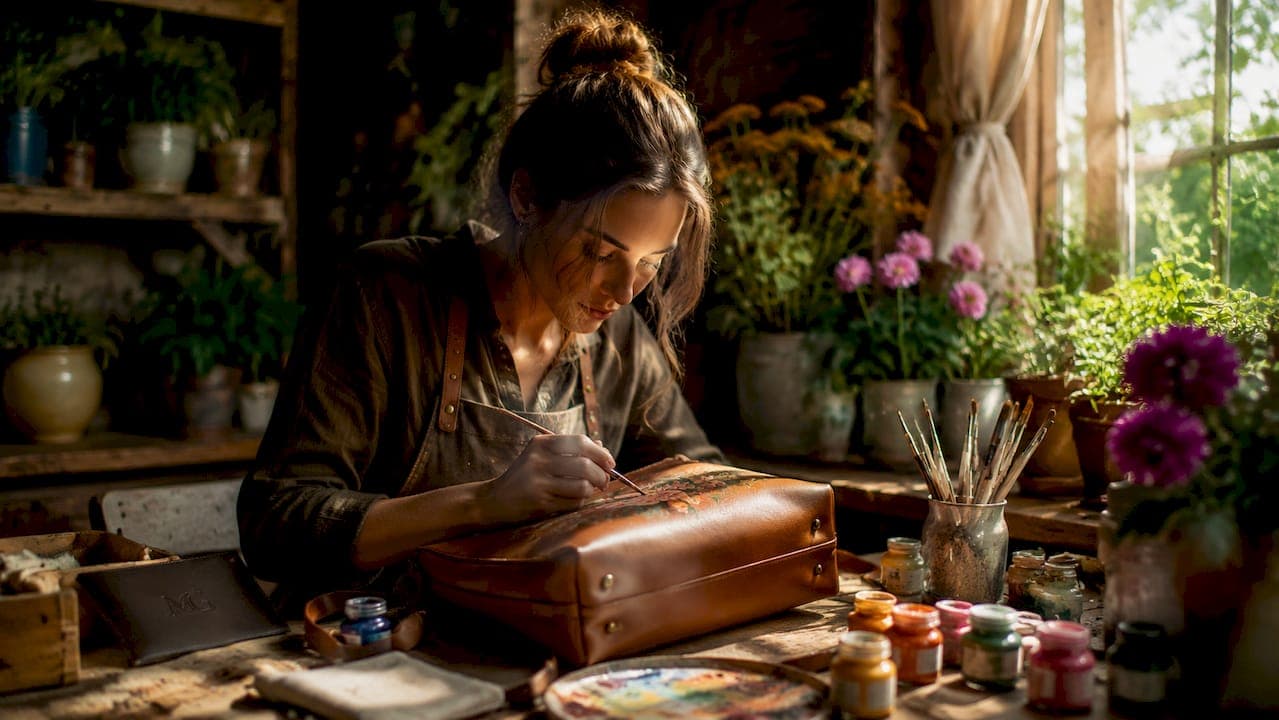
Bespoke products are custom-made items designed specifically for one individual, built around their preferences, physical requirements, and personal identity. The industry term is "made-to-order" or "bespoke," and both describe the same principle: nothing is produced until a specific person commissions it. 71% of consumers now expect personalised experiences from brands. That figure signals a structural shift in what buyers want, not a passing trend. The role of bespoke products extends well beyond aesthetics. It covers functional fit, emotional ownership, and long-term value that mass production simply cannot replicate.
What drives the growing consumer demand for bespoke products?
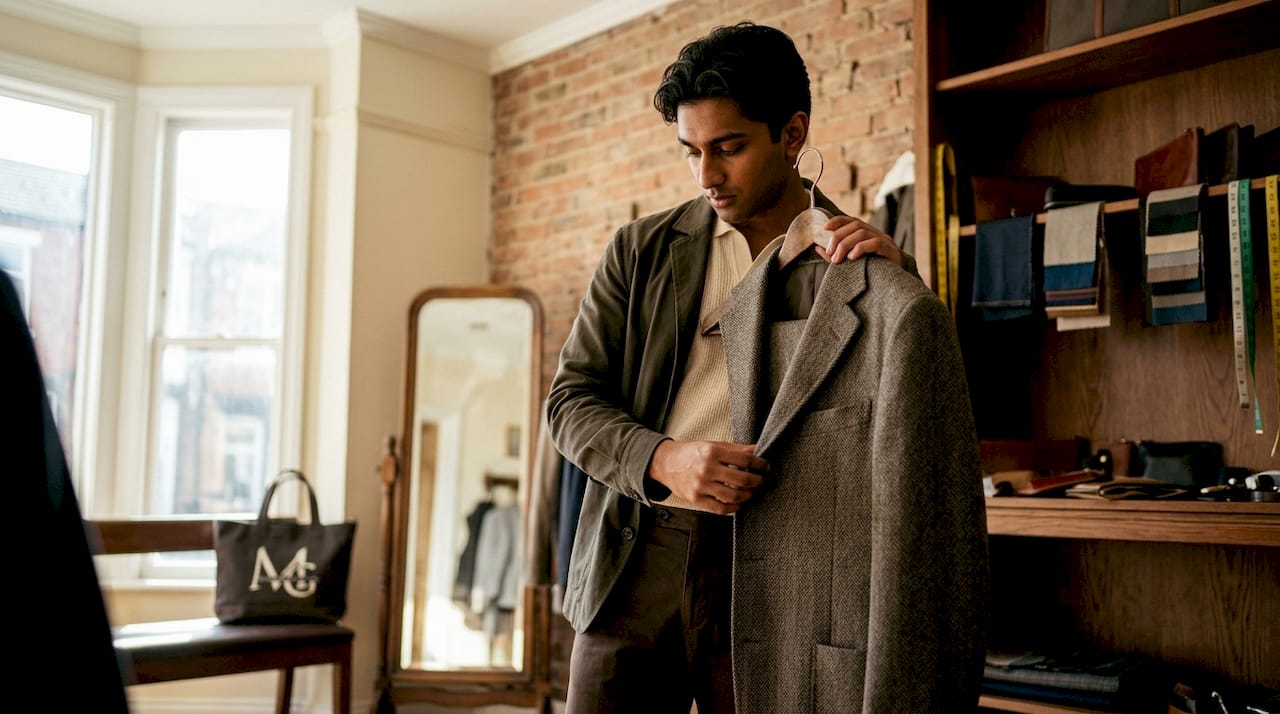
Consumers want to feel seen. The "market of one" concept describes a buyer who rejects generic options because they carry no personal meaning. A standard product says nothing about who you are. A bespoke item says everything.
Consumer psychology shows that customisation triggers three powerful mental responses: a sense of ownership before purchase, effort justification (the belief that something made with care is worth more), and scarcity perception. Each response releases dopamine. Together, they reduce price sensitivity and build emotional attachment that generic products cannot create.
"Customisation triggers ownership, effort justification, and scarcity perception, releasing dopamine and strengthening emotional attachment." — Consumer psychology research on personalised goods
This psychology has real commercial weight. Customers pay 20%–50% more for bespoke items compared to standard mass-produced equivalents. That premium reflects genuine perceived value, not marketing spin.
The demand for personalised goods also mirrors what consumers already experience digitally. Streaming platforms, social feeds, and news apps all adapt to individual preferences. Shoppers now carry that expectation into physical retail. Brands that offer design personalisation options gain a competitive edge because they match the personalised digital world buyers already inhabit.
Key drivers behind rising demand include:
- Identity validation: Buyers use bespoke items to signal who they are, not just what they own.
- Uniqueness: A one-of-a-kind product cannot be replicated by a neighbour or colleague.
- Satisfaction: Made-to-order buyers increasingly accept longer wait times as a fair trade for something meaningful.
- Loyalty: Brands incorporating personalisation see measurably improved customer loyalty over time.
How does bespoke craftsmanship differ from mass-customisation?
Bespoke craftsmanship and mass-customisation both deliver personalised results, but they operate through entirely different processes. Understanding the difference helps buyers choose the right option for their needs and budget.
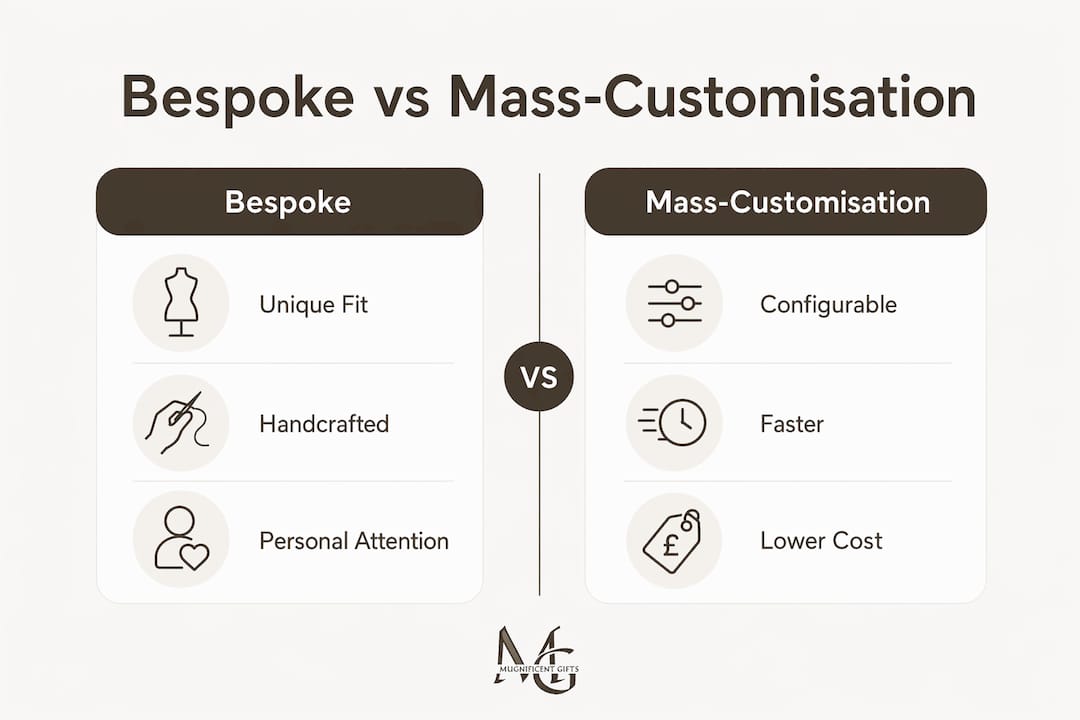
Traditional bespoke production, best illustrated by Savile Row tailoring, begins with unique pattern drafting for each client. A tailor measures physical asymmetries, accounts for posture, and creates a pattern that exists for that person alone. Multiple fittings follow, each refining the garment. The internal structure, known as a floating canvas, is hand-stitched and moulds progressively to the wearer's body over years of use. This process takes months and commands a significant price premium.
Mass-customisation works differently. Configurable components are assembled without retooling the production line, allowing thousands of permutations at near-mass-production cost. Delivery takes days or weeks rather than months. Nike's personalised trainers and Dell's configured laptops are well-known examples of this model. The buyer selects from a defined set of options; the manufacturer assembles accordingly.
| Feature | Traditional bespoke | Mass-customisation |
|---|---|---|
| Production start | After individual commission | After option selection |
| Pattern or design | Unique to the individual | Modular, from preset options |
| Turnaround time | Weeks to months | Days to weeks |
| Price point | Significant premium | Moderate premium |
| Personalisation depth | Unlimited, truly individual | Bounded by available options |
| Long-term refinement | Yes, improves with each commission | No ongoing refinement |
The table shows that neither model is universally superior. Traditional bespoke suits buyers who prioritise depth of personalisation and long-term refinement. Mass-customisation suits those who want a personal touch with faster delivery and lower cost.
Pro Tip: If you want a genuinely bespoke result, ask the maker whether your specific measurements or preferences are recorded for future orders. That record is the foundation of the compounding relationship that makes bespoke products improve over time.
What are the tangible and intangible benefits of bespoke products?
The benefits of tailored items split cleanly into two categories: functional and emotional. Both matter, and they reinforce each other.
Functional advantages
Experts highlight that bespoke products' primary value is functional. A garment cut for your specific measurements eliminates the discomfort that off-the-rack sizing creates. A bespoke piece of furniture fits the exact dimensions of a room. A personalised software solution aligns with a specific workflow rather than forcing the user to adapt. These are not cosmetic improvements. They are practical gains that affect daily comfort and productivity.
Bespoke products also last longer. A garment with a floating canvas, for example, adapts to the wearer's body rather than losing shape. That longevity reduces the total cost of ownership over time, even when the upfront price is higher.
Emotional and psychological benefits
- Identity validation: A bespoke item reflects who you are. It carries your name, your measurements, your preferences, or your sense of humour. That reflection builds pride of ownership.
- Reduced returns: Customisation reduces return rates by up to 40% because buyers receive exactly what they specified. Fewer returns mean less waste and greater satisfaction.
- Emotional attachment: The IKEA Effect explains why participation in customisation increases perceived value. When you help shape a product, you value it more than something pulled from a shelf.
- Compounding satisfaction: Repeat bespoke commissions refine the original profile over time. Each subsequent order produces a better result because the maker knows you better. This compounding relationship is unique to bespoke production.
"The ongoing bespoke process produces products better aligned to the individual after years of use." — Bespoke tailoring research
Sustainability adds another layer of value. Made-to-order processes reduce excess inventory and lower environmental footprint compared to fast fashion alternatives. Buyers who care about ethical production find bespoke goods align with their values as well as their preferences.
In which sectors do bespoke products play a critical role today?
The importance of custom products spans far more industries than most buyers realise. Bespoke thinking has moved well beyond tailoring into technology, home design, and gifting.
- Fashion and tailoring: The original bespoke sector remains its clearest example. A suit cut for one person's posture, shoulder width, and preferred silhouette cannot be replicated by any standard size. The result is comfort, confidence, and a garment that improves with wear.
- Software and technology: Bespoke software solutions are built around a specific organisation's workflow rather than a generic use case. Enterprise platforms often offer configurable modules, but fully bespoke development produces a system that fits the client's exact processes. The functional alignment reduces friction and training time.
- Home and lifestyle: Bespoke furniture, lighting, and interiors allow buyers to match products precisely to their space. A made-to-measure bookcase fills an alcove perfectly. A custom paint colour matches an existing fabric. These details create environments that feel genuinely personal rather than assembled from a catalogue.
- Gifts and personal items: Personalised gifts carry emotional weight that generic alternatives cannot match. A gift that includes someone's name, a shared joke, or a reference to their passion communicates thought and care. Research on why custom gifts feel special confirms that the perceived effort behind a personalised item increases its emotional value significantly.
- Music and niche communities: Bespoke products resonate especially strongly in tight-knit communities where shared identity matters. A musician who receives a product that references their instrument, their practice habits, or their musical humour feels recognised in a way that a generic gift never achieves.
The impact of made-to-order products is particularly visible in small business contexts, where niche audiences respond strongly to products that speak their specific language. Generic offerings struggle to compete when a bespoke alternative exists that feels made for exactly that person.
Key takeaways
Bespoke products deliver functional precision, emotional ownership, and long-term value that mass production cannot match, making them the strongest choice for buyers who prioritise personal fit over convenience.
| Point | Details |
|---|---|
| Consumer demand is structural | 71% of consumers expect personalised experiences, reflecting a lasting shift in buying behaviour. |
| Premium pricing is justified | Buyers pay 20%–50% more for bespoke items because perceived value and emotional attachment are genuinely higher. |
| Bespoke and mass-customisation differ | Traditional bespoke offers unlimited personalisation and long-term refinement; mass-customisation offers speed and moderate personalisation. |
| Functional benefits are primary | Custom fit, longevity, and reduced returns are the core functional gains that bespoke products deliver. |
| Niche communities respond most strongly | Tight-knit groups, including musicians, value bespoke products because they validate shared identity and specific passion. |
Why bespoke matters more than most people admit
I have spent years watching buyers underestimate what bespoke actually delivers. The common assumption is that bespoke is about luxury or status. That misses the point entirely.
The real value is functional first. A product built for your specific measurements, workflow, or preferences removes friction that you may not even notice until it is gone. The first time you wear a garment cut for your actual posture, or use software built around your actual process, the difference is not subtle. It is immediately obvious.
What surprises most people is the compounding effect. A bespoke relationship improves with every interaction. The maker learns your preferences, refines their understanding of what works for you, and produces progressively better results. No mass-produced product does that. It is the same on the first day as it is on the last.
The challenge for brands is scale. Genuine bespoke is labour-intensive and slow. The most interesting development I have seen is brands finding ways to deliver bespoke-quality emotional connection at accessible price points. Mugnificentdeals does this well in the gifting space. A personalised mug with a musician's instrument, name, or inside joke is not a Savile Row suit, but it delivers the same core thing: a product that says "this was made for you specifically." That feeling is what buyers are actually paying for, at every price point.
— Lasse
Personalised music mugs: bespoke gifting made simple
Mugnificentdeals applies the core principles of bespoke production to everyday gifting. Each mug is designed around a specific musical identity, whether that is a violinist's silhouette, a drummer's rhythm, or a playful phrase that only a musician would recognise.
The personalised music mugs collection lets you add names, choose instruments, and select designs that feel sketched and personal rather than mass-produced. The result is a gift that communicates genuine thought. For anyone looking for meaningful personalised gifts for musicians, the range covers everything from subtle black-and-white instrument drawings to humour-led designs that earn a genuine smile. Browse the full collection at Mugnificentdeals and find the one that fits your musician perfectly.
FAQ
What is the role of bespoke products in modern markets?
Bespoke products fulfil demand for personal identity validation, functional fit, and emotional ownership that mass production cannot provide. They command premium pricing and build stronger customer loyalty than generic alternatives.
Why do consumers pay more for bespoke items?
Consumer psychology research shows that customisation triggers ownership, effort justification, and scarcity perception, all of which reduce price sensitivity. Buyers pay 20%–50% more because the perceived value is genuinely higher.
How does bespoke differ from mass-customisation?
Traditional bespoke creates a unique pattern or design for one individual, with multiple refinements over time. Mass-customisation assembles configurable components from preset options, delivering personalisation faster and at lower cost but without the depth of true bespoke production.
Do bespoke products reduce returns?
Customisation reduces return rates by up to 40% because buyers receive exactly what they specified. Higher satisfaction at the point of delivery means fewer returns and less waste across the supply chain.
Which industries benefit most from bespoke products?
Fashion, software, home design, and personalised gifting all benefit significantly. Niche communities, particularly musicians and hobbyists, respond most strongly because bespoke products validate their specific identity and shared passion.