

Design personalisation is the system-driven process of automatically adapting content, interfaces, or products to match each user's behaviour, context, and preferences. Unlike a one-size-fits-all approach, it uses data signals to make every experience feel individually relevant. Brands like Netflix and Amazon have built their entire product logic around this principle, serving millions of users experiences that feel hand-picked. For creatives and individuals, understanding what is design personalisation means recognising it as both a technical discipline and a creative philosophy. Done well, it turns ordinary interactions into something that genuinely resonates.
How does design personalisation differ from customisation?
Design personalisation is system-driven, meaning the product or platform makes decisions on your behalf based on inferred data. Customisation, by contrast, is user-driven. You manually adjust settings, choose a colour scheme, or rearrange a dashboard to suit your preferences. Both serve the user, but through entirely different mechanisms.
Think of personalisation as a concierge who anticipates your needs before you ask. Customisation is the building blocks you arrange yourself. Knowing when to deploy each approach is one of the most underrated skills in UX and product design.
Here is a direct comparison to clarify the distinction:
| Feature | Personalisation | Customisation |
|---|---|---|
| Who controls it | The system | The user |
| Data source | Behavioural and contextual signals | Explicit user input |
| Speed | Automatic and real-time | Manual and deliberate |
| Primary benefit | Convenience and relevance | Empowerment and control |
| Risk | Creepiness or filter bubbles | Cognitive overload from too many choices |
The two approaches are not opposites. They complement each other. A well-designed product might personalise the default experience while still offering customisation options for users who want more control. Spotify, for instance, generates personalised playlists automatically but also lets you build and edit your own. That balance is the hallmark of thoughtful design.
- Use personalisation when you want to reduce friction and surface relevant content without requiring user effort.
- Use customisation when users have strong, specific preferences and the motivation to express them.
- Combine both when your audience spans a wide range of technical confidence and personal taste.
What data and signals drive personalised design?
Personalisation systems rely on two categories of data: explicit data, which users provide directly, and revealed data, which the system infers from behaviour. Explicit data includes stated preferences, saved settings, and profile information. Revealed data includes what you click, how long you linger on a page, what you skip, and what you return to.
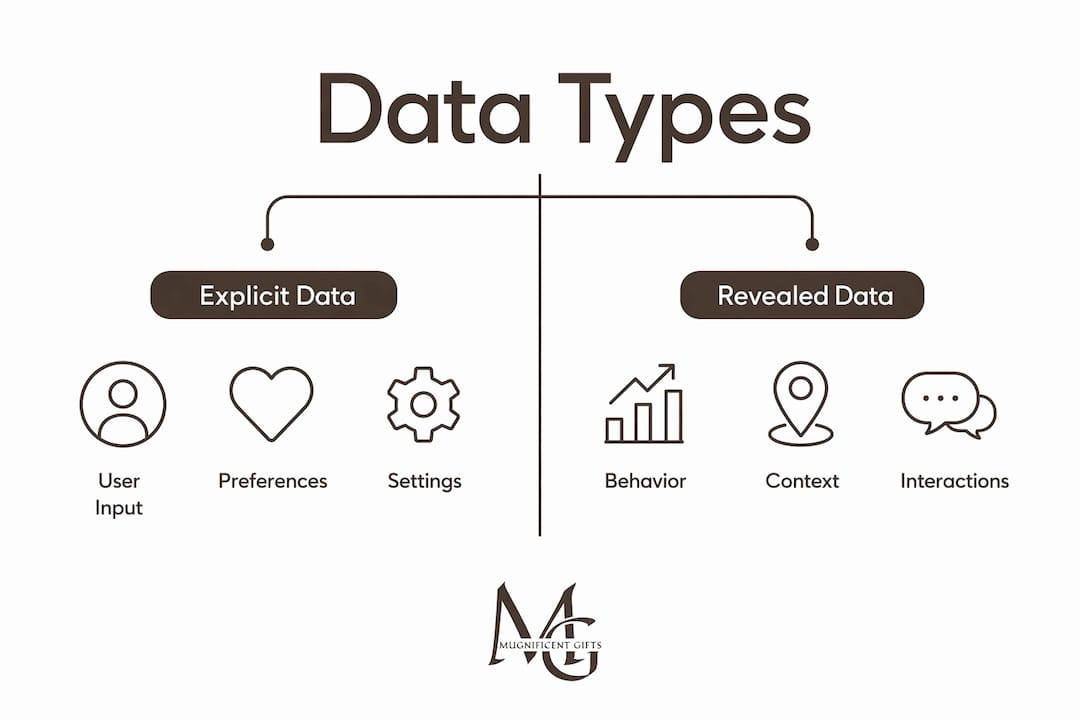
Beyond these two, contextual signals add another layer of precision. Your device type, location, time of day, and even connection speed all inform how a well-built system adapts its output. A mobile user browsing at midnight gets a different experience from a desktop user at midday, and rightly so.
Key data types used in personalised design include:
- Behavioural signals: clicks, scrolls, purchase history, and session duration
- Stated preferences: onboarding questionnaires, saved favourites, and account settings
- Contextual data: device, location, language, and time
- Demographic information: age, profession, and interests (where voluntarily shared)
Privacy is not a secondary concern here. Requesting permissions gradually, in context and only when relevant to the task at hand, builds far greater user trust than demanding all data upfront. Users who understand why their data is being used are more likely to accept the exchange.
Pro Tip: Ask for one permission at a time, tied to a specific user action. If someone saves their first item to a wishlist, that is the right moment to request notification permissions, not during onboarding.
What are the challenges and risks of over-personalisation?
Over-personalisation creates filter bubbles, where users only ever see content that confirms what they already know or like. The result is a narrower, more repetitive experience that gradually reduces discovery and serendipity. For a music lover, this might mean only ever being shown the same genre, missing the unexpected track that becomes a new favourite.
The risks extend beyond boredom. When personalisation feels too precise, it crosses into territory that users describe as surveillance. Seeing an advert for something you mentioned in conversation, or receiving a recommendation that feels uncomfortably specific, erodes trust rather than building it.
Here are the most common pitfalls and how to address them:
- Filter bubbles: Intentionally introduce variety into recommendations. Show users content slightly outside their established patterns to encourage discovery.
- Repetitive experiences: Set limits on how often the same type of content appears. Redundancy signals a system that has stopped learning.
- Perceived surveillance: Be transparent about what data you collect and why. A short, plain-language explanation goes further than a lengthy privacy policy.
- Loss of user agency: Explicit user preferences must always override algorithmic suggestions. If a user manually sets a preference, the system should honour it without exception.
- Cognitive overload: Personalisation should reduce the number of decisions a user faces, not multiply them. If a personalised interface feels busier than a standard one, the design has failed.
"Successful personalisation makes products feel smarter and more helpful, never surveilled or creepy." This distinction between helpful and intrusive is the line every designer must actively manage.
The antidote to over-personalisation is not less data. It is better judgement about how that data is used, combined with genuine user controls that are easy to find and act on.
How is design personalisation applied in products and branding?
The practical applications of personalised design span digital products, physical goods, and brand identity. Each context demands a slightly different approach, but the underlying principle remains constant: the experience should feel made for the person receiving it.
Digital products and UX
Netflix personalises not just which titles it recommends, but which thumbnail artwork it displays for each title. A user who watches a lot of romantic films sees a different cover image for the same film than a user who prefers action. This is AI detecting subtle patterns and adapting visual presentation in real time. Amazon applies the same logic to product listings, pricing displays, and homepage layouts, all adjusted per user session.
For creatives building digital products, the key is to start with the most impactful personalisation layer first. Personalising the content someone sees is usually more valuable than personalising the colour of a button.
Physical products and branding
Personalisation in physical products works differently because the adaptation happens before manufacture rather than in real time. Custom product builders require formalised logic for pricing, inventory, and manufacturing constraints before the user interface is even designed. Many product customisers fail not because the UI is poor, but because the underlying rules were never properly defined.
Branding benefits from personalisation in a subtler way. A brand that speaks directly to a specific identity, say, a musician who sees themselves in every product, creates a sense of belonging that generic branding cannot replicate. The psychology of personalised gifting shows that products carrying a name, an instrument, or an inside joke carry emotional weight that mass-produced alternatives simply do not.
Practical steps for applying personalisation in your own work:
- Start with observation: True personalisation begins with understanding actual routines and habits, not assumed preferences. Watch how users interact before designing the adaptation.
- Layer personalisation gradually: Begin with one meaningful personalisation feature and expand based on feedback and data.
- Maintain variety: Even in highly personalised experiences, build in mechanisms that surface unexpected options.
- Test with real users: Personalisation assumptions often miss the mark. Regular testing reveals whether the system is genuinely helping or quietly frustrating people.
For brands targeting a specific community, such as musicians or artists, personalisation is less about algorithms and more about identity. When a product reflects who you are, the design personalisation has already succeeded at its most fundamental level. Exploring personalised music gifts shows how this principle translates directly into products that feel commissioned rather than bought.
Key takeaways
Design personalisation works best when system-driven adaptation is balanced with clear user controls, transparent data use, and deliberate variety to prevent repetitive or intrusive experiences.
| Point | Details |
|---|---|
| Personalisation vs customisation | Personalisation is automatic and system-driven; customisation is manual and user-controlled. |
| Data hierarchy matters | Explicit user settings must always override algorithmic suggestions to maintain trust. |
| Over-personalisation is a real risk | Filter bubbles and perceived surveillance damage user trust and reduce discovery. |
| Physical products need prior logic | Custom product builders require defined pricing and manufacturing rules before UI design begins. |
| Identity-led personalisation resonates | Products that reflect a user's specific identity create belonging that generic design cannot achieve. |
Why personalisation should feel like a gift, not a guess
I have spent years watching brands treat personalisation as a technical checkbox rather than a creative act. The systems get built, the data gets collected, and then the experience delivered feels oddly hollow. The reason, almost always, is that the team optimised for signals without ever deeply observing the person behind them.
The most revealing lesson I have taken from working across digital and physical design is this: surface-level personalisation, adding a name here, changing a colour there, rarely moves people. What moves people is when a product or experience reflects something true about their life. A mug that says "I improvise, not mistakes" does not just carry a name. It carries a worldview. That is a different level of personalisation entirely.
The balance between system control and user agency is where most projects go wrong. Designers hand too much over to the algorithm and forget that users want to feel in control of their own experience. Personalisation and customisation serve different UX needs and the best products honour both rather than choosing one.
My honest advice: start by watching people use your product or receive your gift. Not analytics. Actual observation. You will learn more in twenty minutes of watching someone interact with your design than in a week of reviewing click data. Then build the personalisation around what you see, not what you assume.
— Lasse
Discover personalised music mugs from Mugnificentdeals
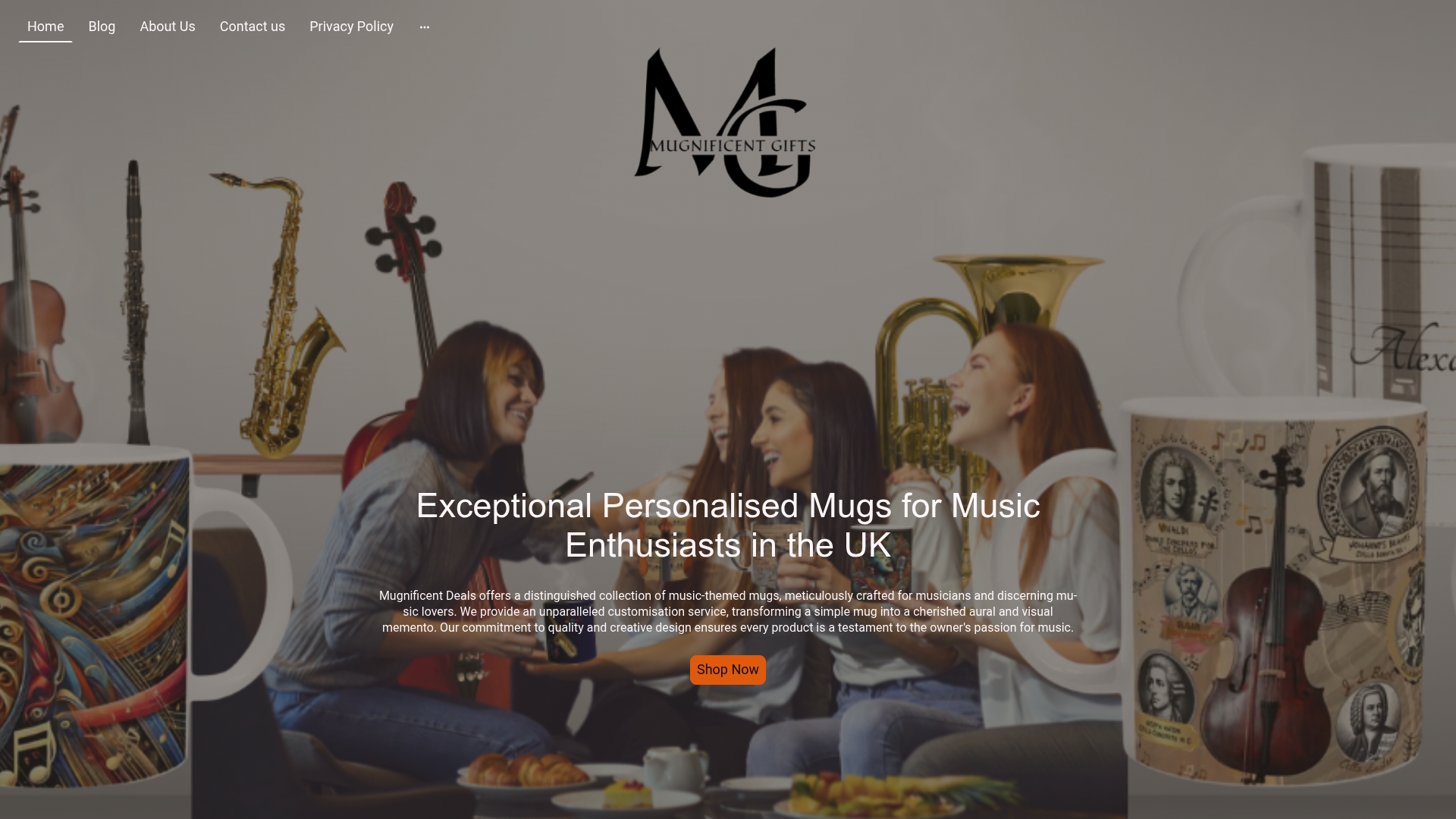
Mugnificentdeals puts design personalisation into practice with every mug it creates. Each piece is built around a specific musical identity, whether that is a violinist's silhouette, a drummer's rhythm, or a wry joke that only a musician would truly appreciate. These are not generic gifts with a name printed on them. They are products where the personalisation is baked into the concept itself. Browse the full range of personalised music mugs to find something that genuinely reflects the musician in your life. For occasions where the gift needs to land perfectly, the best personalised music mugs for gifts collection is a strong place to start.
FAQ
What is design personalisation in simple terms?
Design personalisation is the process by which a system automatically adapts content, visuals, or interfaces to suit an individual user based on their behaviour and context. It differs from customisation, where the user makes those changes manually.
How does personalisation improve user experience?
Combining stated preferences with behavioural data improves relevance and reduces the time users spend searching for what they need. The result is higher engagement and stronger trust in the product.
What is the difference between personalised design and custom design?
Personalised design is driven by the system using data; custom design is driven by the user making deliberate choices. Both improve relevance, but through different mechanisms and for different moments in the user journey.
Can personalisation go too far?
Yes. Over-personalisation creates filter bubbles, repetitive experiences, and a sense of being surveilled. The solution is to build in variety, maintain transparent data practices, and always allow users to override system decisions.
How do small brands apply design personalisation effectively?
Small brands apply personalisation most effectively through identity-led design, creating products that reflect a specific community or worldview rather than relying on algorithmic adaptation. Mugnificentdeals demonstrates this by building every product around the musical identity of its audience.