

Personalisation makes a music-themed gift more relevant, more memorable, and far more likely to be treasured. AI-driven personalisation can lift conversion rates by 15–25%, and UK consumer research shows that 70% of shoppers expect brands to understand their preferences — yet trust remains the deciding factor. When the story behind a gift matters, a personalised music mug from a specialist like Mugnificentdeals is the right call. The psychology of personalised gifting explains why: a name, an instrument, an inside joke — these details turn an object into a keepsake.
Table of Contents
- Why personalisation matters for shoppers and retailers alike
- How personalisation is actually built and delivered
- What should you check before sharing your data with a retailer?
- What actually works when personalising a music-themed mug
- Lead times, pricing and returns: what to expect in the UK
- How to choose the right personalised mug seller: a practical checklist
- Why a music-first maker is the better choice for this gift
- Key takeaways
- Why subtle personalisation is the only kind worth giving
- Mugnificentdeals: music-themed personalised mugs with UK delivery
- Useful sources and further reading
Why personalisation matters for shoppers and retailers alike
The role of personalisation in retail is not simply about showing someone a product they might like. It is about making a shopper feel genuinely seen. For gift buyers, that distinction is everything.
Benefits for shoppers:
- Easier discovery: relevant recommendations cut through noise and surface the right product faster.
- More meaningful gifts: a mug with a recipient's instrument and a lyric they love carries weight that a generic gift cannot.
- Better value perception: personalised items feel considered, which justifies a higher price point.
Benefits for retailers:
- Higher conversion: personalised offers prompted 23% of shoppers to make an unplanned purchase.
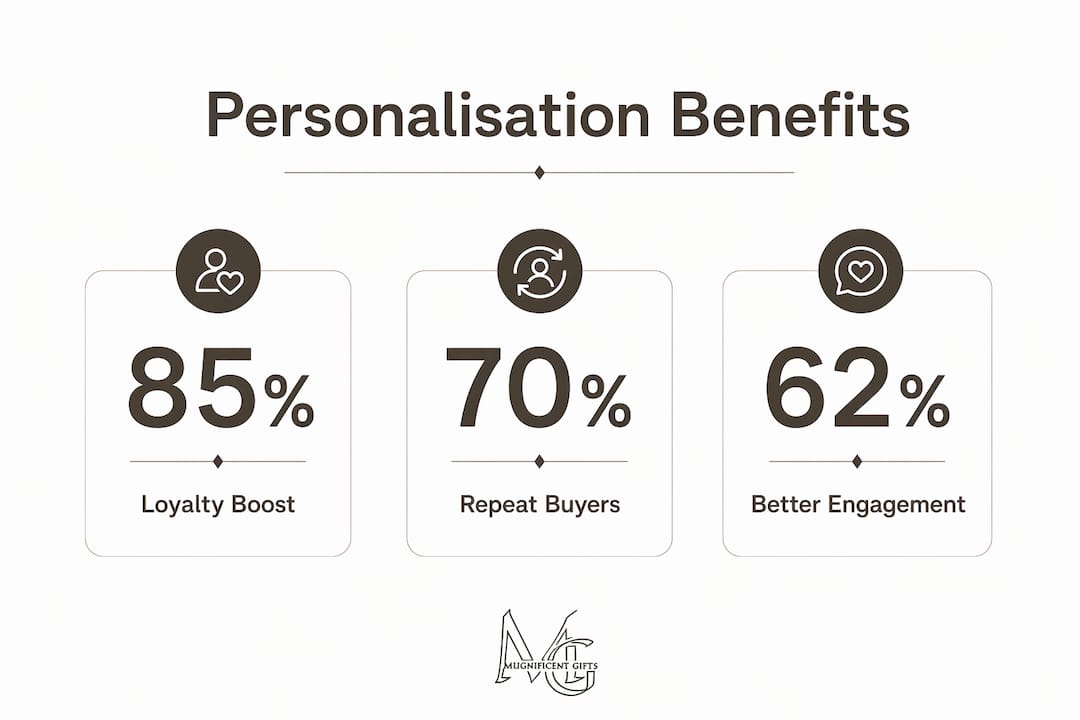
- Stronger loyalty: 85% of loyalty programme members said a personalised offer influenced their spending in the past year.
- Increased average order value through relevant upsells and bundles.
| Benefit | Shopper impact | Retailer impact |
|---|---|---|
| Relevant recommendations | Finds the right gift faster | Higher conversion rate |
| Personalised offers | Feels valued, more likely to buy | Unplanned purchase uplift |
| Loyalty recognition | Stronger emotional connection | Repeat purchase and retention |
"Personalised and contextual — right time, right place, right form — offers and rewards go beyond generic discounts; they shape consumer decisions by delivering meaningful value tailored to individual preferences." — Zarina Stanford, CMO of Bazaarvoice, via Computer Weekly
How personalisation is actually built and delivered
At its core, personalisation works through three mechanisms: consented first-party data, behavioural triggers, and product customisation interfaces. Understanding the flow helps you know what to expect when ordering a personalised mug.
- You browse or search. The site reads your intent — instrument type, gift occasion, price range.
- Recommendations appear. A lightweight algorithm surfaces relevant designs based on your session behaviour.
- You personalise. A customisation tool lets you add a name, choose an instrument graphic, or type a short message.
- You receive a digital proof. A preview image shows exactly what will be printed before you confirm.
- You approve and buy. The order enters production only after proof sign-off.
Behind the scenes, retailers use segmentation rules and, increasingly, lightweight AI to match the right product to the right visitor. Retailers that skip the basics — clear search, accurate stock, a usable customiser — frustrate shoppers even when the AI layer is sophisticated. Good personalisation starts with a site that simply works.
First-party data — what you share directly through purchases, preferences, and opt-ins — is now the most reliable signal retailers have, because shoppers are increasingly protective of their browsing and AI chat histories.
Pro Tip: If a site offers a "save your preferences" or "tell us about yourself" option at checkout, using it tends to produce better recommendations without requiring the site to track your wider browsing behaviour.
What should you check before sharing your data with a retailer?
UK shoppers are privacy-conscious: 43% resist sharing real-time browsing or AI chat data even when they want a personalised experience. Favouring retailers who rely on consented, first-party data is the practical answer.
Before you share personal details or customisation information, look for these trust signals:
- A clear, plain-English privacy notice that explains exactly what data is collected and why.
- Explicit opt-in for marketing communications — not a pre-ticked box.
- A visible proofing policy so you know your personalised design is confirmed before printing.
- Transparent returns and amendment terms for personalised items.
- Real product photos (not just renders) showing finished personalised mugs.
Pro Tip: You can often get a fully personalised experience by sharing only your name and the recipient's instrument preference — you do not need to create an account or enable tracking cookies to get a meaningful result.
What actually works when personalising a music-themed mug
Subtle, story-led personalisation outperforms heavy-handed gimmicks every time. A mug that whispers "this was made for you" lands better than one that shouts it. Design personalisation for music lovers works best when it draws on shared language: the vocabulary of an instrument, a genre, or a musical in-joke only the recipient would catch.
What works well:
- Instrument silhouettes in clean black-and-white line art — timeless and legible at mug scale.
- A recipient's name paired with their instrument ("Sarah's Violin" reads instantly).
- Short lyric snippets or chord references that mean something specific to the recipient.
- Playful text that leans into musician humour ("I don't make mistakes, I improvise").
What to avoid:
- Copyrighted song lyrics printed in full — this creates legal risk and most reputable printers will decline.
- Over-cluttered artwork where three or four design elements compete for attention.
- Very light print colours on white mugs, which fade quickly and read poorly.
- Generic musical notes as the sole design element — they signal effort without personality.
The role of bespoke products in personal expression is to reflect identity, not just interest. A drummer and a classical violinist both love music — but they live in different sonic worlds, and the best personalised gift acknowledges that difference.

Lead times, pricing and returns: what to expect in the UK
Personalised items cost more and take longer than off-the-shelf products. That is not a flaw — it is the nature of bespoke production, and knowing the typical checkpoints helps you plan.
| Stage | Typical UK timeline |
|---|---|
| Order confirmation and proof generation | 1–2 working days |
| Proof review and customer approval | Customer-dependent |
| Print and production | 2–3 working days |
| Dispatch and UK delivery | 2–4 working days |
Pricing by complexity:
- Single name or short text on a standard design: modest uplift over base price.
- Custom instrument graphic with name and message: mid-range, reflecting additional setup.
- Full bespoke artwork or photo integration: highest price tier, longer lead time.
Key points on returns:
- Most UK sellers cannot accept returns on personalised items unless the product is faulty or the proof was not followed.
- Always review your digital proof carefully before approving — check spelling, layout, and colour.
- Personalised post-purchase communications — order updates, dispatch confirmations with your proof image — are a sign of a well-run operation.
How to choose the right personalised mug seller: a practical checklist
Prioritise trust signals, a clear proof process, and genuine customisation controls. A seller who cannot show you a proof before printing is a seller worth avoiding.
Questions to ask before buying:
- Do they send a digital proof for approval before printing?
- What is the stated lead time, and is it clearly displayed at checkout?
- Is the returns policy for personalised items written in plain English?
- Do they explain how your personal data is used?
- Are there real photos of finished personalised mugs — not just product renders?
Red flags:
- No mention of a proofing step anywhere on the site.
- Pricing that only appears at the final checkout stage.
- Lead times listed as a vague range with no upper limit.
- Product images that look digitally composited rather than photographed.
- No contact method beyond a generic form.
A music-specialist seller adds one more layer of reassurance: they understand the difference between a cello and a double bass, and that knowledge shows up in the design options they offer.
Why a music-first maker is the better choice for this gift
Choose a music-focused seller for authenticity, better design fit, and a buying experience that speaks the recipient's language. Generic gift platforms carry thousands of categories; a niche maker has thought deeply about one.
Mugnificentdeals brings several strengths that matter specifically for music gift buyers:
- Music-first design library: instrument-specific artwork rather than generic musical notes.
- Proofing process built into the order flow, so what you see is what gets printed.
- UK dispatch with clear lead times communicated at the point of purchase.
- Tone that matches the recipient — clever and warm, never loud or sentimental.
- Customisation options covering names, instruments, short messages, and musician humour.
The core trade-off is worth stating plainly: personalisation means more patience and more attention to your proof. The result, though, is a gift that feels genuinely special rather than convenient.
Key takeaways
Personalisation increases a gift's relevance and memorability — and for music lovers, a specialist maker who speaks their language makes all the difference.
| Point | Details |
|---|---|
| Personalisation lifts conversion and loyalty | 85% of loyalty members were influenced by a personalised offer; 23% of shoppers made an unplanned purchase from one. |
| First-party data is the trust-safe route | Share only what you choose directly — name, instrument, occasion — rather than enabling broad tracking. |
| Proof before print is non-negotiable | Always approve a digital proof; personalised items cannot usually be returned unless faulty. |
| Budget for slightly more time and cost | Bespoke production adds 3–5 working days and a modest price premium over standard items. |
| Mugnificentdeals for music gifts | Music-first designs, a clear proofing step, and UK dispatch make it the practical choice for music-themed personalised mugs. |
Why subtle personalisation is the only kind worth giving
The conventional wisdom on personalised gifts tends to focus on the "wow" moment — the big reveal, the recipient's name in large letters, the dramatic gesture. That framing misses what actually makes a personalised gift land.
The gifts that get kept are the ones that demonstrate understanding, not just effort. A mug that references the specific instrument someone plays, or carries a joke only a musician would get, signals that the giver paid attention. That is a different thing entirely from simply printing a name on a product.
At Mugnificentdeals, the design philosophy reflects this. The line-art instrument drawings are deliberately understated. The humour is knowing rather than broad. The personalisation options are chosen to add meaning, not volume. A band member's mug with their instrument and a dry caption about rehearsals says more than a photo mug ever could. A music teacher gift with a clever turn of phrase about patience and scales will sit on a desk for years.
The practical lesson for buyers: resist the temptation to add every customisation option available. One well-chosen detail — a name, an instrument, a single line of text — almost always outperforms a cluttered design. Less, done thoughtfully, is the point.
Mugnificentdeals: music-themed personalised mugs with UK delivery
For music gift buyers who want something genuinely considered rather than merely customised, Mugnificentdeals offers a focused alternative to generic gift platforms. The entire range is built around musicians and music lovers — not as a subcategory, but as the whole point.
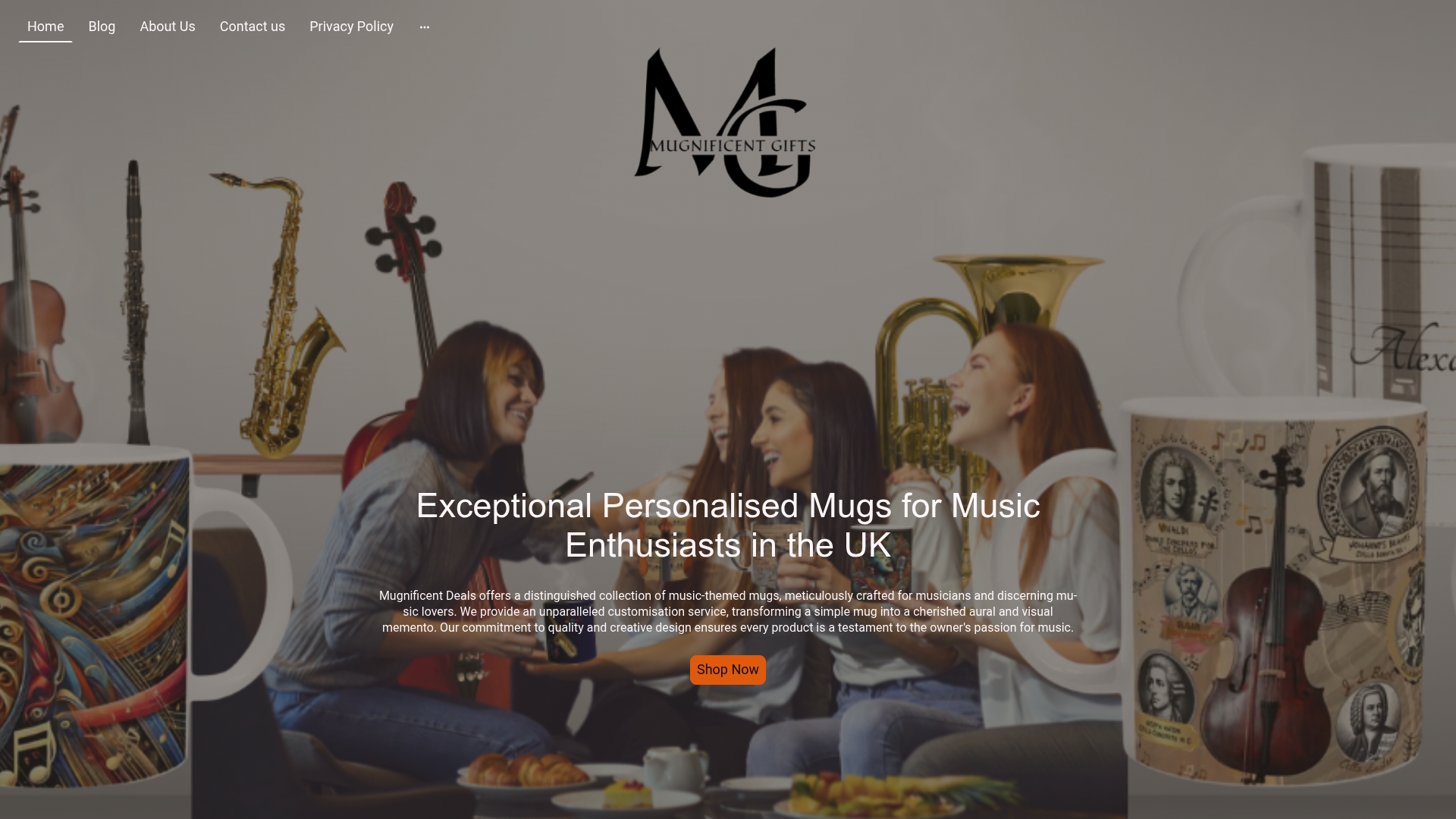
Every order includes a digital proof before printing, clear UK lead times, and design options that go well beyond a name on a plain background. Whether you are buying for a guitarist, a choir singer, or someone who treats every kitchen moment as a performance, the personalised music mugs collection has designs that speak directly to them. For gift buyers who want a curated shortlist, the best personalised music mugs for gifts collection is the fastest route to the right choice. Browse, personalise, approve your proof, and let Mugnificentdeals handle the rest.
Useful sources and further reading
The research and industry data cited in this article come from the following sources. Reports marked with (data-heavy) contain detailed survey findings; those marked (practical read) are more accessible summaries.
- IMRG: The type of personalisation customers want in 2025 (data-heavy)
- Retail Times: UK shoppers resist AI and data sharing despite wanting personalisation (practical read)
- Computer Weekly: AI-driven personalisation appealing to UK shoppers (practical read)
- Rococo Digital: UK eCommerce Statistics (data-heavy)
- Zeta Global: The Fastest Way to Lose Consumers (data-heavy)
- dunnhumby: How to Keep Hold of Your Customers (data-heavy)
- eCommerce News UK: UK shoppers frustrated by AI retail personalisation (practical read)