

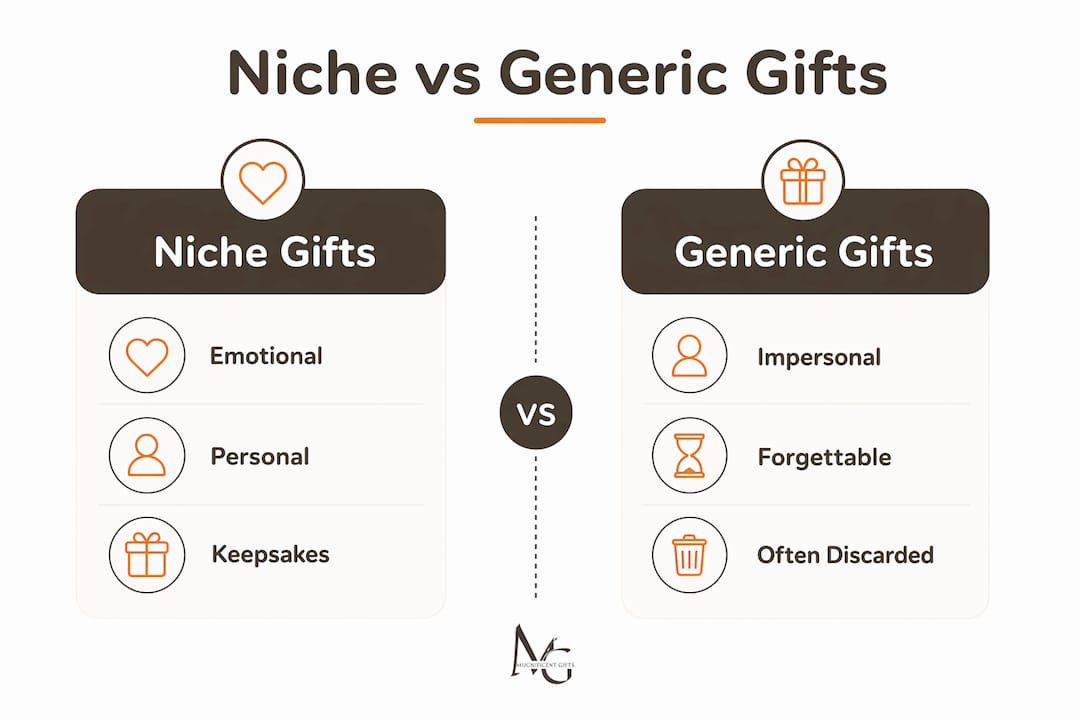
Niche gifting is defined as the practice of selecting presents that reflect a recipient's specific identity, passions, or habits rather than defaulting to broadly appealing, mass-produced items. The case for choosing niche gifts over generic ones is not sentimental preference. It is backed by measurable outcomes: approximately 85% of generic gifts are discarded, regifted, or donated, while personalised and niche gifts are kept as long-term keepsakes. That single figure tells you everything about the difference in perceived value. The personalised gift market reached $40.16 billion globally in 2026, growing at 8.5–10.2% annually. That growth reflects a genuine shift in what gift shoppers want to give and what recipients want to receive.
Why choose niche gifts over generic ones?
The core advantage of niche gifting is emotional precision. A generic gift says "I thought of you." A niche gift says "I know you." That distinction matters far more than price.
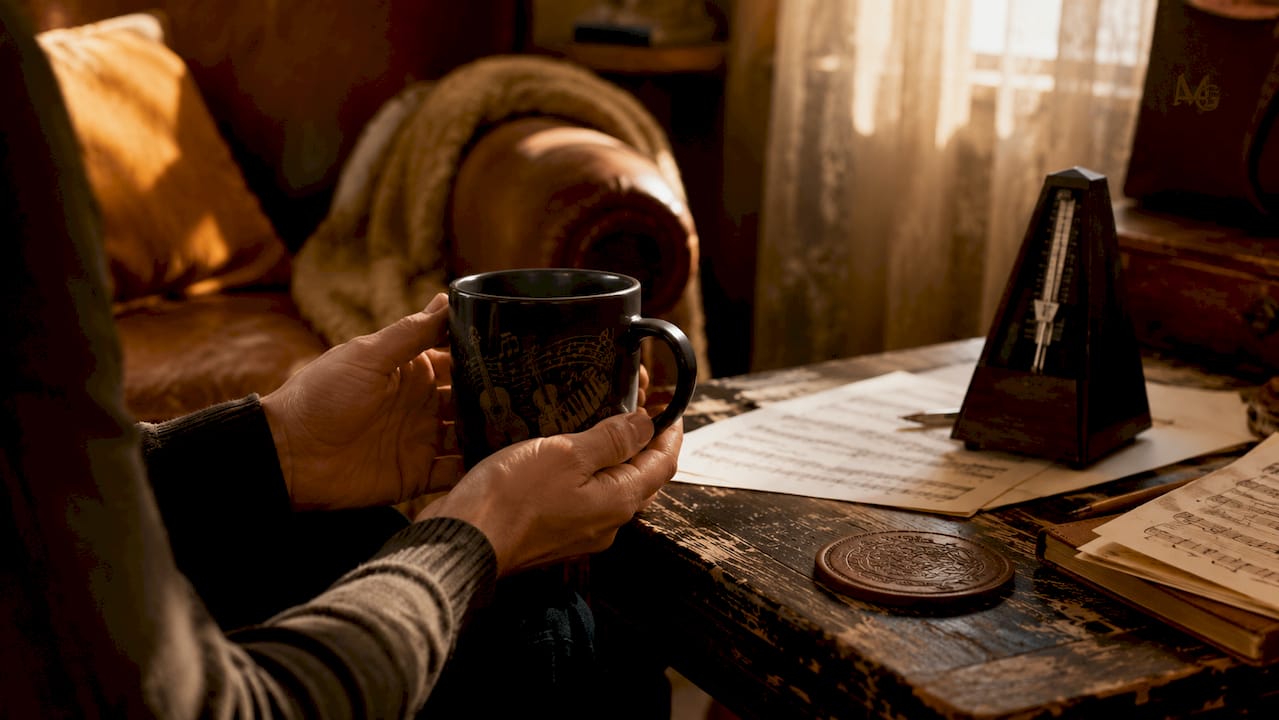
Generic gifts fail because they are designed to offend no one, which means they resonate with no one in particular. A candle, a box of chocolates, or a department store voucher carries no story about the person receiving it. The recipient senses this instantly. The gift feels transactional rather than thoughtful, and that feeling is what drives the high discard rate.
Niche gifts work in the opposite direction. They are chosen because they fit one specific person's world. For a musician, that might mean a mug printed with their instrument, a joke only fellow players would understand, or a design that captures the particular absurdity of practising scales at 7 in the morning. The gift becomes a small mirror held up to the recipient's identity.
The importance of niche gifts also shows up in how they age. Generic gifts are forgotten within weeks. Niche gifts sit on desks, hang on walls, and get used daily because they carry personal meaning every time the recipient encounters them.
What psychological factors make niche gifts more meaningful?
The psychology behind personalised gifting is well established. Personalised gifts trigger oxytocin release because they signal cognitive effort by the giver. That effort communicates care more powerfully than the monetary value of the gift itself. The recipient does not just receive an object. They receive evidence that someone paid attention to who they are.
This is why niche gifts outperform luxury purchases in emotional impact. A high-end generic item signals spending. A thoughtfully chosen niche item signals understanding. Recipients consistently rate the latter as more meaningful, regardless of price.
Three psychological mechanisms explain this:
- Cognitive effort signalling. Choosing a niche gift requires research, thought, and knowledge of the recipient. That effort is visible in the result, and the recipient registers it as a form of care.
- Distinctiveness and storytelling. A niche gift carries a narrative. A mug that reads "I improvise, not mistakes" tells a story about the musician who owns it. That story creates a memory attached to the gift.
- Perceived long-term utility. Recipients of niche gifts see them as useful over time, not just on the day of receipt. This is why 73% of gift givers accept a 2.1x price premium for personalised or niche items. The emotional and practical value justifies the cost.
"The most meaningful gifts are not the most expensive ones. They are the ones that show the giver truly sees the recipient."
Understanding why custom gifts feel special comes down to this: the gift becomes a symbol of the relationship, not just a transaction.
How does curation reduce decision fatigue for gift shoppers?
Choosing a gift on a large general marketplace is an exercise in frustration. Thousands of results, sponsored listings, and irrelevant suggestions make confident decision-making nearly impossible. Niche retailers replace endless options with curation, presenting only items that fit a specific emotional or thematic lane. The result is faster, more confident purchasing.
For gift shoppers buying for musicians, this matters enormously. A curated music gift shop removes the noise. Every item on the page speaks to the same audience. The shopper does not need to filter out irrelevant results because the curation has already done that work.
The process of finding the right niche gift through a curated shop typically follows this pattern:
- Identify the recipient's specific musical world. Are they a classical violinist, a jazz drummer, or someone who sings in the shower? The more specific the answer, the better the gift.
- Browse within a themed collection. A curated shop organises gifts by instrument, personality type, or occasion, making comparison natural rather than exhausting.
- Look for items with built-in storytelling. The best niche gifts carry a message, a joke, or a design that the recipient will immediately recognise as their own.
- Check for personalisation options. Adding a name, instrument, or inside joke elevates a good niche gift into an exceptional one.
- Order early. Artisan and personalised items require lead time. Rushing a niche gift defeats its purpose.
Pro Tip: If you are unsure which design to choose, pick the one that makes you think "they would laugh at this" rather than "they might like this." Specific beats safe every time.
Gifts that match musical personalities are far easier to find when the shop itself is built around that audience.
Why niche gifts matter especially for music lovers
Musicians and music lovers are one of the most rewarding groups to buy for, precisely because their identity is so closely tied to their craft. The challenge is that most generic "music gifts" miss the mark entirely. A treble clef keyring or a generic "music lover" tote bag signals effort without demonstrating knowledge.
The better approach is to match gifts to the recipient's musical habits rather than their interests in the abstract. A violinist who practises daily will appreciate something that fits into their routine. A drummer who jokes about their neighbours' patience will laugh at a mug that acknowledges it. The gift lands because it reflects lived experience, not just a general category.
Practical niche gift ideas for music lovers include:
- Instrument-specific designs. A mug, print, or card featuring the recipient's actual instrument, not a generic musical note, shows genuine attention.
- Humour rooted in musical life. Jokes about sight-reading, improvisation, or the eternal struggle of tuning resonate with musicians in a way that generic humour never does.
- Personalised items with names or dedications. Adding the recipient's name to a music-themed design transforms a product into a keepsake.
- Practical gifts with personality. A beautifully designed mug is used every day. That daily use keeps the gift visible and the connection alive.
Pro Tip: For friends and family buying for a musician, the safest and most appreciated niche gift is one that acknowledges the specific instrument. A guitarist and a cellist do not share the same musical world, and the gift should reflect that difference.
Unique music gift ideas for every type of musician exist when you know where to look. The key is specificity over generality.
Effective niche gifting requires planning, particularly when personalisation or artisan production is involved. Ordering two to three weeks ahead of the occasion removes the risk of a rushed, less considered alternative.
Niche gifts versus generic gifts: what the evidence shows
The difference between niche and generic gifts is not just emotional. It is practical, economic, and increasingly environmental.
| Factor | Niche gifts | Generic gifts |
|---|---|---|
| Retention rate | High. Kept as keepsakes and used regularly | Low. Frequently discarded, regifted, or donated |
| Emotional impact | Strong. Signals knowledge and care | Weak. Perceived as transactional |
| Production model | Small-batch or artisan-led, reducing waste | Mass-produced, often with excess stock |
| Price perception | 2.1x premium accepted by 73% of buyers | Price sensitivity higher due to low perceived value |
| Environmental footprint | Lower through reduced overproduction | Higher through volume-driven manufacturing |
Small-batch niche gifts carry natural scarcity, which elevates perceived value and reduces the risk of the recipient already owning the same item. That scarcity is not manufactured. It is a natural consequence of thoughtful, limited production.
Gifting trends are shifting toward story-rich presents that celebrate relationships and preserve memories. This reflects a broader cultural desire for connection over consumption. Niche gifts sit at the centre of that shift.
Key takeaways
Niche gifts outperform generic ones because they signal genuine knowledge of the recipient, triggering stronger emotional bonds and achieving far higher retention rates than mass-produced alternatives.
| Point | Details |
|---|---|
| Generic gifts are discarded | Approximately 85% of generic gifts are thrown away, regifted, or donated rather than kept. |
| Niche gifts trigger oxytocin | The cognitive effort behind a personalised gift signals care, strengthening the emotional bond between giver and recipient. |
| Curation reduces decision fatigue | Themed niche shops help shoppers find the right gift faster by removing irrelevant options from the search. |
| Specificity beats generality for musicians | Gifts tied to a musician's specific instrument or habits land far better than generic music-themed items. |
| Plan ahead for personalised orders | Artisan and customised gifts require lead time, so ordering early avoids rushed compromises. |
Why I think most people still underestimate niche gifting
I have watched the gifting conversation shift considerably over the past few years. Shoppers talk about wanting to give something meaningful, yet when the moment arrives, many default to a gift card or a safe, forgettable item from a large marketplace. The intention is there. The follow-through is not.
The reason, I think, is that niche gifting feels like more work. And in one sense, it is. You have to know the person. You have to find the right shop. You have to order early enough for personalisation. But that effort is precisely the point. The recipient feels it. They may not articulate it, but they know the difference between a gift chosen for them and a gift chosen for anyone.
For music lovers in particular, the gap between a generic present and a genuinely niche one is enormous. A mug that references their specific instrument, carries a joke only a musician would understand, or includes their name alongside a design that reflects their craft is not just a mug. It is a statement that the giver paid attention. That is rare, and recipients remember it.
The psychology of personalised gifting confirms what most of us already sense: the gifts we remember longest are the ones that showed us we were truly seen. Niche gifting is simply the practice of making that happen deliberately.
My advice is straightforward. Next time you are buying for a musician, resist the safe option. Find the gift that makes you think "this is so them." That instinct is worth following.
— Lasse
Mugnificentdeals: personalised music mugs worth giving
Mugnificentdeals builds music-themed personalised mugs that embody everything discussed in this article. Each design is specific, considered, and rooted in the real experience of musical life, from instrument drawings to humour that only musicians will fully appreciate.
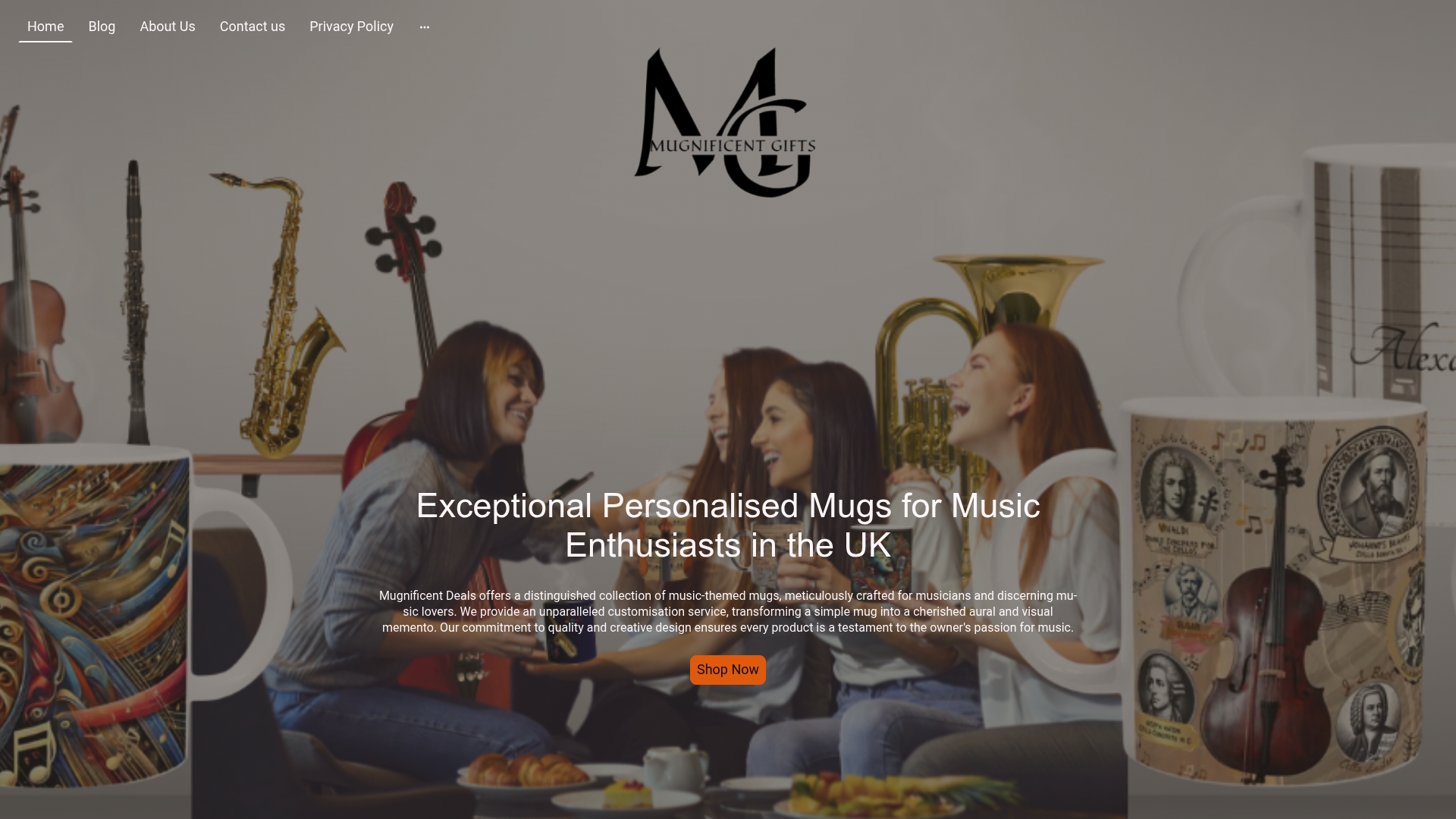
The personalised music mugs collection covers a wide range of instruments and personalities, with options to add names and personal touches that turn a great design into a genuinely memorable gift. If you are looking for best personalised music mugs for an upcoming occasion, the range offers something specific for every type of musician. Quality is consistent, and delivery is reliable, so you can order with confidence and give with pride.
FAQ
What is niche gifting?
Niche gifting is the practice of choosing presents that reflect a recipient's specific interests, habits, or identity rather than selecting broadly appealing, mass-produced items. The result is a gift that feels personal and considered rather than generic.
Why do niche gifts have higher retention rates?
Niche gifts are kept because they carry personal meaning. Approximately 85% of generic gifts are discarded or regifted, while personalised and niche items are treated as keepsakes due to their emotional relevance to the recipient.
Are niche gifts worth the higher price?
Yes. Research shows that 73% of gift givers willingly accept a 2.1x price premium for personalised or niche gifts because the emotional value and lasting utility outweigh the additional cost.
How do I choose a niche gift for a musician?
Match the gift to the recipient's specific instrument and musical habits rather than general music interest. A gift that references their actual instrument or a joke rooted in their daily musical life will resonate far more than a generic music-themed present.
When should I order a personalised niche gift?
Order at least two to three weeks before the occasion. Artisan and personalised items require production and customisation lead times, and ordering early ensures the gift arrives on time without compromising quality.