

What are personal branding gifts, and how do they differ from generic merchandise?
Personal branding gifts are purposefully selected items that communicate an individual's unique identity, values, and personality, going well beyond a logo printed on a mug or tote bag. Where generic branded merchandise broadcasts a company name, a personal branding gift reflects the recipient's world: their role, their interests, a shared milestone, or an inside reference that signals genuine attention. Think of it as the difference between off-the-rack and bespoke. The more an item reflects the person receiving it, the more intentional it feels.
The distinction matters because gifts carry an implicit message. A generic item says "we needed to send something." A thoughtful, personalised one says "we see you." That gap in perception directly affects brand trust and loyalty.
Gifting typically falls across four tiers:
- Tier 1 (basic branding): Logo-imprinted items such as mugs, notebooks, or tote bags. Useful for broad awareness, but not personal.
- Tier 2 (targeted selection): The item changes by recipient group. Sales receives travel gear; executives receive something more refined.
- Tier 3 (individualised touch): Names, milestone dates, or team-specific language are added. A notebook with a person's name lands very differently than a standard branded unit.
- Tier 4 (bespoke experience): Custom kitting, recipient choice portals, or campaign-tied gifts built around a very specific audience.
Branded merchandise excels at visibility and scale. Personal branding gifts excel when relationship depth matters more than exposure. The most effective approach often blends both: a premium item personalised with the recipient's name and packaged with brand-aligned accents.
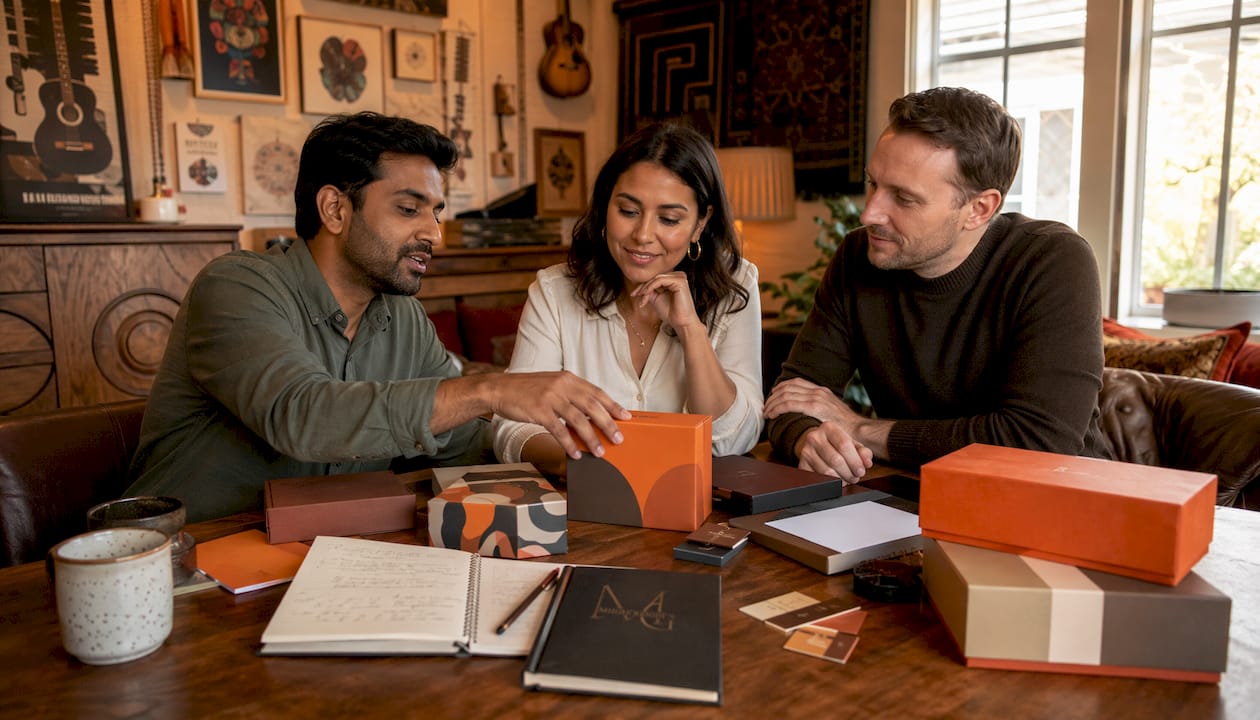
How the 5 P's of personal branding shape your gifting choices
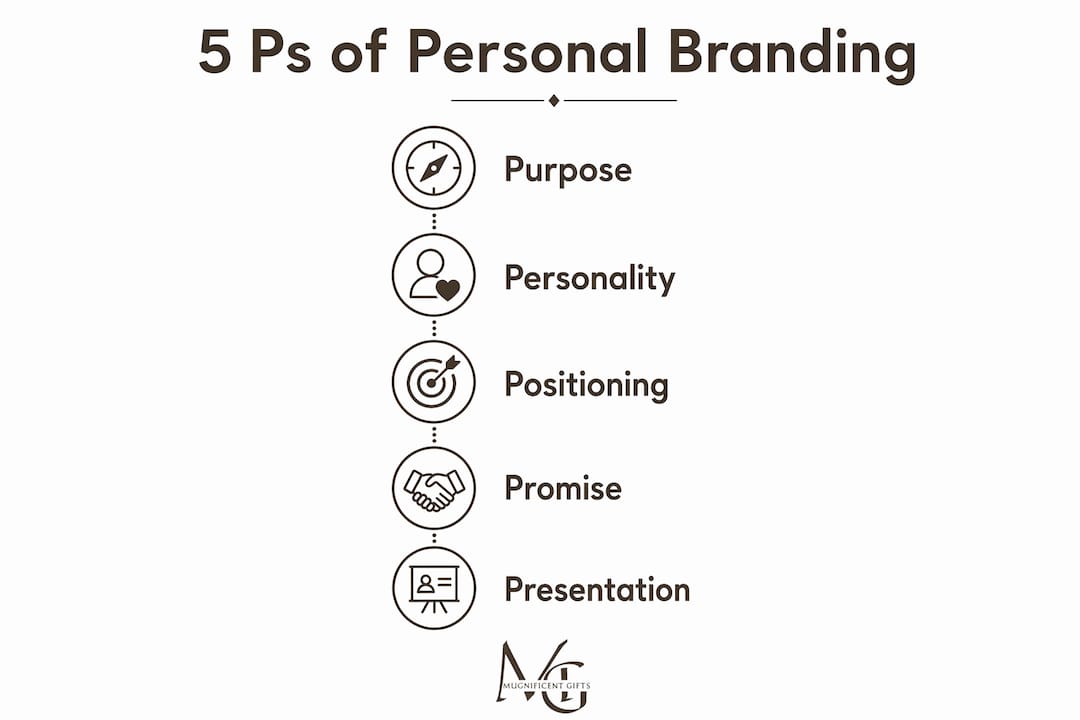
The 5 P's framework gives personal branding its backbone, and each pillar directly informs how gifts should be chosen and presented.
- Personal: Your brand is yours alone. Gifts must reflect your authentic identity, not a borrowed corporate aesthetic. A musician gifting a fellow creative should choose something that whispers their world, not a generic pen set.
- Pointed: Focus is power. A scattered gift selection dilutes your message. Choose items that speak clearly to what you stand for and to whom you are speaking.
- Purposeful: Every gift should serve a deliberate goal, whether that is welcoming a new client, celebrating a milestone, or reinforcing a long-term relationship. Purposeless gifting is just spending.
- Prioritised: Not every relationship warrants a Tier 4 bespoke gift. Prioritise your gifting effort where the relationship stakes are highest, and match the investment accordingly.
- Profitable: Profitability here is broad. The return on a well-chosen gift might be a renewed contract, a warm referral, or simply a client who feels genuinely valued and stays.
When gifts align with all five pillars, they stop being gestures and start functioning as brand evidence.
Why expert voices agree: thoughtful gifting builds brands, generic gifting erodes them
The sharpest insight from brand strategist Kalyn at Stylisht Yours is deceptively simple: the best gifts earn a permanent place in someone's daily life. When someone uses your gift every day, your brand becomes part of their daily rhythm. When a friend asks where they got it, your brand earns a warm, organic referral. That is not sentiment; that is measurable return.
"Your gift is essentially a silent brand ambassador. Cheap or rushed gifts say 'you're an afterthought.' Generic gifts say 'I don't really know you.' Thoughtful, unique gifts say 'I see you. I value you. I practise what I preach.'" — Sparkle Hustle Grow
The risk of generic gifting is subtler than most realise. When a brand that claims to value quality and care sends something rushed and impersonal, recipients feel the disconnect even if they cannot articulate why. It quietly undermines the very promises a brand makes.
Creative business expert Katie Chamberlin points to packaging and copy as the often-overlooked amplifiers. Branded ribbons, wax seals, and on-brand thank-you notes allow even modest gifts to express sophistication economically. The full sensory experience, including card weight, handwriting style, and ribbon texture, must be congruent with brand tone, particularly for service providers whose brand rests on perceived care and craft.
Pro Tip: Before selecting any gift, ask: "Could a stranger hold this and understand something true about my brand?" If the answer is no, keep looking.
Best practices for selecting and presenting personal branding gifts
Choosing the right gift starts with intent, not a catalogue. The framework is straightforward: define the moment, identify the recipient group, decide what success looks like, then select and personalise accordingly.
- Start with the objective. Appreciation, onboarding, milestone recognition, and client retention all call for different products and personalisation levels.
- Segment your recipients. A gift that works for a top client feels hollow for a new hire, and vice versa. Segment by role, relationship stage, or shared interest.
- Prioritise utility and durability. Items that fit into daily life, drinkware, quality notebooks, travel accessories, earn repeated use and repeated brand exposure. Novelty items get discarded.
- Apply personalisation at the lightest level that still feels intentional. A name, a relevant message, or a milestone date often carries more emotional weight than a larger logo.
- Let packaging do the heavy lifting. Custom packaging details such as branded ribbons, wax seals, and handwritten notes amplify perceived value without inflating unit cost.
- Avoid brand misalignment. A sustainability-focused brand sending plastic novelty items creates unconscious distrust. Every element of the gift must be congruent with stated values.
- Budget for the full picture. Unit cost is only part of the equation. Setup, packaging, shipping, and minimum order thresholds all affect the real cost of a gifting campaign.
For guidance on corporate gift selection that balances personalisation with practicality, the principles remain consistent: quality over volume, relevance over popularity.
Pro Tip: Under-gifting at a milestone moment can do more damage than no gift at all. A five-year anniversary gift that looks like conference swag signals the relationship was never truly valued.
How Mugnificentdeals gets personal branding gifts right
Mugnificentdeals is a useful case study precisely because it operates where personal branding gifts are most powerful: at the intersection of niche identity, emotional resonance, and everyday utility. The brand targets musicians and music lovers with personalised music mugs that incorporate names, instruments, and inside jokes. Nothing about that feels mass-produced, because it is not.
The lessons for any personal branding gift strategy are clear:
- Niche targeting sharpens emotional impact. A mug featuring a violin drawing and the owner's name says "this was made for you" in a way a generic branded mug never can.
- Humour and personality are brand signals. Mugnificentdeals uses clever, lightly self-aware copy ("I improvise, not mistakes") that earns a smile rather than demanding attention. Tone is branding.
- Everyday utility multiplies brand exposure. A mug used every morning is a daily brand touchpoint. The psychology of personalised gifting confirms that items woven into daily routine carry disproportionate emotional weight.
- Packaging and aesthetic coherence matter. Mugnificentdeals' warm, earthy visual identity carries through to the gift experience, reinforcing the brand's artisanal character at every touchpoint.
- The gift becomes a referral tool. When a musician displays a personalised mug, other musicians notice. That organic visibility is the "daily rhythm" ROI that brand strategists describe.
Any brand can apply these principles: choose a niche, personalise meaningfully, match tone to identity, and select items that earn a permanent place in the recipient's day.
Discover Mugnificentdeals' personalised gift range
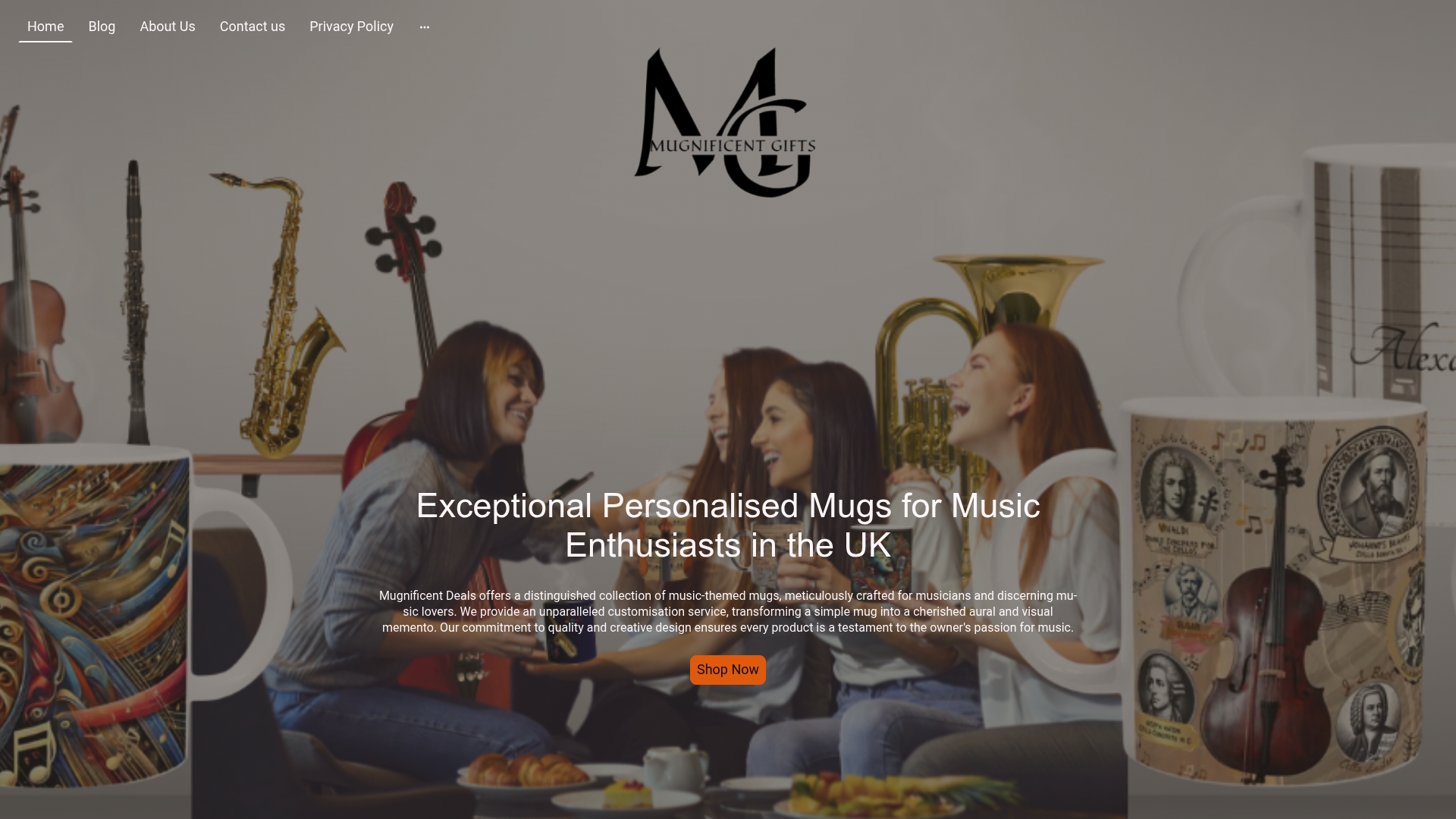
Mugnificentdeals brings personal branding gifts to life through music-themed, personalised mugs that feel genuinely considered rather than commercially convenient. Whether you are gifting a violinist, a drummer, or someone who simply lives for music, the best personalised music mugs from Mugnificentdeals offer a gift that speaks their language from the first glance. Browse the full collection at Mugnificentdeals and find a gift that does what the best personal branding gifts always do: make the recipient feel genuinely seen.
Key takeaways
Personal branding gifts work because they reflect the recipient's identity and the giver's values simultaneously, turning a simple object into lasting brand evidence.
| Point | Details |
|---|---|
| Beyond logo merchandise | Personal branding gifts use names, milestones, and shared references to create emotional connection, not just brand visibility. |
| Four gifting tiers | Match personalisation depth to the occasion: broad items for events, bespoke gifts for VIP clients and key milestones. |
| The 5 P's as a filter | Every gift should be Personal, Pointed, Purposeful, Prioritised, and ultimately Profitable in the broadest sense. |
| Packaging amplifies value | Branded ribbons, wax seals, and on-brand notes allow modest gifts to express brand sophistication without large cost increases. |
| Daily utility drives ROI | Gifts that earn everyday use become organic referral tools, making consistent brand exposure the true measure of gifting success. |