
A clever gift is defined by how well it fits the recipient's life, not by how surprising it is. Most gift buyers focus on the element of surprise, yet research shows that 60% of gift purchases are driven by surprise potential, despite evidence that usefulness yields far better long-term satisfaction. The real measure of a thoughtful present is whether it gets used, remembered, and appreciated weeks after the wrapping comes off. This guide draws on gift psychology insights to help you choose meaningful gift choices for musicians, friends, and family members who value creativity, humour, and personal relevance.
What makes a clever gift: usefulness and emotional connection
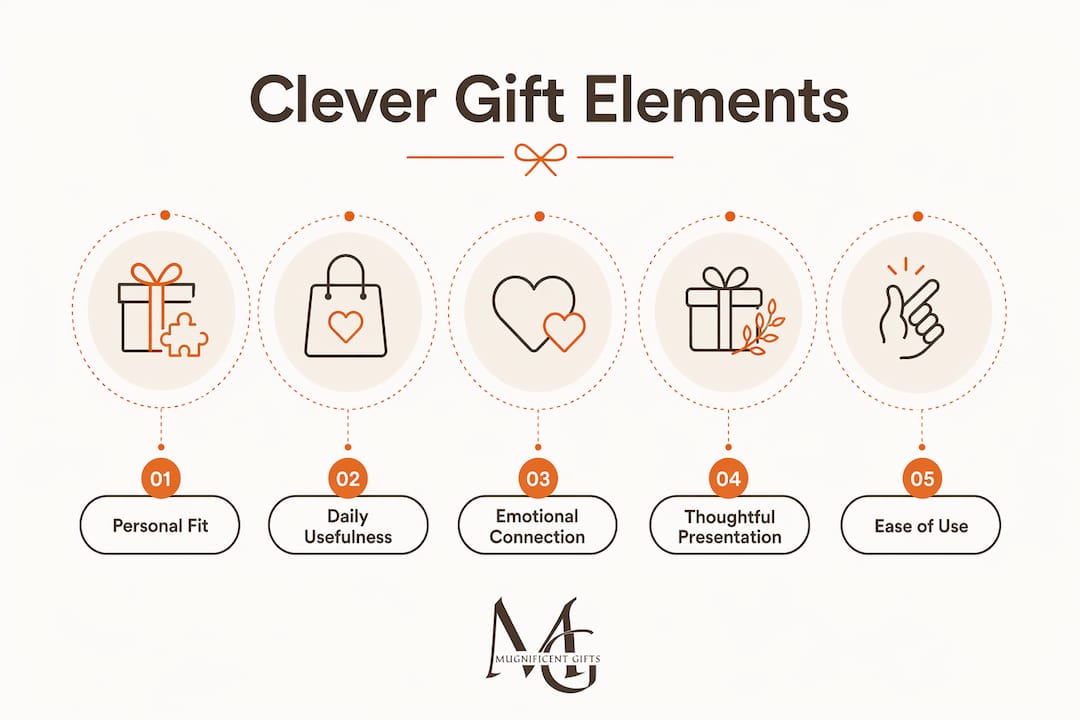
A clever gift solves a problem the recipient has not yet solved for themselves. Gifts tied to daily needs become recurring positive reminders of the giver, while one-time novelty items fade quickly. That compounding effect is what separates a truly thoughtful present from a well-intentioned but forgettable one.
Usefulness alone is not enough. The gift also needs an emotional thread connecting it to the recipient's identity or shared history. A mug printed with a violinist's instrument is useful every morning. The same mug with the recipient's name and a private joke about their practice habits becomes a small, daily expression of being known. That emotional layer is what turns a practical object into a meaningful gift choice.

Research confirms that most givers mistakenly optimise for the initial unwrapping reaction. Recipients, however, value gifts that provide compounding utility over time. The wow moment lasts seconds. The right gift lasts months.
Consider what gift psychology calls the "daily snag" principle: the best gifts fill a gap the recipient wants filled but would not prioritise buying for themselves. A drummer who always forgets their coffee goes cold during rehearsal benefits more from a quality insulated mug than from a novelty drumstick keyring. The former solves a real, repeated problem. The latter earns a polite smile and a drawer.
Here is what separates gifts that impress from gifts that disappoint:
- Repeated use: The gift fits naturally into an existing daily routine without requiring new habits.
- Personal fit: It reflects something specific the giver noticed about the recipient, not a generic category assumption.
- Emotional resonance: It connects to a shared memory, an inside joke, or a known passion.
- Low friction: It requires no setup, installation, or extra storage.
- Lasting relevance: Its value does not diminish after the first use.
Pro Tip: Think about what the recipient complains about or reaches for repeatedly. The answer to "what would make their day slightly easier?" is almost always a better gift than anything on a bestseller list.
How do you find out what someone actually wants?
Observation is the most underused gift-selection tool available. Shifting from instinct to observation significantly reduces gift-giving anxiety and improves how well the gift lands. The anxiety formula in gift psychology is straightforward: anxiety rises when motivation is high but confidence in the right choice is low. Observation builds that confidence directly.
The process does not require detective work. It requires paying attention over a few weeks. Here is a practical framework:
- Notice repeated behaviours. Does the recipient always have a cold cup of tea on their piano? Do they mention the same frustration twice? Repeated patterns reveal genuine needs.
- Listen for "I should really get one of those" moments. When someone says this and then does not act on it, they have identified a gap they want filled but have not prioritised.
- Check their wishlist. Wishlists eliminate guesswork and reduce giver anxiety by aligning the gift with confirmed preferences. Using a wishlist does not make a gift less personal. It makes it more likely to succeed.
- Ask a mutual friend. A second perspective often surfaces details the recipient would never mention directly.
- Avoid projecting your own preferences. The gift is for them, not a reflection of what you would enjoy receiving.
The most common mistake is overcomplicating the selection. The best gifts match a person, product, and moment. Cleverness is measured by fit, not by how unusual the item is. A gift that requires the recipient to change their routine, learn new software, or find extra shelf space is a burden dressed as a present.
Pro Tip: Set a reminder two weeks before a birthday to start observing. One genuine observation beats a month of browsing gift guides.
Balancing creativity, personalisation, and humour for music lovers
Music lovers are an ideal audience for creative gift suggestions because their passion is specific, visible, and deeply personal. The challenge is avoiding the generic. A gift labelled "for music lovers" that could apply to anyone who has ever owned a pair of headphones is not a personalised gift option. It is a category assumption.
The most effective creative gifts for musicians combine three elements: a nod to their specific instrument or genre, a personal detail that shows genuine attention, and a touch of humour that earns a smile rather than demanding a laugh. Humour and creativity amplify emotional impact but should never interfere with the gift's ease of use or personal fit.
Mugnificentdeals builds exactly this kind of gift. A mug featuring a hand-drawn cello with the recipient's name and a line like "I improvise, not mistakes" works on three levels simultaneously: it is practical, it is personal, and it is funny in a way that only a cellist would fully appreciate. That specificity is what makes it a music-themed personalised gift rather than a generic novelty.
When choosing creative gifts for music-loving friends or family, keep these principles in mind:
- Instrument specificity matters. A gift designed for "musicians" feels less personal than one designed for a guitarist or a pianist.
- Humour should be relatable, not broad. Inside jokes and niche references land harder than universal puns.
- Personalisation beats decoration. A name, a date, or a specific lyric transforms an object into a keepsake.
- Utility anchors the creativity. A funny mug gets used daily. A funny ornament gets stored in january.
For deeper guidance on matching gifts to musical personalities, the instrument the recipient plays is the single most useful starting point. A drummer's humour differs from a classical violinist's. The gift should reflect that difference.
Art-based gifts follow a similar logic. Art as a meaningful gift works because it connects to identity and emotion rather than function alone. The best creative gifts borrow from both worlds: they are useful and they carry meaning.
Does gift presentation really change how a gift is received?
Presentation shapes perception before the recipient even sees the object inside. A note explaining why the gift was chosen often matters more than the gift itself. That single sentence, "I noticed you always forget your coffee goes cold during rehearsal, so I thought this might help," does more work than any amount of elaborate wrapping.
Simple, considered wrapping signals care without creating pressure. Complicated unwrapping, with layers of tape, nested boxes, and tissue paper, can make the recipient feel observed and anxious rather than delighted. The goal is comfort, not theatre.
Frictionless presentation mirrors frictionless gifting. A gift that arrives clearly, opens easily, and comes with a short, warm note is immediately associated with positive feelings. That association sticks. It colours every subsequent use of the gift.
The note does not need to be long. Three sentences work perfectly: what you noticed, why you chose this, and what you hope it brings them. That structure turns a purchase into a story. Stories are what people remember.
Pro Tip: Write the note before you wrap the gift, not after. When the object is in front of you, the reason you chose it is clearest. That clarity comes through in the writing.
Key takeaways
A clever gift earns lasting appreciation by combining personal fit, daily usefulness, and thoughtful presentation rather than relying on surprise alone.
| Point | Details |
|---|---|
| Usefulness beats surprise | Gifts used daily create compounding value; one-time novelty items fade within weeks. |
| Observation reduces anxiety | Noticing repeated behaviours and preferences builds gift confidence and improves success. |
| Personalisation beats decoration | Specific details like a name, instrument, or inside joke transform an object into a keepsake. |
| Presentation shapes perception | A short note explaining your choice often matters more than the gift object itself. |
| Humour enhances, not replaces | Clever humour amplifies emotional impact but must never compromise ease of use or personal fit. |
Why I stopped trying to surprise people with gifts
I spent years chasing the perfect surprise. I would spend weeks hunting for something unusual, something the recipient had never seen, something that would produce that wide-eyed moment. The results were mixed at best.
The shift came when I started paying attention instead of searching. A friend mentioned offhandedly that her morning coffee always went cold before she finished it. I bought her a quality thermal mug with her name and a small joke about her habit of starting five tasks at once. She still uses it two years later. She has mentioned it more times than I can count.
The uncomfortable truth about clever gifting is that it requires less creativity and more attention. The observation is the skill. The gift is just the vehicle. When you notice what someone actually needs, the choice becomes obvious. The surprise is not in the object. It is in the fact that you were paying attention at all.
I have also learned to stop treating wishlists as a shortcut for the lazy. They are a gift to the giver. They remove the guesswork and free you to add the personal touches that make the gift feel considered rather than convenient. A wishlist item wrapped with a handwritten note and a specific reason for choosing it is more meaningful than an elaborate surprise that misses the mark entirely.
The best gifts I have ever given were not the most expensive or the most unusual. They were the ones where the recipient said, "How did you know?" That question is the real measure of a clever gift.
— Lasse
Personalised music mugs: clever gifts that earn their place on the shelf

Mugnificentdeals designs personalised music mugs that tick every box this article describes. Each mug is practical, used daily, and built around the recipient's specific instrument and personality. The designs feel hand-drawn and considered rather than mass-produced, which means the gift communicates care before the recipient even reads the note.
Customisation options include the recipient's name, instrument, and a touch of music-specific humour that speaks directly to their world. Ordering is straightforward, with no complicated configuration required. The result is a personalised music mug that fits naturally into a musician's morning routine and earns a smile every time they reach for it. For a curated selection of the most popular options, the best personalised music mugs for gifts collection is the clearest starting point.
FAQ
What makes a gift clever rather than just thoughtful?
A clever gift combines personal fit, daily usefulness, and ease of use. Thoughtfulness is the intention; cleverness is the execution, where the gift solves a real need the recipient has not solved for themselves.
Is it acceptable to use a wishlist when choosing a gift?
Wishlists are one of the most effective tools for gift selection. They eliminate guesswork, reduce giver anxiety, and allow you to focus your energy on personalising the presentation rather than guessing the product.
Why do personalised gifts work so well for musicians?
Musicians have a strong sense of identity tied to their instrument and genre. A personalised gift that reflects that specific identity, rather than a generic "music lover" category, signals genuine attention and creates a lasting emotional connection.
How important is the note that comes with a gift?
A short note explaining why you chose the gift often shapes the recipient's perception more than the object itself. Three sentences covering what you noticed, why you chose it, and what you hope it brings them is enough to turn a purchase into a meaningful gesture.
Should a clever gift always be practical?
Practicality is the strongest foundation for a clever gift, but it does not have to be purely functional. The most effective gifts combine utility with a personal or humorous detail that makes the recipient feel genuinely seen.