

Musician identity gifts are personalised presents that celebrate a musician's specific artistic style, chosen instrument, and the emotional territory their music inhabits. These are not generic treble clef keyrings or mass-produced "music lover" novelties. They are items that say, "I see you as the fretless bassist, the jazz saxophonist, the bedroom producer who names every synth patch." Understanding musician identity gifts means understanding that musicians do not simply play music. They are their music, and the best gifts reflect that truth back to them.
Research confirms that musicians experience identity fusion with their work at higher rates than most other creative professions. That fusion is the foundation of every good gift decision you will make.
How do musicians craft their identity, and why does it matter for gifting?
A musician's identity is built through instrument choice, sonic signature, and personal philosophy toward practice, not simply through genre affiliation. A classical violinist and a folk fiddler both play violin, yet their artistic identities are entirely distinct. The violinist may define herself through precise bowing technique and the emotional weight of Romantic repertoire. The fiddler may define himself through improvisation, regional tradition, and the physical joy of dance music. Gifting either of them a generic "music lover" mug misses the point entirely.
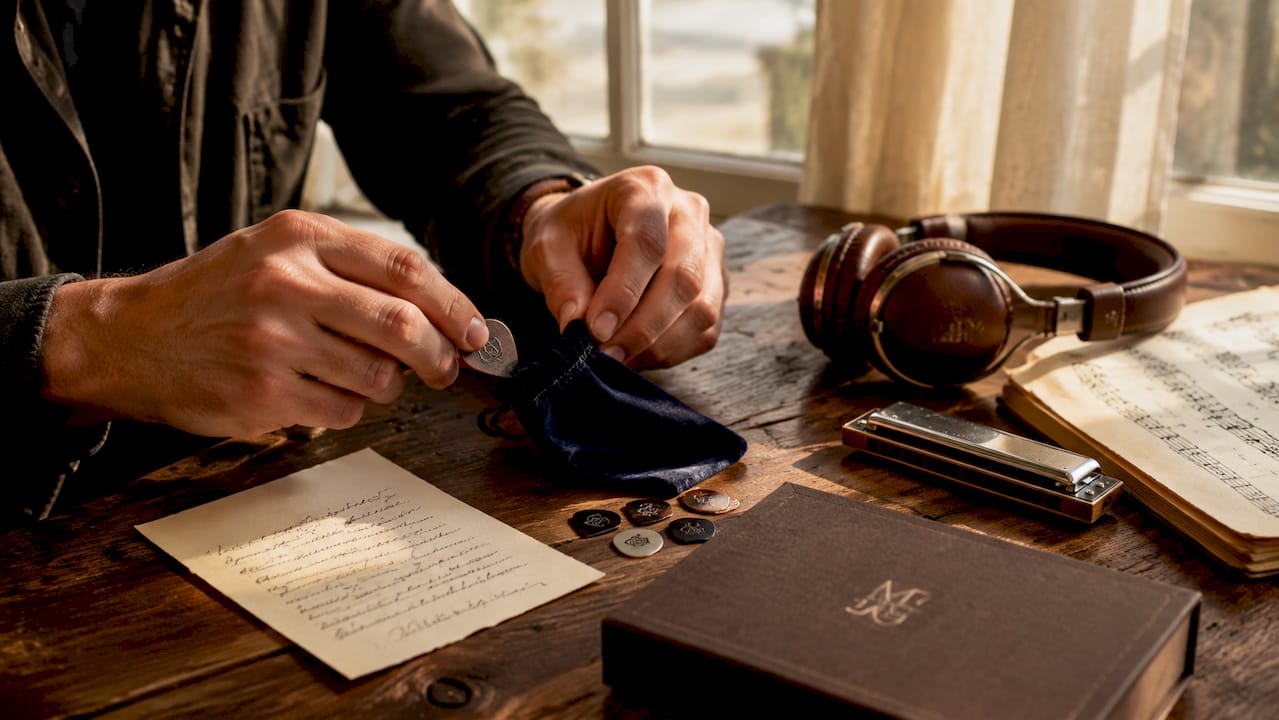
Identity formation through instrumentation is a well-documented phenomenon. Musicians attach meaning to specific instrument models, playing quirks, and even the particular tone they chase across years of practice. A guitarist who has spent a decade chasing a warm, clean Telecaster tone has a very different identity from one who lives for heavy, down-tuned riffs. These distinctions matter enormously when choosing a gift.
The key musical identity traits that shape a musician's self-concept include:
- Instrument specificity. The exact instrument, not just the family. A drummer who plays jazz brushes identifies differently from one who plays metal double-kick.
- Playing technique. Fingerstyle versus plectrum, bowed versus pizzicato, improvised versus composed. Technique is identity made physical.
- Sonic philosophy. The sounds a musician chases and the sounds they deliberately avoid reveal their artistic values.
- Emotional territory. The feelings their music creates, whether melancholy, euphoria, tension, or release, form the emotional core of their identity.
- Practice ethos. Some musicians are disciplined scholars of their craft. Others are intuitive explorers. Both identities deserve recognition.
Pro Tip: Before choosing a gift, spend five minutes thinking about the specific instrument, playing style, and musical mood of the person you are gifting. That five minutes will separate a memorable gift from a forgettable one.
What distinguishes musician identity gifts from generic music-themed gifts?
Generic music-themed gifts treat all musicians as interchangeable. Identity gifts treat each musician as singular. The difference is not about price. A thoughtfully chosen personalised mug can outperform an expensive but generic gift set every time.
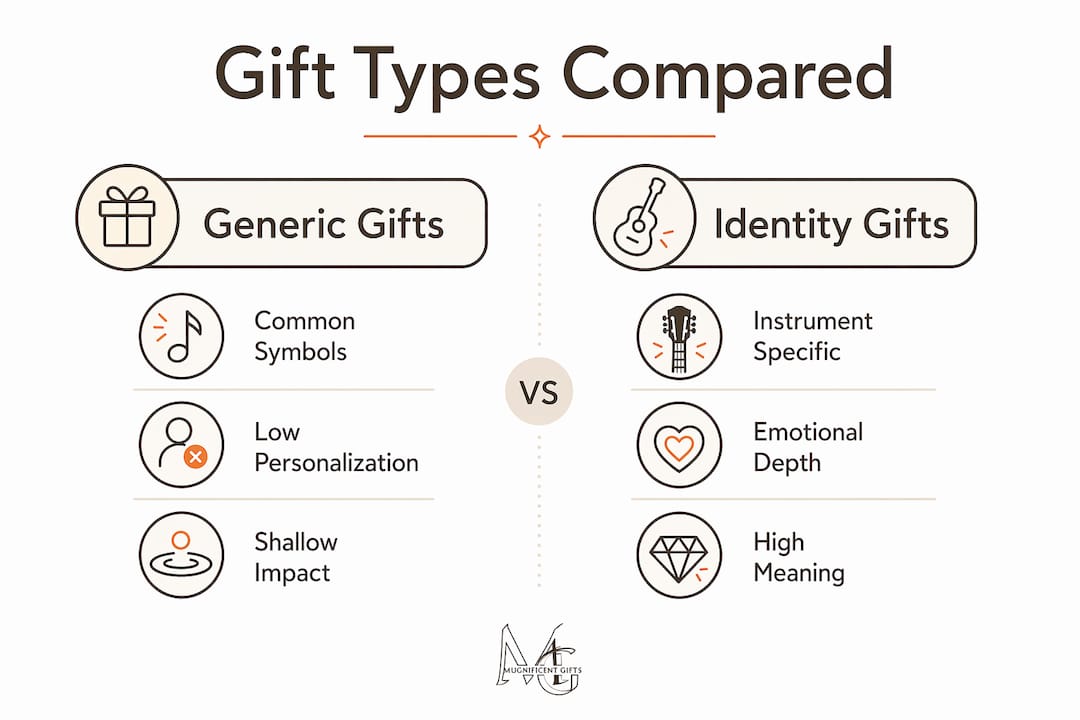
Personalisation with names, inside jokes, or instrument-specific aesthetics significantly increases perceived gift value. The reason is psychological. When a gift reflects specific knowledge of the recipient, it signals genuine attention and care. That signal carries more emotional weight than the object itself.
Consider these four contrasts between generic and identity-centred gifts:
- Generic: A mug printed with a treble clef and the words "Music Lover." Identity-centred: A mug featuring a hand-drawn illustration of a tenor saxophone with the recipient's name and a phrase that echoes their playing style, such as "I improvise, not mistakes."
- Generic: A music note necklace from a high-street jeweller. Identity-centred: A commission of the specific chord voicing the musician uses to open every set.
- Generic: A "World's Best Musician" novelty item. Identity-centred: A print referencing the exact album or composer that shaped their artistic voice.
- Generic: A digital streaming gift card. Identity-centred: A tactile, personalised object with physical presence that embodies their abstract art in daily life, such as a custom ceramic mug they reach for every morning.
"Artists benefit from gifts that reflect the specific emotional territory their music inhabits, not just demographic or style cues." — Personal branding for musicians and artists
The emotional territory point is worth dwelling on. A musician who writes melancholic, introspective songs about loss inhabits a very different creative world from one who writes high-energy dance tracks. A gift that acknowledges that emotional world, even subtly, will resonate far more deeply than one that simply acknowledges "music."
Why should gifts celebrate broader musician identities rather than rigid genre labels?
Many contemporary musicians deliberately resist narrow genre labels. Artists increasingly identify broadly as musicians rather than as "jazz musicians" or "rock guitarists," because broad identity preserves creative freedom. A gift that locks someone into a single genre can feel limiting, even dismissive of their artistic range.
This matters practically. If you buy a gift that screams "jazz purist" for a musician who has recently moved into electronic production, the gift may feel like it belongs to an older version of them. Gifts that celebrate the musician's evolving artistic self, rather than a fixed label, age far better.
The most thoughtful approach focuses on these principles:
- Celebrate the instrument, not the genre. A trumpet is a trumpet whether it plays bebop, classical, or hip-hop. Instrument-specific gifts transcend genre boundaries.
- Honour the creative process. Gifts that acknowledge the act of making music, practising, composing, and performing, speak to the musician's identity at its core.
- Reflect their current artistic chapter. A gift aligned with where the musician is now, not where they were five years ago, shows you are paying attention.
Pro Tip: If you are unsure about a musician's current genre direction, focus on their instrument and their relationship with practice. Those elements remain constant even as their sound evolves.
Musicians' identity extends beyond output to become an organising principle of their entire life. Gifts that validate their commitment to craft, rather than spotlight commercial success or genre achievement, affirm that deeper identity. That is the level at which the best gifts operate.
How to select thoughtful musician identity gifts that resonate deeply
The practical process of choosing a great musician identity gift follows a clear logic. Start with the specific, not the general. Work from instrument to technique to emotional territory, and let that research guide your choice.
Focus on instrument and technique first
Musician identity gifts must be instrument-specific or emotionally tailored, not built around generic music symbols. A gift featuring a detailed illustration of a double bass speaks directly to a bassist. A gift referencing a pianist's left-hand independence speaks to a pianist who has spent years developing that skill. Specificity is the currency of meaningful gifting.
Prioritise tactile, personalised objects
Physical, tactile gifts with customisation bring abstract musical identity into concrete daily life. Custom mugs, commissioned artwork, and bespoke accessories all serve this function. They are present in the musician's daily routine, not filed away in a drawer. A personalised mug used every morning becomes a small, daily affirmation of identity.
Avoid gifts that imply amateurism
Gifts that imply hobbyism can trigger imposter syndrome in musicians who take their craft seriously. A "beginner's guide to guitar" given to a professional guitarist is not just unhelpful. It is actively undermining. Always match the gift to the musician's self-concept and level of commitment.
Here is a practical comparison of general versus identity-centred gift approaches:
| Gift type | Example | Emotional impact |
|---|---|---|
| Generic music symbol | Treble clef keyring | Low. Feels impersonal and interchangeable. |
| Instrument-specific | Custom mug with hand-drawn violin illustration | High. Signals specific knowledge of the recipient. |
| Emotionally tailored | Print referencing their signature musical mood | Very high. Acknowledges their inner artistic world. |
| Personalised daily object | Named mug with instrument and inside joke | Very high. Present in daily life, affirms identity constantly. |
| Genre-locked novelty | "Jazz is life" poster for a multi-genre musician | Low to negative. May feel reductive or outdated. |
Authenticity in music is described as a lived feeling, a stable artistic point of view. Gifts should reflect that inner coherence rather than chase surface-level trends. The best gifts feel like they were made for this specific person, because in the best cases, they were.
Pro Tip: Browse the musician's social media or listen to their recent recordings before choosing. You will pick up instrument details, lyrical themes, and emotional tone that will make your gift feel uncannily well-chosen.
Key takeaways
Musician identity gifts work because they reflect the specific instrument, emotional territory, and creative philosophy that define a musician's sense of self, not just their love of music in general.
| Point | Details |
|---|---|
| Identity over genre | Celebrate the musician's instrument and process rather than locking them into a genre label. |
| Specificity increases impact | Personalisation with names, instrument details, and inside references raises perceived gift value significantly. |
| Avoid amateurism signals | Never choose gifts that imply hobbyism for a musician who identifies as a serious practitioner. |
| Tactile objects carry daily meaning | Physical, personalised items like custom mugs affirm identity every time they are used. |
| Emotional territory matters | Gifts aligned with the emotional world of a musician's music resonate more deeply than demographic cues. |
Why I think most music gifts get it wrong
Most people buying gifts for musicians default to the treble clef. I understand why. It is recognisable, it is safe, and it says "music" without requiring any deeper knowledge. But that is precisely the problem. It says "music" when it should say "you."
The musicians I have spoken with over the years are remarkably consistent on this point. The gifts they remember are the ones that showed someone had actually listened. Not just to their music, but to them. The friend who noticed they always talked about Miles Davis's Kind of Blue and found a print of the original session notes. The partner who commissioned a mug featuring a hand-drawn sketch of their battered old upright piano. These gifts worked because they reflected the specific emotional territory the musician inhabits.
There is also something worth saying about authenticity. Authenticity for musicians is not a marketing concept. It is a lived feeling, a sense of inner coherence between who they are and what they create. A gift that aligns with that coherence, rather than contradicting it with a generic symbol, becomes part of that story. It validates the musician's commitment to their craft at a level that goes well beyond the object itself.
My honest advice to gift-givers is this: spend less time worrying about price and more time thinking about specificity. A well-chosen personalised mug from Mugnificentdeals will outlast and outperform an expensive but impersonal gift set every single time. The thought is the gift. The object is just the vessel.
— Lasse
Personalised music mugs that celebrate who musicians really are
Mugnificentdeals designs mugs that speak a musician's language, not the generic language of "music lover" merchandise. Each design is built around specific instruments, playing personalities, and the kind of dry humour that only musicians truly get.
From hand-drawn instrument illustrations to witty phrases that only a fellow musician would appreciate, Mugnificentdeals turns a daily coffee ritual into a small act of identity affirmation. The personalised music mugs collection lets you add names, instrument details, and personal touches that transform a mug into a genuinely meaningful gift. If you want something curated for gifting specifically, the best personalised music mugs for gifts collection is the right place to start.
FAQ
What are musician identity gifts?
Musician identity gifts are personalised presents that reflect a musician's specific instrument, playing style, and emotional connection to their craft. They differ from generic music-themed gifts by acknowledging the musician's unique artistic self rather than music as a broad concept.
Why do personalised gifts matter more to musicians than generic ones?
Personalisation with instrument-specific details, names, and inside references significantly increases perceived gift value for musicians. Generic gifts signal low effort; personalised gifts signal genuine attention to who the musician actually is.
Should I buy a gift based on a musician's genre?
Genre-specific gifts risk feeling reductive, as many musicians identify broadly as musicians rather than by a single genre. Focus on their instrument and creative process instead, as these remain stable across stylistic changes.
What types of gifts work best for serious musicians?
Tactile, personalised objects with physical presence work best. Custom mugs, commissioned artwork, and instrument-specific accessories all bring a musician's abstract identity into daily life without implying amateurism.
How do I find out enough about a musician to choose the right gift?
Listen to their recent recordings, browse their social media, and pay attention to the instruments and emotional tone they favour. Even a brief conversation about their current musical interests will give you enough detail to choose a gift that feels genuinely personal.