

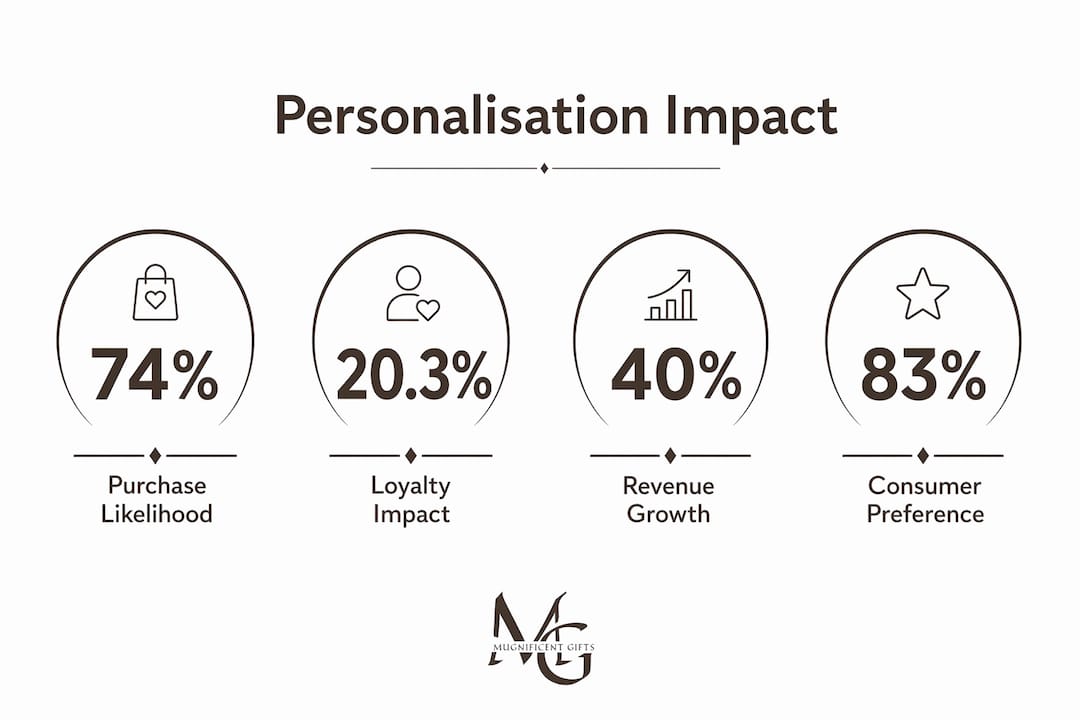
Personalization is the practice of adapting marketing and customer experiences to reflect each individual's unique preferences, behaviour, and context. Why personalization matters is no longer a theoretical question. Companies that excel at it generate up to 40% more revenue than their peers, and nearly 75% of consumers are more likely to buy from brands that personalise their experience. These figures come from Harvard Business Review research published in 2026, and they represent a clear commercial signal. Tailored experiences are not a nice addition. They are a core driver of growth.
Why personalization matters for business and consumer outcomes
The benefits of personalised marketing fall into three clear categories: conversion, loyalty, and revenue. Each is measurable, and each compounds over time.
Conversion rates rise sharply with personalisation. 74% of consumers are more likely to purchase when a brand tailors its experience to them. That figure alone justifies the investment for most marketing teams.

Customer loyalty strengthens at a measurable rate. Personalisation accounts for 20.3% of customer loyalty impact, outranking integrity and perceived effort. That makes it the single strongest driver of repeat business in the KPMG loyalty framework.
Revenue growth is the clearest proof point. Top personalising businesses generate up to 40% more revenue than average performers. The gap between personalising and non-personalising brands widens every year.
Beyond the numbers, personalisation improves brand reputation. Customers who feel understood are more likely to recommend a brand, leave positive reviews, and forgive occasional service failures. Real-time personalisation, which adapts to a customer's current context rather than past behaviour alone, amplifies all three outcomes. A customer browsing on a rainy Tuesday evening has different needs than the same customer on a sunny Saturday morning. Brands that recognise this distinction earn trust faster.
How has personalisation evolved into AI-driven orchestration?
Basic personalisation, such as inserting a customer's first name into an email subject line, is no longer sufficient. The effectiveness of purchase-history-based recommendations has dropped by 24%, a clear sign that customers have grown accustomed to, and unimpressed by, surface-level tactics.
The shift in 2026 is towards agentic personalisation. This approach uses AI to orchestrate customer journeys in real time, drawing on signals such as:
- Current location and local weather conditions
- Browsing intent and on-site behaviour in the current session
- Recent support interactions and open service tickets
- Sentiment detected in live chat or email exchanges
Each signal feeds an AI model that adapts the entire experience, not just a single message. A customer who raised a complaint yesterday receives a different next-best-action than one who just added three items to their basket. This is the difference between personalisation as a campaign tactic and personalisation as an operational system.
Pro Tip: Start by identifying the one customer touchpoint with the highest volume and clearest data. Build your first AI-driven personalisation there, measure the lift, and then replicate the model elsewhere.
The most advanced implementations connect marketing, sales, and service into a single data layer. This prevents the frustrating experience of a customer receiving a promotional email the same day their complaint is unresolved.
What challenges exist in personalising customer experiences?
Personalisation is not without tension. Research published in the Journal of Marketing identifies a personalisation paradox: personalisation increases persuasion, but it can also trigger privacy concerns if customers feel their data is being used without clear benefit to them.
The pattern is not linear. Personalisation that closely matches a consumer's self-concept, their identity, values, and aspirations, is highly persuasive. Personalisation that feels intrusive or irrelevant produces the opposite effect. The implication is that the type of data used matters as much as the fact of using data at all.
Consumer expectations also reveal a significant gap. 83% of US adults want personalisation, yet 57% still receive generic experiences. That gap represents both a failure and an opportunity.
| Challenge | What it means in practice |
|---|---|
| Privacy concerns | Customers accept data use when they see clear value in return |
| Generic experiences | 57% of consumers receive content that ignores their preferences |
| Superficial tactics | Name tokens and basic recommendations no longer drive meaningful lift |
| Data silos | Disconnected teams send conflicting messages, eroding trust |
Pro Tip: Always give customers a clear reason why you are using their data. A simple "Based on your recent purchase" label increases acceptance and reduces the sense of surveillance.
True personalisation requires deep understanding of customer context, not just data collection. The distinction between knowing a customer's purchase history and understanding their current situation is where most brands fall short.
How can organisations implement personalisation strategies at scale?
Scaling personalisation is a process, not a launch. The most effective organisations follow a disciplined sequence rather than attempting to personalise every touchpoint simultaneously.
-
Identify one high-leverage touchpoint. Choose the interaction with the highest volume and clearest outcome metric. A product recommendation on a checkout page or a follow-up email after a free trial are strong starting points.
-
Prove lift with data before expanding. Starting small and measuring impact before replicating is the established best practice. Run a controlled test, document the results, and use them to build internal support for broader investment.
-
Connect marketing, sales, and service data. Holistic personalisation across departments prevents conflicting customer experiences. A customer who receives a discount offer while waiting for a refund loses trust in the brand immediately.
-
Use AI to classify and predict, not just to automate. AI is most useful when it identifies patterns humans cannot see at scale, such as which customers are likely to churn in the next 30 days or which product category a new customer is most likely to explore next.
-
Adjust your approach for B2B versus B2C. In B2C, personalisation targets individuals. In B2B, account-level personalisation is more effective because an average B2B purchase involves 13 stakeholders. Messaging that speaks to the account's strategic priorities outperforms messaging aimed at a single contact.
Pro Tip: In B2B, map the key roles involved in a purchase decision and create content that addresses each stakeholder's specific concern. A CFO needs cost justification. A technical lead needs integration detail. One message cannot serve both.
Ongoing measurement is not optional. Personalisation strategies degrade as customer behaviour shifts. Build a regular review cycle into your process, not just a launch plan.
What measurable impact does personalisation have on loyalty and performance?
Personalisation drives loyalty more directly than any other marketing lever. The KPMG data is unambiguous: personalisation is the strongest loyalty driver, accounting for 20.3% of loyalty impact across industries. No other factor, including brand integrity or perceived effort, comes close.
The downstream effects are equally significant. Personalisation reduces churn, increases retention, and lifts cross-sell revenue compared to generic approaches. Customers who feel recognised return more often and spend more per visit. The compounding effect on lifetime value is substantial.
Specific metrics that improve with personalisation include bounce rate on key landing pages, time-to-value for new customers, and ticket deflection in customer service. Each of these connects directly to cost reduction or revenue growth.
"Personalisation is not a marketing tactic. It is the operational infrastructure that determines whether a customer relationship deepens or dissolves. Brands that treat it as a campaign will always underperform brands that treat it as a system."
Anticipating customer needs, rather than reacting to them, is the highest form of personalisation. A brand that contacts a customer before a problem arises, based on behavioural signals, builds a qualitatively different relationship than one that responds only to complaints. That proactive posture is what separates high-retention brands from average ones. Explore how personalised gifting psychology applies these principles in a tangible, consumer context.
Key takeaways
Personalisation is the single strongest driver of customer loyalty, accounting for 20.3% of loyalty impact, and top personalising businesses generate up to 40% more revenue than their peers.
| Point | Details |
|---|---|
| Revenue impact is significant | Businesses that personalise effectively generate up to 40% more revenue than average competitors. |
| Loyalty driver above all others | Personalisation accounts for 20.3% of customer loyalty impact, outranking integrity and effort. |
| Basic tactics are losing effectiveness | Purchase-history recommendations have dropped 24% in effectiveness; contextual AI is now required. |
| Start small, then scale | Prove lift at one touchpoint before replicating personalisation across the full customer journey. |
| B2B requires account-level thinking | With an average of 13 stakeholders per purchase, B2B personalisation must address group priorities. |
Personalisation as a long-term operating principle
I have watched brands pour significant budget into personalisation campaigns that delivered a short-term conversion bump and then flatlined. The pattern is consistent: they treated personalisation as a project with a launch date rather than a continuous operating discipline.
The brands that sustain results do something different. They build personalisation into the infrastructure of how they serve customers, not into a single campaign. They connect their data across departments, review their models regularly, and resist the temptation to scale before they have proven their approach works at a smaller level.
The AI dimension is real and growing. But the most important shift is not technological. It is organisational. A business that shares customer data across marketing, sales, and service will always outperform one that does not, regardless of which tools it uses. The technology amplifies the strategy. It does not replace it.
Ethical personalisation is also not a constraint. It is a competitive advantage. Customers who trust that a brand uses their data responsibly engage more openly, share more information, and stay longer. Transparency is not a compliance requirement. It is a loyalty mechanism. If you want to see how design personalisation applies these principles in a creative product context, the parallels are worth exploring.
Treat personalisation as an ongoing operational driver. Review it quarterly. Measure it rigorously. And never mistake a name token for genuine customer understanding.
— Lasse
Personalised music mugs: personalisation you can hold in your hands
Personalisation works because it makes people feel seen. Mugnificentdeals applies that principle to something tangible: personalised music mugs designed for musicians and music lovers who want a gift that actually means something.
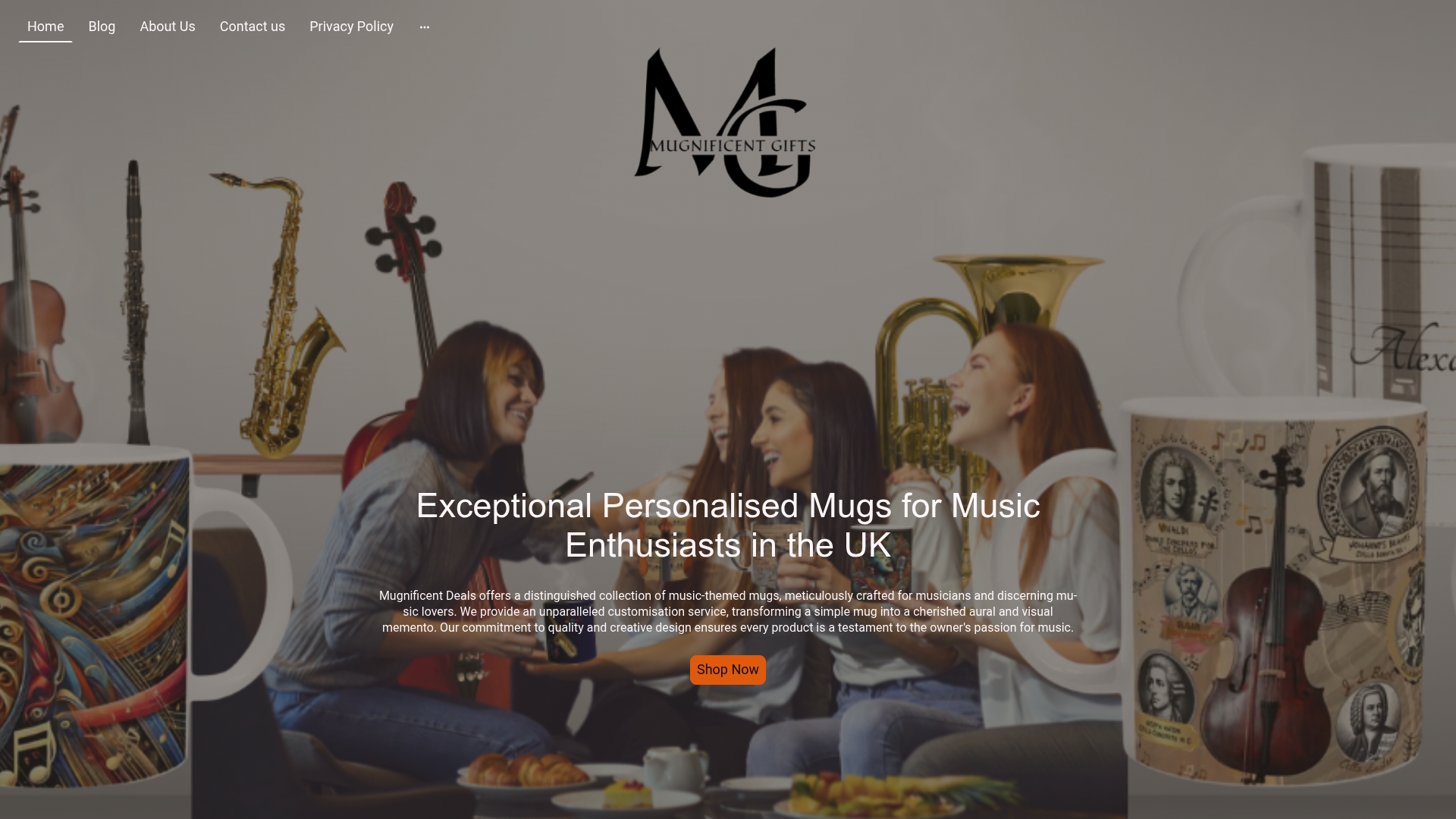
Each mug is built around a specific instrument, a name, or an inside joke that only the recipient will fully appreciate. That specificity is what separates a thoughtful gift from a generic one. Whether you are buying for a violinist, a drummer, or someone who considers air guitar a legitimate skill, Mugnificentdeals has a design that speaks their language. Browse the best personalised music mugs for gifts and find the one that fits your musician perfectly.
FAQ
What is personalisation in marketing?
Personalisation in marketing is the practice of tailoring content, offers, and experiences to an individual's preferences, behaviour, and context. It goes well beyond inserting a customer's name into an email.
Why does personalisation increase revenue?
Personalised experiences make customers more likely to purchase and return. Companies that excel at personalisation generate up to 40% more revenue than peers, according to Harvard Business Review research.
How does AI improve personalisation?
AI analyses real-time signals such as browsing intent, location, and sentiment to adapt the entire customer experience dynamically. This is far more effective than static, history-based recommendation engines.
What is the personalisation paradox?
The personalisation paradox describes the tension between personalisation increasing persuasion and simultaneously triggering privacy concerns. Personalisation is most effective when the data used closely matches a consumer's own sense of identity.
How do you measure the impact of personalisation?
Key metrics include conversion rate lift, customer retention rate, churn reduction, cross-sell revenue, and ticket deflection in customer service. Each should be tracked against a control group to isolate the effect of personalisation.