

Creative gifting is the practice of choosing presents that connect deeply with the recipient's personality, values, and daily life, making the gift meaningful far beyond its material worth. Unlike traditional gift-giving, which often defaults to price or novelty, creative gifting prioritises emotional resonance and personal relevance above all else. It treats the act of giving as a form of social communication. A well-chosen gift says, "I see you, I know you, and I thought about you." That is a powerful message to send, and it costs nothing extra to get right.
What is creative gifting and why does it matter?
Creative gifting is the intentional practice of selecting a present that fits the recipient's identity, not just the occasion. It shifts the focus from "what should I buy?" to "what does this person actually need, love, or find meaningful?" That shift is small in theory but significant in practice.
Psychologists describe gifting as a strategic social act. Effective gifts reinforce identity and trust by demonstrating genuine listening rather than extravagant display. A gift that reflects a shared memory, a private joke, or a known passion communicates care in a way that an expensive but generic item simply cannot.
The role of creativity in gift selection is not about being unusual for its own sake. Creativity here means accuracy. It means reading the person correctly and translating that understanding into something tangible. A handmade card that references a specific moment between two people carries more weight than a luxury hamper chosen at random.
This approach also benefits the giver. When you give with intention, you feel more confident in your choice. That confidence comes from knowing the gift is right for the person, not just right for the price point.

How does creativity influence gift selection and impact the recipient?
Creativity transforms an ordinary object into a meaningful experience. The role of creativity in gifts is to close the gap between what a gift costs and what it communicates. A thoughtfully chosen present signals effort, attention, and care in ways that price alone never can.
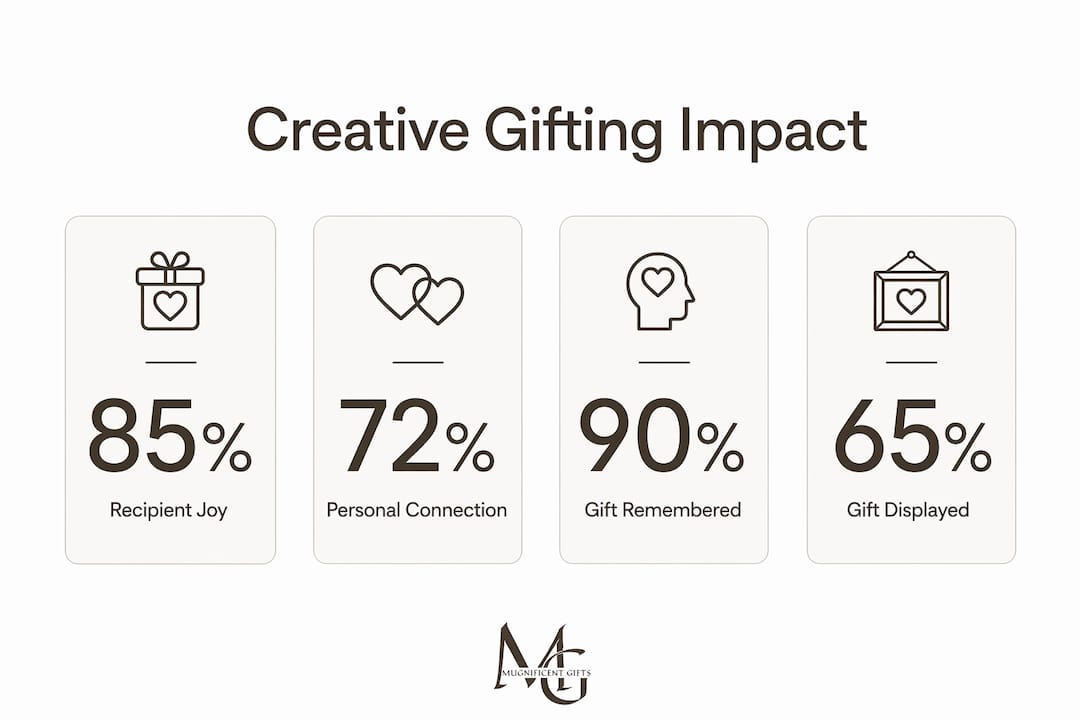
Personalised gifts are more likely to be displayed and create recurring positive emotional effects long after the occasion has passed. That staying power is what separates a memorable gift from one that ends up in a drawer. When a gift reflects the recipient's identity, it becomes part of their environment rather than clutter within it.
Creativity in gift selection also works through presentation. Adding a handwritten note or meaningful anecdote boosts perceived generosity and thoughtfulness, even when the gift itself is modest. The experience around receiving a gift matters as much as the gift itself.
Consider these elements that make a gift feel genuinely creative:
- Recipient identity fit: The gift reflects a known passion, hobby, or role in the recipient's life.
- Shared reference: It connects to a memory, inside joke, or experience you both share.
- Presentation: Themed wrapping, a handwritten note, or a personal story woven into the delivery.
- Practical resonance: It solves a real, recurring need in the recipient's daily life.
- Timing and context: The gift arrives at a moment that amplifies its meaning.
Pro Tip: Before buying anything, write down three things the recipient has mentioned wanting, struggling with, or loving in the past six months. The right gift is usually hiding in that list.
What do recipients really want from creative gifts versus giver assumptions?
Givers and recipients often want completely different things from the same exchange. Givers tend to optimise for the unboxing moment, the gasp, the surprise. Recipients, by contrast, optimise for lasting utility over momentary excitement. This mismatch is one of the most consistent findings in gifting psychology.
The numbers are telling. Registry-compliant gifts scored 8.4 out of 10 on recipient satisfaction, while unrequested surprises scored 6.6 out of 10. That is a meaningful gap, and it persists across relationships and occasions. Friends diverge from wishlists 61% of the time, yet recipients consistently rate wishlist gifts higher.
"The myth of spectacle causes many givers to believe that cost or surprise equals care. True gifting efficacy stems from accuracy and listening to the recipient's actual needs, not from extravagance or dramatic reveals."
The practical implication is clear. Creativity in gifting should be directed at how you give, not at what you give in defiance of the recipient's stated preferences. A gift from a wishlist, wrapped with care, presented with a personal note, and timed thoughtfully, outperforms a costly surprise almost every time.
| Gifting approach | Recipient satisfaction | Key driver |
|---|---|---|
| Requested or wishlist gift | 8.4/10 | Utility and relevance |
| Unrequested surprise gift | 6.6/10 | Novelty and giver intent |
| Personalised with context | High | Effort signal and identity fit |
| Generic high-cost gift | Moderate | Price perception only |
Gift-giving anxiety often results from high motivation but low confidence. Trusting a recipient's wishlist or stated preferences reduces that anxiety and improves outcomes for both parties. Creativity then lives in the delivery, the presentation, and the personal touches around the gift.
How to personalise creative gifts effectively without common pitfalls
True personalisation goes well beyond printing a name on something. Template-style personalisation often feels insincere, lowering the emotional impact rather than raising it. A mug with "Sarah" on it is not a personalised gift. A mug with a drawing of Sarah's instrument and a phrase only she would understand is something else entirely.
Effective personalisation connects the gift to a specific memory, shared experience, or aspect of the recipient's identity. That specificity is what signals genuine effort. It tells the recipient that you paid attention, that you remembered, and that you cared enough to act on what you know.
Here is how to personalise with real impact:
- Anchor to a specific memory: Reference a trip, a conversation, or a shared experience that only the two of you would recognise.
- Reflect their role or identity: A gift that acknowledges someone as a musician, a parent, or a reader feels more personal than one that simply has their name on it.
- Personalise the packaging too: A handwritten letter, themed wrapping paper, or a small accompanying item can elevate the entire experience.
- Use their own words: If they have a favourite phrase, a running joke, or a saying they repeat, incorporate it. That level of detail is unmistakable.
- Tell the story: Include a note that explains why you chose the gift. Context transforms an object into a gesture.
Pro Tip: The psychology of personalised gifting shows that effort signals matter more than cost signals. A gift that took thought always outperforms a gift that took money.
Avoid the trap of adding personalisation as an afterthought. The best personalised gifts are designed from the recipient outward, not from a product inward with a name added at the end.
Practical creative gifting ideas for creative and music-loving recipients
Music lovers and creative people are among the easiest recipients to gift well, because their passions are specific, visible, and deeply personal. The key is to match the gift to their particular corner of the creative world, not just "music" or "art" in the abstract.
-
Personalised instrument-themed mugs: A mug featuring a hand-drawn illustration of the recipient's instrument, paired with a phrase that speaks to their musical life, is both practical and deeply personal. Mugnificentdeals specialises in exactly this kind of gift, blending music-themed personalisation with everyday usefulness. Every musician uses a mug. Not every musician owns one that feels made for them.
-
Experience-based gifts: Concert tickets, instrument workshops, or a masterclass with a musician they admire deliver lasting memories rather than objects. These work especially well when you choose the specific artist or genre the recipient loves, not just a generic "music experience."
-
Handmade or commissioned artwork: A custom illustration of their instrument, a hand-lettered print of a lyric they love, or a portrait of their band is a gift that no algorithm could generate. The effort is visible and the result is unique.
-
Practical tools for their craft: A quality metronome, a new set of strings for their instrument, or a well-reviewed music journal addresses a real daily need. Choosing solutions for the recipient's daily friction points improves gift lastingness and value far more than novelty items.
-
A curated gift set: Combine a personalised mug with a small bag of their favourite coffee, a handwritten note referencing a shared musical memory, and perhaps a playlist you made for them. The combination tells a story. Individual items rarely do that on their own.
Pro Tip: When gifting a musician, think about their instrument specifically. A gift for "a music lover" feels generic. A gift for "a violinist who practises every morning" feels seen. Check out instrument-themed gift guidance to narrow your choice with confidence.
The best creative gifts for close relationships leverage the recipient's stated preferences. Creativity lives in the delivery, the combination, and the personal narrative you build around the gift.
Key takeaways
Creative gifting works because it prioritises emotional accuracy over price, directing creativity into personalisation, presentation, and recipient-centred selection rather than surprise or spectacle.
| Point | Details |
|---|---|
| Emotional resonance over cost | Thoughtful gifts consistently outperform expensive but generic ones in recipient satisfaction. |
| Recipients prefer utility | Wishlist-aligned gifts score 8.4/10 versus 6.6/10 for unrequested surprises. |
| Personalisation needs depth | Connecting gifts to specific memories or identity signals genuine effort and raises emotional impact. |
| Presentation amplifies meaning | A handwritten note or themed packaging elevates even a modest gift into a memorable experience. |
| Music lovers reward specificity | Gifts tied to a recipient's exact instrument or musical identity feel far more personal than broad "music" themes. |
Why I think most people are gifting creatively in the wrong direction
People spend enormous energy trying to surprise. They hide the gift, they misdirect, they build up to a reveal. I understand the impulse. Surprise feels generous. It feels like effort. But the research is clear, and my own experience confirms it: the surprise is for the giver, not the recipient.
The most meaningful gifts I have ever given were ones where the recipient already knew roughly what was coming, because I had listened carefully enough to know what they actually wanted. The creativity went into the execution. A personalised mug for a friend who plays the cello, featuring a sketch of her instrument and a phrase only she would laugh at, was not a surprise. She had mentioned wanting something like it. What surprised her was how precisely it reflected her.
That is where I think creative gifting is heading in 2026. Away from spectacle and towards specificity. Away from "what will impress them at the moment of opening?" and towards "what will they still love in six months?" Music-themed gifts, particularly personalised ones, sit perfectly in that space. They are practical, they are personal, and they carry meaning every time they are used.
My advice is simple. Listen more than you plan. Give less thought to the reveal and more thought to the recipient. The best gift is the one that makes someone feel genuinely known.
— Lasse
Personalised music mugs: creative gifts worth giving
Mugnificentdeals brings together everything that makes creative gifting work: personalisation, practicality, and a clear sense of who the recipient is.
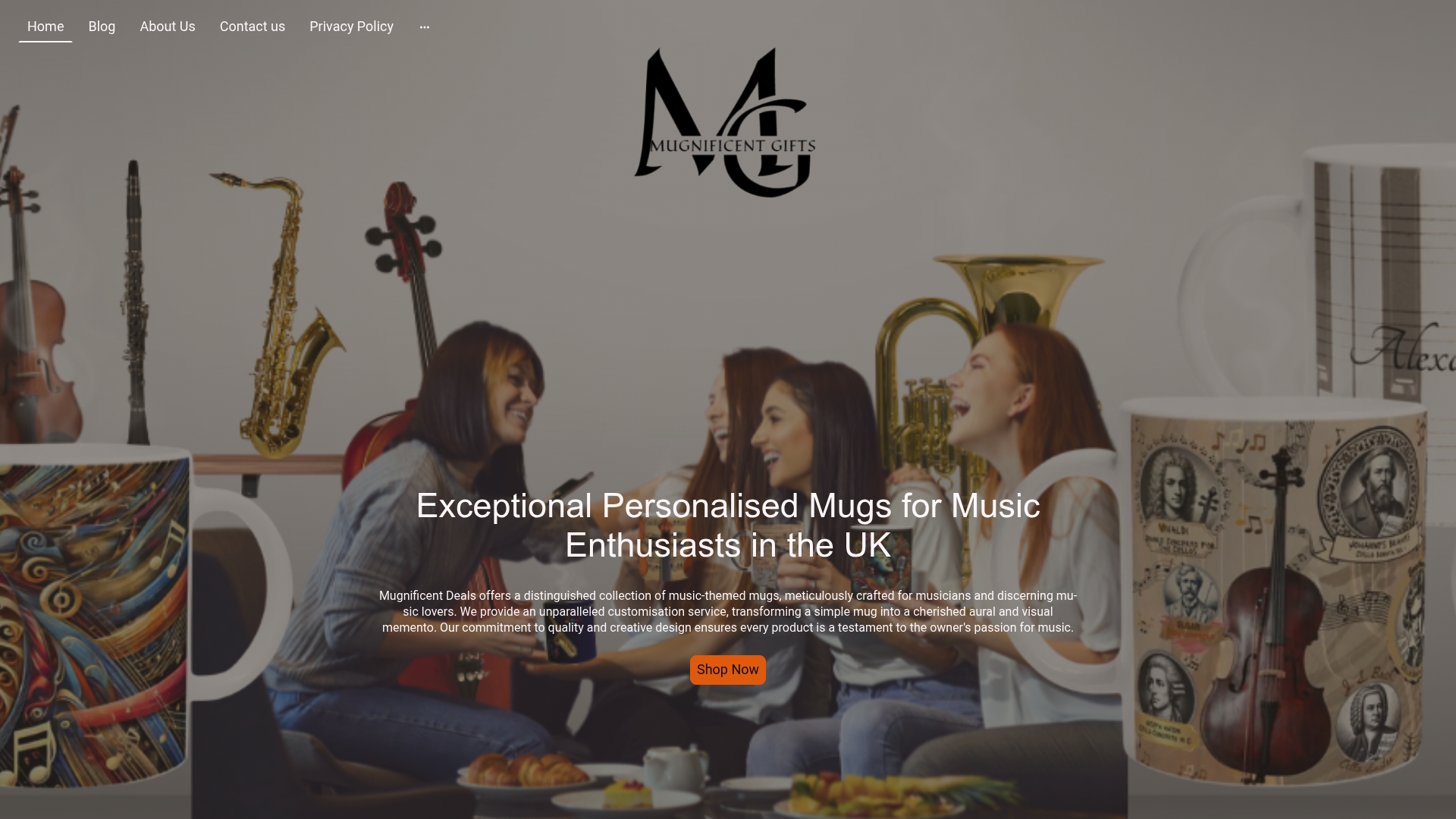
The personalised music mugs at Mugnificentdeals are designed for musicians and music lovers who deserve a gift that actually speaks their language. Each design features hand-drawn instrument illustrations, clever phrases, and options to personalise with names or custom details. These are not mass-produced novelties. They are gifts built around a specific identity. If you are looking for top-rated music gift options that combine everyday usefulness with genuine personal meaning, Mugnificentdeals is the place to start.
FAQ
What is creative gifting in simple terms?
Creative gifting is the practice of choosing presents based on the recipient's personality, values, and daily life rather than price or convention. It prioritises emotional relevance over novelty or cost.
Does a creative gift have to be expensive?
No. Thoughtfulness consistently outperforms high-priced mass-produced gifts in recipient satisfaction. A modest gift with strong personal meaning outperforms an expensive but generic one.
Why do recipients prefer wishlist gifts over surprises?
Recipients optimise for lasting utility rather than momentary excitement. Research shows wishlist gifts score 8.4 out of 10 in satisfaction, compared to 6.6 out of 10 for unrequested surprises.
What makes a personalised gift feel genuine rather than generic?
Genuine personalisation connects the gift to a specific memory, shared experience, or aspect of the recipient's identity. Template-style personalisation with only a name added feels insincere and lowers emotional impact.
What are good creative gift ideas for music lovers?
Personalised instrument-themed mugs, concert experiences, commissioned artwork, and practical tools for their specific instrument all work well. The key is to reference their particular instrument or musical identity, not just "music" in general.