
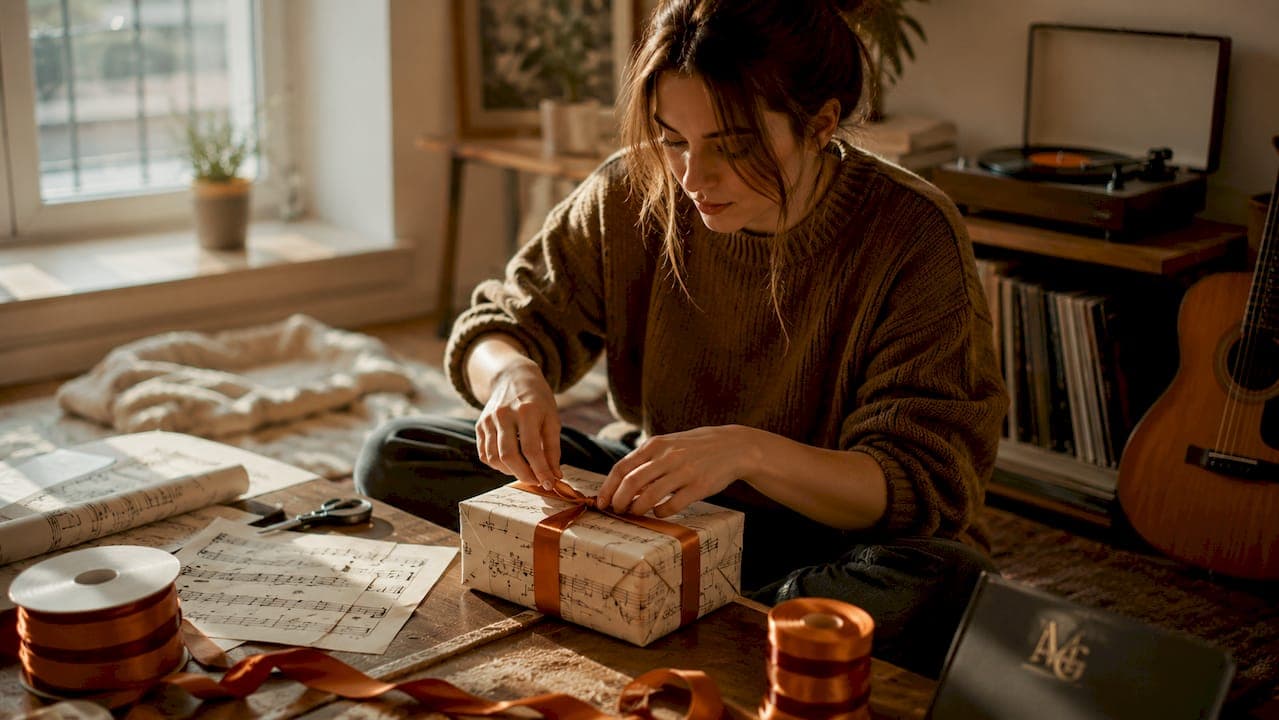
A personal touch in gifts is defined as the deliberate effort and thoughtful attention that transforms a present from a purchased object into a genuine expression of care. It goes well beyond printing a name on a mug or selecting a generic "music lover" design from a catalogue. The meaning of personal touch lies in the giver's ability to say, without words, "I see you." For anyone buying gifts for musicians or music fans, this distinction matters enormously. A gift that reflects a specific instrument, an inside joke about practice struggles, or a quiet nod to a beloved genre carries emotional weight that no mass-produced item can replicate.
Why does the personal touch matter in gifting?
The role of personal touch in gifting is backed by compelling psychological research, not just warm sentiment. A University of Bath study confirms that personalised gifts increase recipients' self-esteem and generate what researchers call "vicarious pride," a feeling of connection to the giver's effort and care. This means the emotional value of a gift is partly borrowed from the giver's intention. When your musician friend unwraps something that clearly reflects their world, they feel seen and valued, not just gifted.

The psychological mechanism behind this is known as the effort heuristic. People assign greater emotional value to gifts that demonstrate noticeable thought and care, regardless of price. A carefully chosen mug featuring a dry joke about violin practice communicates more effort than an expensive but impersonal gadget. The effort heuristic explains why two gifts of equal monetary value can feel completely different to the person receiving them.
Consumer research from 2026 reinforces this further. 71% of consumers expect personalised interactions, and 76% feel frustrated when they receive generic attempts at personalisation. That frustration is not trivial. It signals that recipients are perceptive enough to distinguish genuine thoughtfulness from a name slapped onto a standard product. For gift buyers, this is both a warning and an opportunity.
"Personalisation transforms gifts from objects to meaningful experiences by communicating the giver's pride and effort, closing the emotional loop with recipients." — University of Bath research
Gifts with a genuine personal touch also tend to last longer in memory and in the home. A recipient who receives something that resonates with their identity is far more likely to keep it, display it, and associate it with the giver for years. That kind of lasting impact is the true importance of personalised gifts.
How is personal touch different from mass customisation?
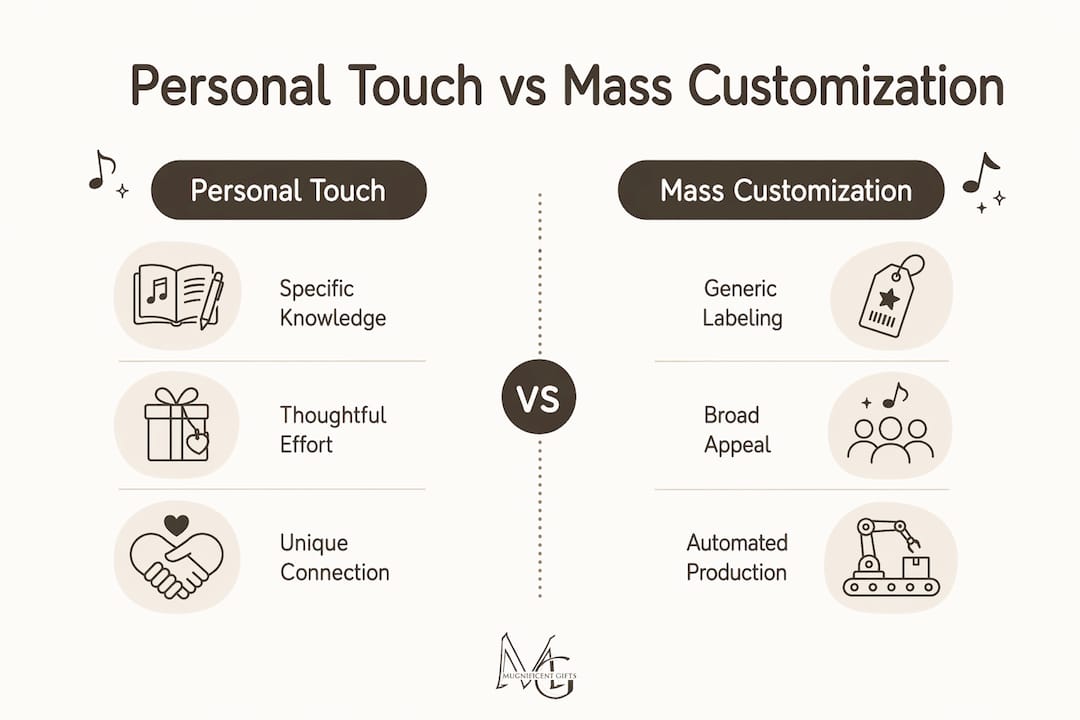
Understanding what separates a genuinely personal gift from a generically customised one is where most gift buyers gain a real advantage. The distinction is subtle but significant.
| Feature | Personal touch | Mass customisation |
|---|---|---|
| Basis | Specific knowledge of the recipient | General category (e.g. "music lover") |
| Emotional impact | Feels like recognition | Feels like a label |
| Effort signal | High. Requires attention and thought | Low. Automated or template-driven |
| Risk of misfire | Low when done with care | Higher. Can feel generic or presumptuous |
| Example | A mug referencing a drummer's specific habit | A mug reading "I love music" |
The most effective approach, according to gifting psychology experts, is what they call "recognition without announcement." This means selecting something that aligns with the recipient's specific preferences without loudly declaring it. A mug that references the particular frustration of tuning a guitar before every session speaks directly to a guitarist's lived experience. It does not need to say "For Guitarists" in large letters to land with impact.
Over-customisation carries its own risks. When a gift is too heavily labelled or too obviously themed, it can feel performative, as though the giver is showing off their knowledge rather than sharing genuine warmth. It can also make the recipient feel boxed in, reduced to a single identity rather than seen as a whole person. The craft of thoughtful gifting lies in restraint. One small, precise detail is more memorable than five obvious ones.
Thoughtful curation and presentation also separate personal gifts from generic ones. How a gift is wrapped, what note accompanies it, and whether the packaging reflects any care all contribute to the overall impression. A beautifully presented gift with a handwritten card explaining why you chose it will outperform a heavily customised item delivered without context.
What practical ways can you add a personal touch for music lovers?
Adding a personal touch to gifts for musicians and music fans does not require a large budget or specialist skills. It requires attention. Here are the most effective approaches:
-
Reference the specific instrument, not just "music." A gift that nods to the recipient's instrument, whether that is a cello, a drum kit, or a ukulele, immediately signals that you paid attention. Generic music imagery (treble clefs, headphones) is everywhere. Specificity is rare and therefore more meaningful.
-
Use inside jokes or shared references. Musicians accumulate a rich vocabulary of shared frustrations and triumphs: the eternal battle with a tricky passage, the joy of finally nailing a piece, the peculiar pride of owning too many instruments. A gift that taps into this internal experience of their craft will resonate far more than one that simply acknowledges they play music.
-
Consider the aesthetic, not just the theme. A musician who loves minimalist design will appreciate a clean, understated gift. One who gravitates towards bold, expressive art will respond to something more vivid. Matching the gift's visual style to the recipient's known taste is a form of personalisation that most people overlook entirely.
-
Add a handwritten note that explains your choice. This is one of the most underused tools in gifting. A short note saying "I saw this and thought of the story you told me about your first recital" transforms a good gift into an unforgettable one. The note does not need to be long. It needs to be specific.
-
Think about daily use. A gift that the recipient will encounter every morning, such as a mug they use for their first cup of tea, carries the personal touch into their daily routine. Every use becomes a small reminder of the connection. For music lovers who appreciate matching presents to musical personalities, this kind of functional gift with a personal dimension is particularly effective.
Pro Tip: The single most powerful personal touch is often the smallest one. A detail that only you and the recipient would understand, a reference to a specific conversation, a joke only the two of you share, creates a gift that no one else on earth could have given. That exclusivity is what makes a gift truly special.
How to communicate the personal touch to the recipient
Choosing a thoughtful gift is only half the work. The other half is making sure the recipient understands the intention behind it. Research from the University of Bath confirms that a card or note bridging the recipient's awareness of the giver's effort is essential to fully realising the emotional value of a personal gift. Without that bridge, even the most thoughtful gift can be received as a pleasant but unremarkable object.
Here is a practical approach to communicating your personal touch effectively:
-
Write a specific note, not a generic one. Avoid "Happy Birthday, hope you like it." Instead, write one or two sentences explaining why you chose this particular gift. "I remembered you mentioned how much you laugh at your own sight-reading mistakes, so this felt right" is worth ten generic birthday messages.
-
Mention the connection out loud if the moment allows. When handing over a gift in person, a brief verbal cue, such as "this reminded me of what you said about your first gig," reinforces the intention without making it feel like a speech. Keep it natural and brief.
-
Avoid over-explaining. There is a balance between sharing your intention and turning the gift-giving moment into a presentation. One or two sentences of context is enough. The gift itself should carry the rest of the message.
-
Time the reveal thoughtfully. A gift given at a quiet, one-to-one moment lands differently from one opened in a group setting. If the personal touch is particularly intimate or specific, a private moment allows the recipient to respond genuinely without an audience.
Pro Tip: If you are sending a gift by post, the card becomes even more important. Write it as though you are speaking directly to the person. A card that says "I know you will get this joke" is an invitation into a shared moment, even across a distance.
The psychology of personalised gifting shows that recipients who understand the effort behind a gift report significantly higher emotional satisfaction than those who receive the same gift without context. Closing that loop is not optional. It is the final step that completes the gift.
Key takeaways
A personal touch in gifts is defined by intentional effort and specific knowledge of the recipient, not by the degree of customisation applied to a product.
| Point | Details |
|---|---|
| Definition of personal touch | Deliberate, specific effort that reflects genuine knowledge of the recipient's identity and preferences. |
| Psychological impact | Personalised gifts increase self-esteem and generate vicarious pride, strengthening the bond between giver and recipient. |
| Restraint over excess | One precise, meaningful detail outperforms multiple obvious customisations every time. |
| Communication matters | A handwritten note or verbal cue is essential to fully realise the emotional value of a thoughtful gift. |
| Music-specific approach | Reference the specific instrument, inside jokes, or craft experiences rather than generic music imagery for maximum impact. |
Why I think most people are one small detail away from a great gift
There is a tendency, when buying gifts for musicians, to reach for the obvious. A treble clef keyring. A tote bag that says "Music is Life." These are not bad gifts. They are just forgettable ones. What I have found, after years of buying for music-loving friends, is that the gifts people genuinely treasure are almost always the ones that reference something specific and shared.
The violinist friend who laughs about always being the last one to tune up. The pianist who has a complicated relationship with Chopin. The drummer who insists their timing is perfect and everyone else is wrong. These are the details that make a gift feel like it was made for one person. And the truth is, it does not take much. A mug with a dry joke about sight-reading, presented with a note that says "this is for you specifically," does more emotional work than a gift ten times its price.
What I have also noticed is that givers often underestimate their own knowledge of the recipient. You know more than you think. You have heard the stories, witnessed the frustrations, shared the laughs. The high-touch philosophy in gifting holds that genuine human warmth cannot be replicated by any automated system, and I believe that completely. The personal touch is not a product feature. It is a decision to pay attention, and then to act on what you know.
Trust your instincts. The detail that makes you think "they will get this immediately" is almost certainly the right one.
— Lasse
Find the perfect personalised music gift at Mugnificentdeals

Mugnificentdeals designs mugs that speak directly to musicians and music lovers, not in the language of generic music imagery, but in the language of real musical life. From dry humour about practice struggles to clean, instrument-specific illustrations, each design is built to feel like it was made for someone specific. Browse the personalised music mugs collection to find a gift that carries a genuine personal touch, or explore the best personalised music mugs for gifts for curated options that are ready to give. Add a handwritten note, and you have a gift that will be remembered long after the wrapping paper is gone.
FAQ
What does personal touch mean in a gift?
Personal touch in a gift refers to the deliberate effort to reflect the recipient's specific identity, preferences, or shared experiences. It is defined by intentionality and specificity rather than the degree of customisation applied.
Why are personalised gifts more meaningful than generic ones?
Research from the University of Bath confirms that personalised gifts increase recipients' self-esteem and create vicarious pride by connecting their appreciation to the giver's effort. Generic gifts lack this emotional signal, which is why 76% of consumers feel frustrated by impersonal attempts at personalisation.
How do you add a personal touch to a gift for a musician?
Reference the recipient's specific instrument, use inside jokes about their musical experiences, and match the gift's aesthetic to their known taste. A handwritten note explaining why you chose the gift completes the personal touch by closing the emotional loop.
Is personalisation the same as adding a personal touch?
No. Personalisation, such as printing a name or adding a generic label, is a product feature. A personal touch is a human quality. It comes from specific knowledge of the recipient and the effort to act on that knowledge in a way that feels genuine rather than automated.
How important is the card or note with a personalised gift?
The card is essential. University of Bath research shows that recipients who understand the effort behind a gift report significantly higher emotional satisfaction. A brief, specific note transforms a good gift into one the recipient will remember and keep.