
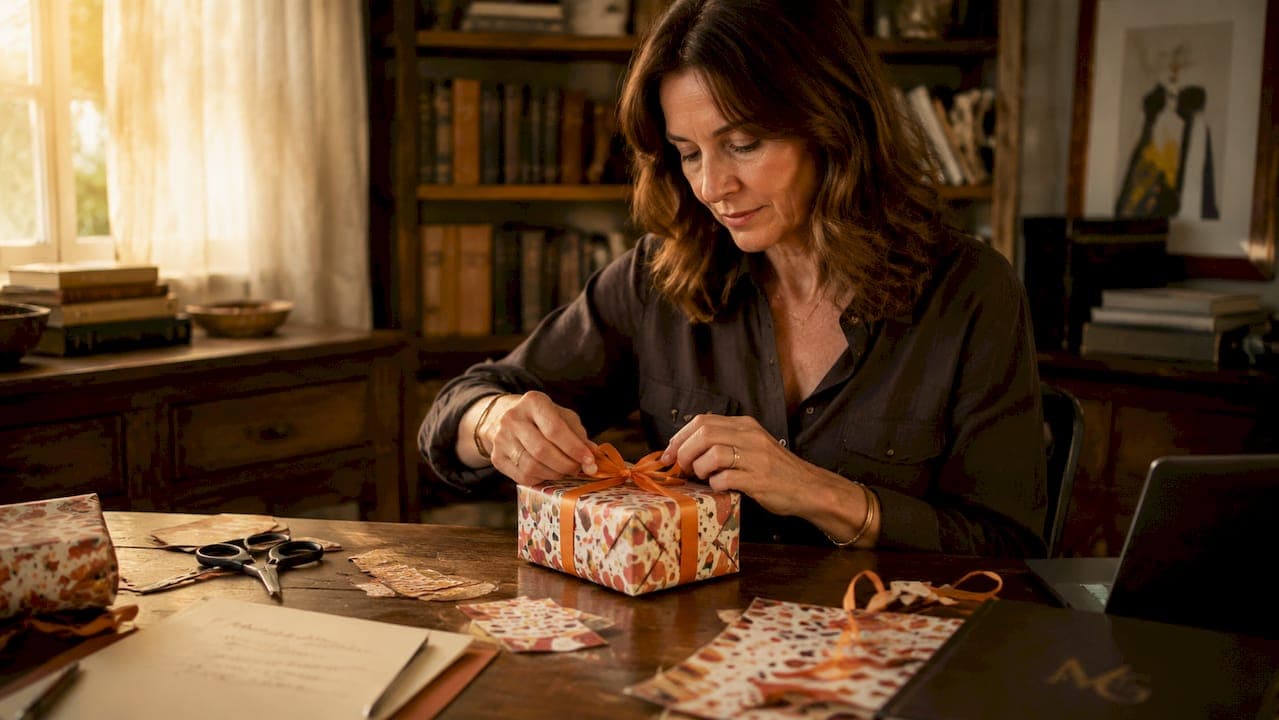
A thoughtful gift is a present chosen with genuine care for the specific person receiving it. It reflects their personality, speaks to something they love, and shows that you paid attention. Price has very little to do with it. What separates a meaningful gift from a forgettable one is the intention behind it and the degree to which it fits the recipient's life, values, and tastes.
Thoughtful gifting, as psychologists and gift-giving researchers describe it, is the practice of selecting presents based on mindful consideration of the recipient's individuality rather than convenience or cost. A personalised touch consistently elevates how appreciated a gift feels, whether that comes through customisation, meaningful packaging, or a choice that clearly required effort and knowledge of the person.
The qualities that distinguish a truly thoughtful gift include:
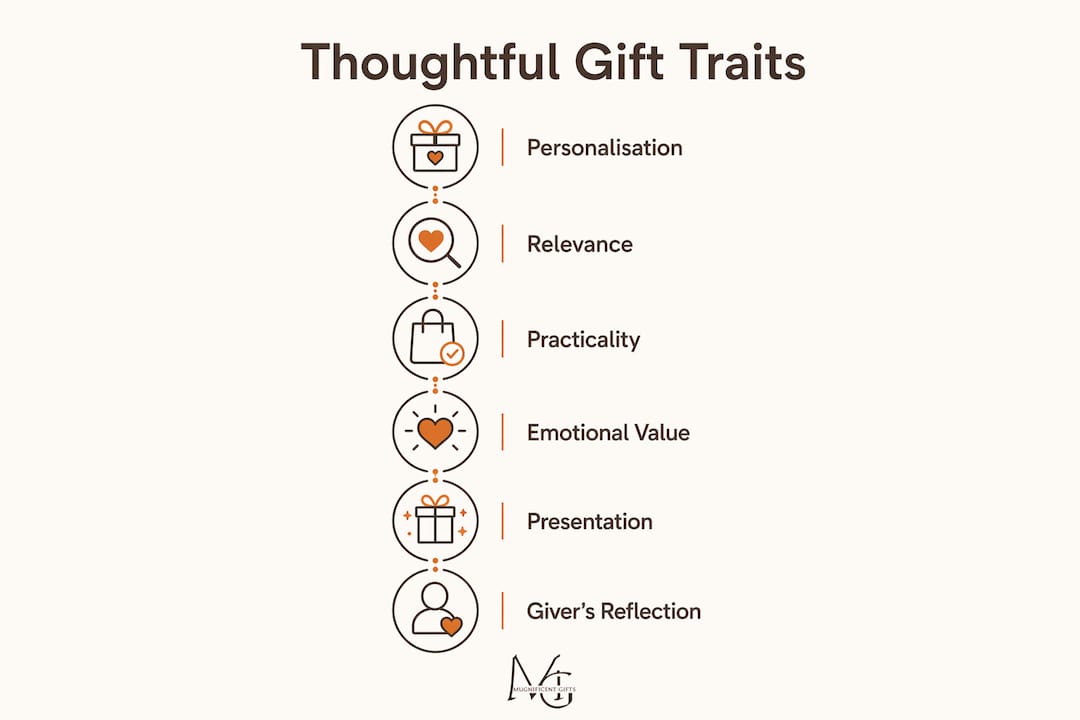
- Personalisation: it references something specific to the recipient, such as a hobby, an inside joke, or a life milestone
- Emotional resonance: it makes the recipient feel seen and valued, not just given something
- Usefulness or relevance: it fits naturally into their daily life or interests
- Reflection of care: the giver clearly invested time and thought, not just money
- Appropriate presentation: the way it is wrapped or delivered adds to the experience
Why do people give gifts, and why does thoughtfulness change everything?
Gift-giving is one of the oldest forms of human connection. People give gifts to celebrate, to express affection, to mark transitions, and to strengthen bonds with those they care about. Birthdays, anniversaries, graduations, and holidays all carry an unspoken expectation that a gift will communicate something words alone cannot.
The problem is that gifting can easily slide into obligation. When a present feels generic or rushed, recipients often sense it. Research published in Frontiers in Psychology confirms that even well-meaning gifts can feel like social obligations if the recipient perceives them as lacking genuine care or personal thought. The gift itself becomes secondary to what it signals about the relationship.
Thoughtful gifting changes that dynamic entirely. Occasions where it matters most include:
- Milestone celebrations such as a significant birthday or a new job, where the gift should acknowledge the person's journey
- Difficult times such as illness or loss, where a practical, considered gift communicates support without words
- Everyday appreciation where a small but well-chosen present can strengthen a friendship more than an expensive gesture
Impulsive or obligatory gifting tends to prioritise the giver's convenience over the recipient's experience. Thoughtful gifting reverses that priority. It asks: what does this person actually need, enjoy, or value?
Pro Tip: Before buying anything, spend two minutes writing down three things the recipient has mentioned wanting, struggling with, or enjoying recently. That list is worth more than any gift guide.
What characteristics actually define a thoughtful gift?
Understanding what makes a gift genuinely thoughtful helps you move beyond guesswork. These are the defining characteristics, with examples of each in practice.
1. Personalisation that goes beyond a name
Adding someone's name to a product is a start, but deep personalisation references something specific to who they are. A mug printed with a violin drawing for a violinist, or a card that quotes an in-joke, signals that you know this person. Research from the British Psychological Society suggests that gifts revealing the giver can deepen relationship bonds, because they represent an act of personal disclosure rather than a transaction.
2. Relevance to the recipient's actual interests
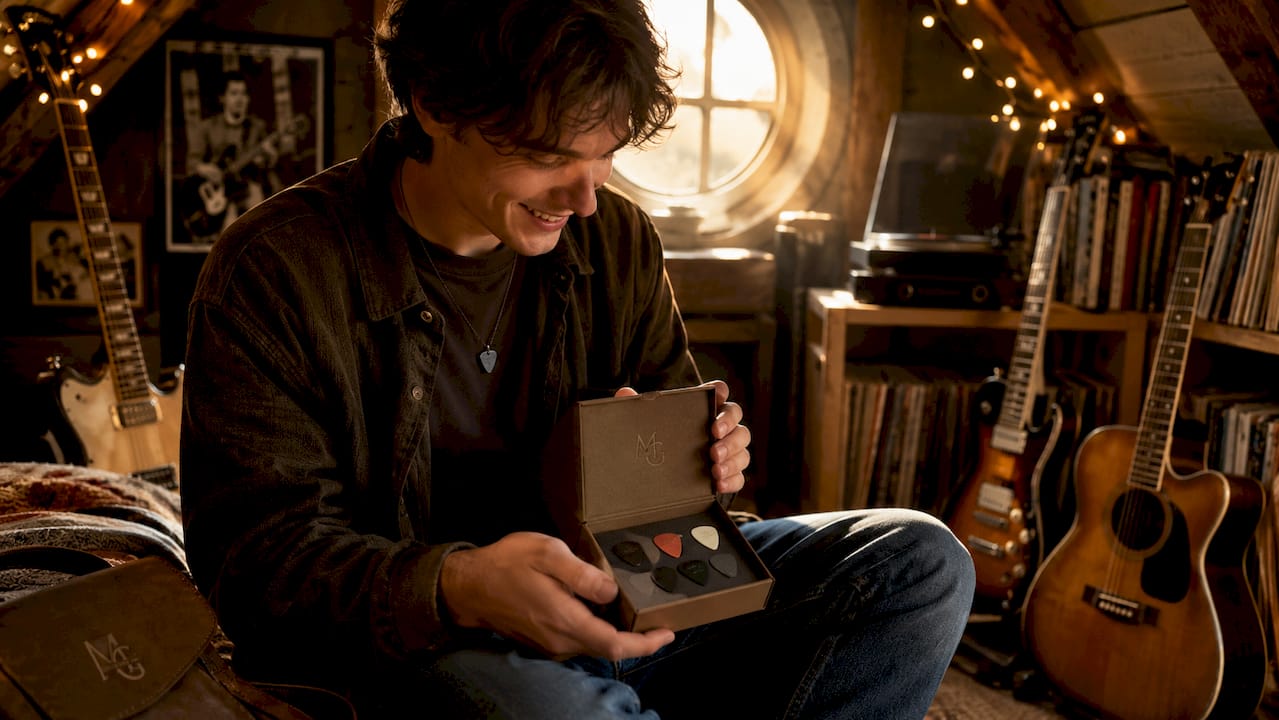
A gift aligned with someone's genuine passions feels far more considered than a generic luxury item. A musician who receives something tied to their instrument will feel understood in a way that a standard gift card never achieves. Relevance is the difference between a present that gets used daily and one that sits in a drawer.
3. Practicality and long-term usability
Research consistently shows that recipients value usefulness over the initial wow factor. Givers often focus on how impressive a gift looks when opened, but recipients care more about how much they will enjoy or use it over time. A well-chosen practical item, such as something that replaces a disposable habit or solves a specific problem, can convey more genuine care than a costly but impractical gesture.
4. Experiential or emotional value
Experiences create memories in a way that objects rarely do. A cooking class, a concert ticket, or even a shared meal carries emotional weight that outlasts the moment of giving. According to research from UCLA Anderson School of Management, experiential gifts strengthen relationships more than material ones, driven by the greater emotional intensity of consuming an experience versus owning a possession.
5. Presentation and packaging
How a gift arrives matters. Careful wrapping, a handwritten note, or a box that feels considered adds to the recipient's experience before they even see what is inside. Presentation signals effort, and effort signals care.

6. A reflection of the giver's personality
Gifts that share something of the giver's own interests or humour can create intimacy. Choosing a book you love and telling the recipient why you thought of them, or selecting a product that reflects a shared memory, turns a present into a conversation. The role of thoughtful design in gifts extends to this layer: when the aesthetic or concept of a gift reflects both giver and recipient, it becomes genuinely personal.
A few things to avoid when assessing whether a gift fits these characteristics:
- Assuming the recipient shares your taste without evidence
- Choosing based on what you would want rather than what they have expressed
- Prioritising visual impact at the expense of lasting usefulness
Common mistakes that make gifts feel less thoughtful
Even people with the best intentions fall into predictable traps. Recognising these patterns is half the battle.
- Equating cost with care. Research is clear that high cost does not correlate with perceived thoughtfulness. Recipients consistently prefer meaningful, budget-friendly gifts over expensive but impersonal ones. Spending more does not compensate for knowing less about the person.
- Ignoring what the recipient has already told you. Studies show that recipients strongly prefer gifts from their own wish lists over unsolicited ones, which givers often mistakenly believe are more thoughtful because they required more imagination.
- Focusing on the moment of opening rather than long-term use. Givers tend to prize surprisingness and visual impact at the point of exchange. Recipients, however, care far more about how useful and enjoyable a gift will be over time. This giver-recipient gap explains why so many well-intentioned presents end up unused.
- Poor or careless presentation. A thoughtful gift wrapped in a carrier bag sends a contradictory message. Presentation is part of the gift.
- Overthinking to the point of paralysis. Forcing creativity without genuine knowledge of the recipient often produces gifts that feel contrived. Simpler and more relevant nearly always beats elaborate and generic.
- Giving consumables without knowing the recipient's relationship with them. Some people love ephemeral luxuries like candles or bath products; others feel anxious about using something up. Knowing which camp the recipient falls into matters.
The psychological tendency for givers to misjudge what recipients want is well-documented. Givers focus on the exchange moment; recipients focus on ownership value. Closing that gap requires putting yourself genuinely in the recipient's position, not just imagining how the gift will look when unwrapped.
What psychology and research tell us about thoughtful gifting
The science of gift-giving reveals some genuinely surprising findings, and they consistently point in the same direction: thoughtfulness, emotional resonance, and relevance matter far more than price or spectacle.
The neurochemistry of giving is worth understanding. According to research published in Psychology Today, gifting triggers dopamine and oxytocin, chemicals that build empathy and trust between people. A thoughtful gift is not just a nice gesture; it is a biological signal that strengthens the bond between giver and recipient. Thoughtful gifts build social bonds by confirming the recipient's valued place within a relationship.
The UCLA Anderson research on experiential versus material gifts found that experiences evoke greater emotional intensity during consumption, and it is that emotional intensity, not the moment of receiving, that drives relationship growth. This has a practical implication: a shared experience or an experience-adjacent gift, such as a concert ticket or a workshop, tends to do more relational work than a physical object of equivalent value.
"The main takeaway from the psychology of gift-giving research is that, if your goal is to strengthen your relationship with the recipient, giving them an experience tends to be more effective." — The Conversation, psychological research on Christmas gifting
Mindful gifting, as explored in academic literature, takes this further. Mindful gifting emphasises slowing down to consider the full impact of a gift, including its sustainability and its meaning, rather than defaulting to consumerist impulse. The goal is not restriction but intentionality: choosing fewer, better gifts that genuinely serve the recipient.
Cultural context also shapes how thoughtfulness is perceived. Cash, for example, is considered unthoughtful in many Western contexts because it signals minimal effort. Yet in Chinese culture, cash given in a red envelope carries symbolic meaning that reframes the gesture entirely. Understanding the cultural backdrop of the recipient adds another layer of genuine consideration to the gifting process.
Pro Tip: When you are unsure between two options, choose the one the recipient will use most often. Frequency of use is a reliable proxy for how much a gift will be appreciated over time.
For those looking to explore meaningful gift choices across different occasions, the principle remains consistent: start with the person, not the product category.
Key takeaways
A thoughtful gift is defined not by its price but by how well it reflects genuine knowledge of and care for the recipient, with personalisation, usefulness, and emotional resonance as its core qualities.
| Point | Details |
|---|---|
| Personalisation drives appreciation | Gifts referencing specific interests or shared experiences feel more considered than generic presents. |
| Usefulness outlasts surprise | Recipients value long-term enjoyment over the initial wow of opening a gift. |
| Experiences strengthen bonds | Experiential gifts evoke greater emotional intensity and build closer relationships than material ones. |
| Cost does not equal care | Recipients consistently prefer meaningful, budget-friendly gifts over expensive but impersonal ones. |
| Presentation amplifies thoughtfulness | Careful wrapping and a handwritten note signal effort and add to the recipient's overall experience. |
Give a gift that actually means something

At Mugnificentdeals, every design starts with a specific person in mind. Whether it is a violinist who needs their morning coffee to feel like a small celebration of who they are, or a drummer who deserves something that makes them smile before the first rehearsal of the day, the personalised music mugs collection is built around the idea that a great gift says "I know you" without saying a word.
Browse the best personalised music mugs for gifts and find something that fits the musician in your life, not just their instrument, but their sense of humour, their identity, and the way they take their coffee.