

Creative teacher gifts are defined as personalised, thoughtful presents that go beyond generic tokens to express genuine appreciation for an educator's work and character. The question of why give creative teacher gifts has a clear answer: research shows that small acts of recognition increase individual motivation by 40% and help 74% of adults manage workplace stress. Teachers carry an enormous emotional load every day. A gift that reflects real thought does not just say "thank you." It says "I see you."
Why give creative teacher gifts instead of generic ones?
Creative teacher appreciation gifts work because they communicate something a shop-bought mug with "World's Best Teacher" printed on it simply cannot: that someone paid attention. Gallup studies confirm that regular recognition improves teacher retention and motivation, and that appreciated teachers engage more deeply with students. The gift is the vehicle. The message is the point.
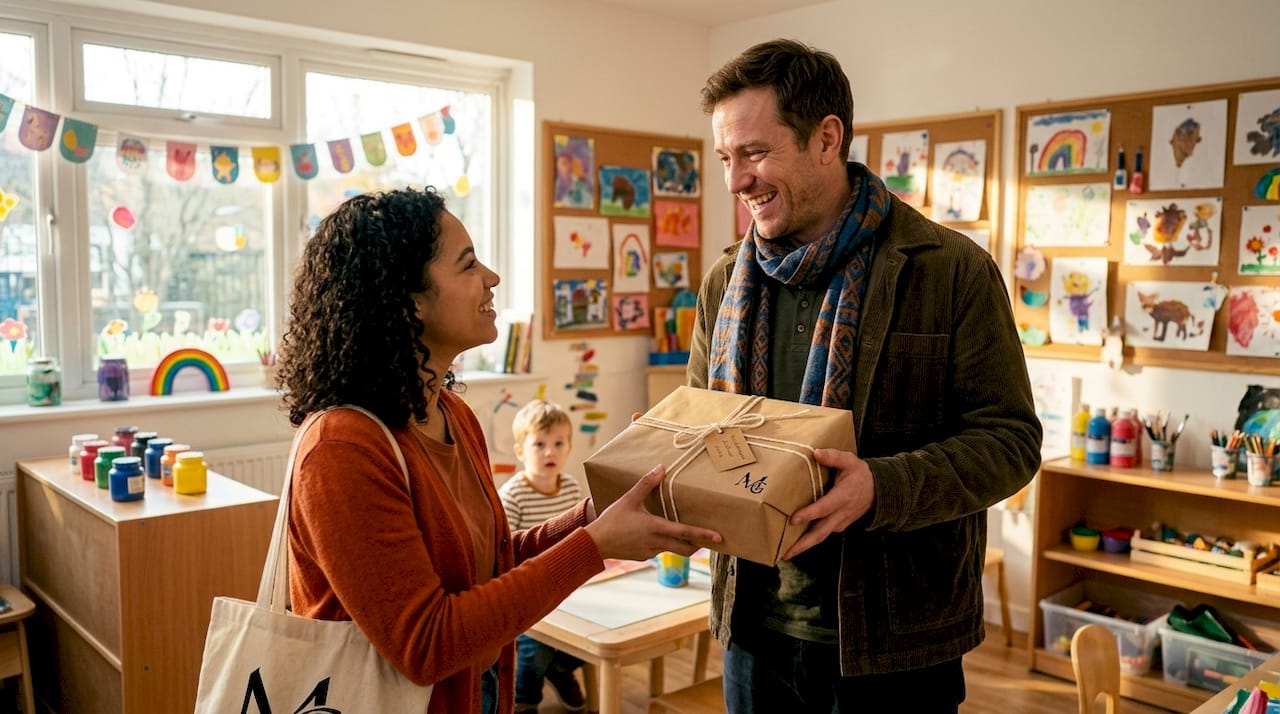
Generic gifts fail not because they are cheap, but because they are interchangeable. A teacher who receives the same printed tote bag from five different families in one week does not feel uniquely valued. She feels processed. Creative gifts, by contrast, carry a narrative. They tell the teacher something specific about how she is remembered, which is why they land so differently.
The term "teacher appreciation gift" covers a wide spectrum, from a handwritten card to a curated experience. The most effective ones sit at the intersection of personal relevance and practical usefulness. Understanding that distinction is the first step to choosing something that genuinely matters.
What types of creative gifts do teachers value most?
Teachers are consistent in what they say they want, and the answers may surprise you. Over 470 teachers surveyed named personalised handwritten notes as the most cherished gifts, often kept for years. That finding matters because it reframes the entire gifting exercise: the emotional weight of a gift is not proportional to its price tag.
That said, practical gifts organised with creativity are also deeply appreciated. Teachers frequently run out of essential classroom supplies by may, so a creative "survival kit" filled with sticky notes, quality pens, and snacks hits both the practical and the personal notes at once. It shows you understand the realities of the job.
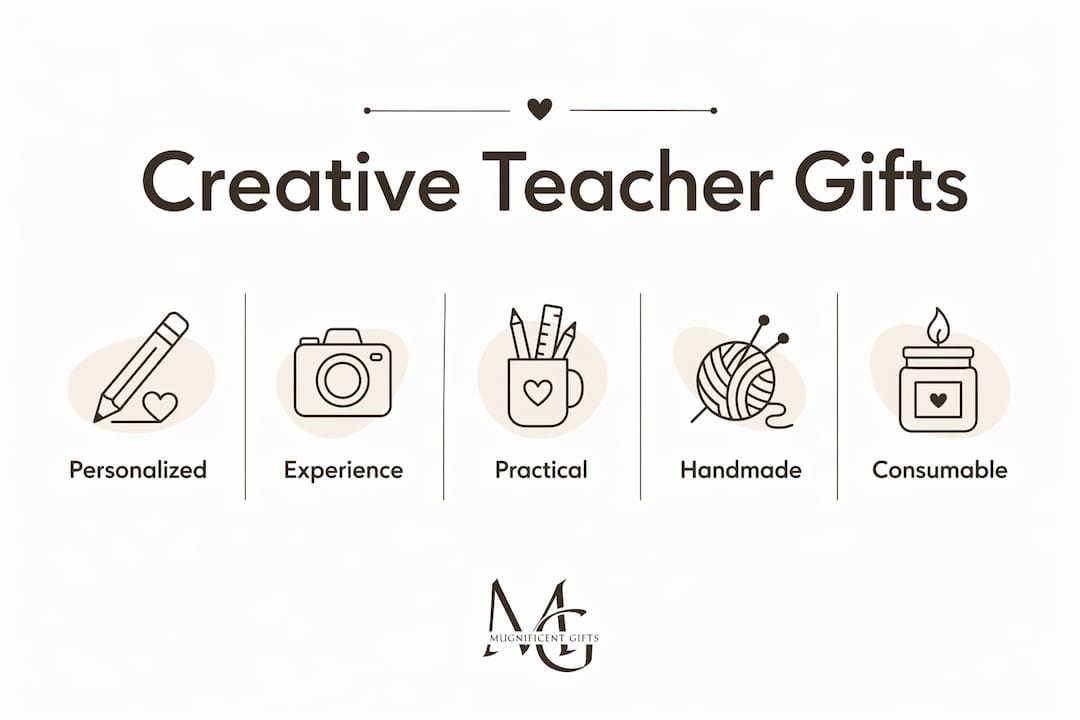
Here are the gift types that consistently resonate with educators:
- Personalised handwritten notes or letters from the child, describing a specific memory or lesson that stayed with them
- Classroom supply kits presented creatively, such as in a decorated box or themed basket
- Experience gifts like art workshops, cookery classes, or spa vouchers that offer genuine mental recharge
- Personalised items featuring the teacher's name, subject, or a shared inside joke from the classroom
- Consumables such as quality coffee, tea, or snacks that disappear without adding clutter
Pro Tip: If you are unsure what a teacher needs, ask the child. Children often know their teacher's favourite snack, drink, or hobby far better than adults realise.
Avoid gifts that are purely decorative and carry generic "teacher" branding. Experts advise choosing high-quality personal items the teacher would buy for herself, rather than items that signal "I bought this because you are a teacher" rather than "I bought this because I know you."
How do creative gifts support teacher well-being and reduce burnout?
Teaching demands sustained emotional availability. A teacher manages thirty different personalities, navigates parental expectations, and delivers curriculum targets, all before lunch. That level of emotional labour creates a genuine burnout risk, and it is one reason why thoughtful presents for teachers carry more weight than most gift-givers realise.
Creative or experience-based gifts provide longer-lasting psychological rewards than physical items, precisely because they offer restorative experiences. A pottery class or a creative workshop gives a teacher something rare: unstructured time to be a learner rather than an instructor. That role reversal is genuinely refreshing.
Gratitude activates neural pathways that reduce stress hormones and renew professional purpose. When a teacher receives a gift that reflects real thought, it does not just feel nice. It biologically reinforces her sense of value and belonging in the profession.
Educational wellbeing experts describe gratitude as a core wellness tool, noting that it strengthens social connections and lowers stress in ways that formal support systems often cannot replicate. A well-chosen gift is, in effect, a small act of preventive care for a professional who spends her days caring for others.
The benefits of giving teacher gifts extend beyond the individual. When teachers feel valued, student outcomes improve. Appreciated teachers are more present, more creative in their teaching, and more likely to stay in the profession. The ripple effect of one thoughtful gift is wider than it appears.
Common mistakes to avoid when choosing creative gifts for educators
Most gifting mistakes come from good intentions paired with insufficient information. Knowing what to avoid is as useful as knowing what to choose.
- Buying heavily branded "teacher" items. Mugs, bags, and frames stamped with "World's Best Teacher" create clutter and feel impersonal. Choose items the teacher would genuinely use in her own life.
- Choosing scented gifts without checking. Candles, lotions, and diffusers are popular choices, but scent sensitivity is a real concern. A strongly scented gift can trigger headaches or allergic reactions. Opt for neutral or consumable alternatives when in doubt.
- Assuming cost equals impact. Teachers consistently value intention over monetary value. A £10 gift chosen with care outperforms a £50 gift chosen in haste.
- Going it alone when a group gift is possible. Pooling contributions from several families unlocks better options, such as a spa day, a restaurant voucher, or a quality personalised item that one family could not justify alone.
- Ignoring the role of presentation. Handmade or thoughtful wrapping signals effort before the gift is even opened. It sets the emotional tone of the whole exchange.
Pro Tip: Group gifting works best when one parent coordinates early, sets a clear budget per family, and collects contributions at least two weeks before the occasion.
How to personalise creative gifts for a lasting impression
Personalisation is the single most reliable way to make a gift memorable. Handmade gifts tell a unique story that conveys the giver's invested time, helping teachers feel truly seen. That sense of being "seen" is precisely what generic gifts fail to deliver.
The most effective personalised gifts share a few common qualities:
- They reference something specific: a classroom phrase, a subject the teacher is passionate about, or a memory from the school year
- They incorporate the child's voice, whether through a handwritten message, a drawing, or a recorded video message
- They reflect the teacher's identity outside the classroom, such as her love of music, gardening, or a particular type of coffee
Experience gifts add another dimension. A creative workshop, for example, gives the teacher both a gift and a memorable occasion. She does not just receive something. She does something, and that experience becomes a story she tells.
| Approach | Best for |
|---|---|
| Personalised item with name or subject | Teachers who value daily-use gifts |
| Handwritten letter from the child | Any teacher, any occasion |
| Experience voucher (workshop, spa, restaurant) | End-of-year or long-serving teachers |
| Creative classroom supply kit | Practical teachers who mention supply shortages |
| Group gift with pooled contributions | High-impact occasions like retirement or maternity leave |
Involving children in the gift creation process adds authenticity that no shop can replicate. A child who decorates a gift box, writes a letter, or chooses a specific item based on a classroom memory gives the teacher something no catalogue can offer: proof that she made a difference.
For music teachers specifically, personalised gift ideas that reference their instrument or teaching style carry particular resonance. A gift that speaks the teacher's own language lands with a precision that generic options never reach.
Key takeaways
Creative teacher gifts work because they combine personal relevance with emotional recognition, producing measurable benefits for teacher motivation, well-being, and retention.
| Point | Details |
|---|---|
| Personalisation drives impact | Gifts referencing specific memories or the teacher's identity outperform generic options every time. |
| Small gestures carry real weight | Micro-recognitions increase motivation by 40% and help 74% of adults manage workplace stress. |
| Avoid clutter and branded items | Choose high-quality personal items over heavily labelled "teacher" gifts that accumulate without meaning. |
| Experience gifts offer lasting rewards | Creative workshops and vouchers provide restorative benefits that physical items rarely match. |
| Intention matters more than cost | Teachers value the partnership between home and school over the monetary value of any gift. |
Why I think most people underestimate the power of a well-chosen teacher gift
People often agonise over whether their gift is "big enough." I have seen parents spend more energy worrying about the price than thinking about the person. That is the wrong calculation entirely.
The gifts I have seen teachers genuinely treasure are almost never the expensive ones. They are the ones that prove someone was paying attention. A mug that references a music teacher's favourite instrument, a note that quotes something she said in class, a workshop voucher that gives her two hours of being a student again. These things cost relatively little. Their impact is disproportionate.
What strikes me most is how rarely teachers are treated as full human beings with lives, preferences, and passions outside the classroom. A gift that acknowledges that dimension does something quietly profound. It says: "We know you are more than your job title." That is a message worth delivering, and a well-chosen creative gift is one of the most efficient ways to deliver it.
The psychology behind creative gifting confirms what instinct already tells us: thoughtfulness is the active ingredient. Everything else is packaging.
— Lasse
Thoughtful teacher gifts, ready when you are
Finding a gift that genuinely reflects a teacher's personality does not have to be difficult. Mugnificentdeals specialises in personalised, music-themed gifts that feel sketched and thought-out rather than mass-produced. Each design speaks to a specific kind of person: the violinist who marks time in her sleep, the music teacher who has heard every excuse for missing practice.

Whether you are shopping for an end-of-year occasion, a back-to-school surprise, or simply a moment of appreciation, Mugnificentdeals offers unique gifts for music teachers that combine humour, personality, and daily practicality. A gift that earns a genuine smile the moment it is unwrapped is always worth finding. You can browse the full range at Mugnificentdeals.
FAQ
Why are creative gifts better for teachers than standard ones?
Creative gifts communicate personal recognition rather than obligation. Teachers value intention and the sense of partnership between home and school far above monetary value or generic branding.
What is the most appreciated teacher gift according to teachers?
Over 470 teachers named personalised handwritten notes as their most cherished gifts, often kept for years. Practical classroom supply kits and experience vouchers follow closely.
How much should you spend on a creative teacher gift?
Most teachers appreciate tokens in the £10–£25 range when chosen thoughtfully. Group gifting allows families to pool contributions for higher-impact options without placing the burden on one household.
Do experience gifts work well for teachers?
Experience gifts provide longer-lasting psychological rewards than physical items. Experts highlight that creative workshops and similar experiences offer genuine mental recharge, which is rare and valuable for educators.
Should children be involved in choosing or making the gift?
Yes. A child's direct involvement, whether through a handwritten letter, a drawing, or selecting a specific item, adds authenticity that no shop-bought gift can replicate. It also makes the gift more meaningful to the teacher.