
You usually need permission to put song lyrics or musical notation on merchandise in the UK. Most lyrics, tunes and recognisable musical elements still in copyright require clearance before you can print them commercially, and there is no shortcut for "a few seconds" of a song on a printed product. If ownership is unclear, your first move is to trace the rights holder or choose text that is public domain or entirely your own.
TL;DR:
- Copyright in musical works and lyrics generally lasts for 70 years after the creator’s death, so recent songwriters' lyrics are almost always protected.
- Clearances require contacting the specific rights holder, usually the publisher or songwriter, since collecting societies do not cover printed lyric reproduction.
- For small runs, a written permission from the publisher or songwriter is often faster and cheaper than negotiating licensing schemes or royalties.
- Using short public domain quotes or original artwork is a safe, license-free alternative to quoting lyrics directly.
- Failing to clear rights can lead to legal actions like cease-and-desist orders, damages, or legal costs, with risk increasing alongside sales volume.
Table of Contents
- Quick checklist before you print music on a mug or tee
- What parts of a song are protected and for how long
- Who to contact: publishers, songwriters and UK collecting societies
- Step by step: clearing rights for mugs, T-shirts and printed goods
- Practical compliance checklist for UK mug sellers
- Legal and commercial risks of printing music without permission
- A seller's view on creative freedom and copyright law
- How Mugnificent Deals keeps your music merchandise on the right side of the law
- Essential GOV.UK, IPO and PRS pages to consult
- Sources
- FAQ
Quick checklist before you print music on a mug or tee
Before you send anything to production, run through a short mental audit. It takes minutes and can save you a legal headache later.
- Check the copyright term: work out the creator's date of death or the sound recording's publication date.
- Decide which right applies: lyrics and notation, or a sound recording, since each is controlled differently.
- Search publisher directories and the collecting societies for the current rights owner.
- If clearance looks unlikely, switch to public domain text or write your own line instead.
- Put any agreement in writing and file it against the product's SKU so it is easy to find later.
Pro Tip: Keep a simple spreadsheet mapping each product to its licence status. It turns a legal question into a five-second lookup.
What parts of a song are protected and for how long
A single song can carry several separate copyrights, and merchandise sellers often trip up by clearing one while ignoring another. The musical work covers the melody and lyrics as written. The sound recording is the specific captured performance. Performers' rights protect the individual who performed it. Printing a lyric line on a mug touches the musical work, not the recording, but you still need permission from whoever controls that written text.
In the UK, copyright in musical works and lyrics generally lasts for the life of the creator plus 70 years after the end of the calendar year they died. Sound recordings run on a separate, publication-linked timeline. There is also a transitional provision, sometimes called the 2039 rule, which affects certain unpublished works and extends protection for them regardless of how long ago the author died. The IPO's duration guidance sets this out work by work, and it is worth checking directly rather than assuming.
A quick reality check: if a songwriter died less than 70 years ago, their lyrics are almost certainly still protected, and that single fact rules out printing them without permission.

Who to contact: publishers, songwriters and UK collecting societies
Collecting societies handle a great deal of music licensing in the UK, but their remit is narrower than many sellers assume. Understanding who controls what saves wasted enquiries.
- PRS for Music licenses public performance and some broadcast uses, not printed lyric reproduction.
- MCPS manages mechanical reproduction rights, largely for recordings on physical audio formats.
- PPL licenses the use of recorded music itself, separate from the underlying composition.
- Printed lyric or notation use typically sits with the music publisher or the songwriter directly, so that is who you approach.
- If a diligent search cannot locate the owner, the Intellectual Property Office's orphan works scheme offers a licensed route for limited use.
As GOV.UK's guidance on music licences for physical products puts it, there is no single "merchandise licence" that covers this ground. You identify the individual rights holder and approach them, or work through a specialist agent who already has those relationships.
Step by step: clearing rights for mugs, T-shirts and printed goods
Clearance sounds daunting until you break it into a sequence. Most small sellers can complete it without a lawyer, provided they are methodical.
- Pin down exactly what you're printing: a full verse, a fragment, or notation, since each implicates different rights.
- Trace the rights holder through the publisher, the songwriter's agent, or the collecting societies' repertoire databases.
- Send a clear written request describing your artwork, print run size, sales territory and intended use.
- Negotiate terms: flat fees, per-unit royalties and restrictions on run size or retail channel are all common, so get everything in a written licence.
- If an exhaustive search fails, document every step and consider the IPO orphan works scheme for a licensed, limited use.
- Bring in a clearance agent if you need multiple works cleared at once, are drawing on an older back catalogue, or plan to sell internationally.
The MCPS limited manufacture guidance is a useful reference point here: its schemes cover physical audio products like CDs, not printed lyric reproduction on mugs or apparel, so do not assume a mechanical licence covers your merchandise. For a single small print run, a short written permission direct from the publisher is often faster and cheaper than negotiating a formal royalty scheme.
Pro Tip: Ask the publisher for a one-off flat fee tied to your exact run size. It is usually simpler to agree and easier to track than an ongoing royalty.
Practical compliance checklist for UK mug sellers
Turning legal principle into daily practice is where most small merchandise businesses actually live. A few habits keep you protected without slowing production.
- Favour original phrases, short public domain quotes or commissioned artwork over quoted lyrics wherever the design allows it.
- Keep a licence file per SKU noting territory, retail channel and any run-size limits attached to the permission.
- Write clearance responsibilities into agreements with printers and fulfilment partners so nobody assumes someone else checked.
- Log any licence fees as separate ledger entries and keep correspondence and licences on file for at least the term of the agreement.
- Design a fallback version of any lyric-based mug so production can continue if permission is refused.
| Approach | Licensing burden | Best suited to |
|---|---|---|
| Original wording or commissioned art | None | Everyday stock designs |
| Short public domain quote | Minimal | Classical or historic themes |
| Cleared, licensed lyric | Ongoing tracking required | Limited runs with clear commercial value |
Small design choices, like a short music quote rather than a full verse, or a print-ready sketch design, often solve the licensing question before it becomes one.
Legal and commercial risks of printing music without permission
Ignoring clearance is not a victimless shortcut. Rights holders and publishers do act on unlicensed use, and the consequences scale with how visible or commercial your infringement is.
- A cease and desist letter is usually the opening move, giving you a chance to withdraw stock or agree terms retrospectively.
- Persistent or large-scale infringement can escalate to an injunction, damages or an account of profits, plus legal costs.
- Litigation against small sellers is uncommon for a single mug, but the exposure grows with print run size and retail visibility.
- Good records and a written licence are your strongest protection, both legally and in maintaining trust with retail partners.
A seller's view on creative freedom and copyright law
Copyright rules can feel like they are pulling against creativity, but in practice they push you towards originality rather than against it. A lyric line often adds less to a design than an evocative sketch of the instrument itself, and the sketch never needs a licence.
I once watched a small redesign happen in an afternoon: a mug built around a quoted chorus became one built around a hand-drawn violin and a single original line, no fees, no waiting. Mugnificent Deals has written more on this exact trade-off in its guide to lyrics licensing for mug sellers, worth a read before you commit a design to print.
— Lasse
How Mugnificent Deals keeps your music merchandise on the right side of the law
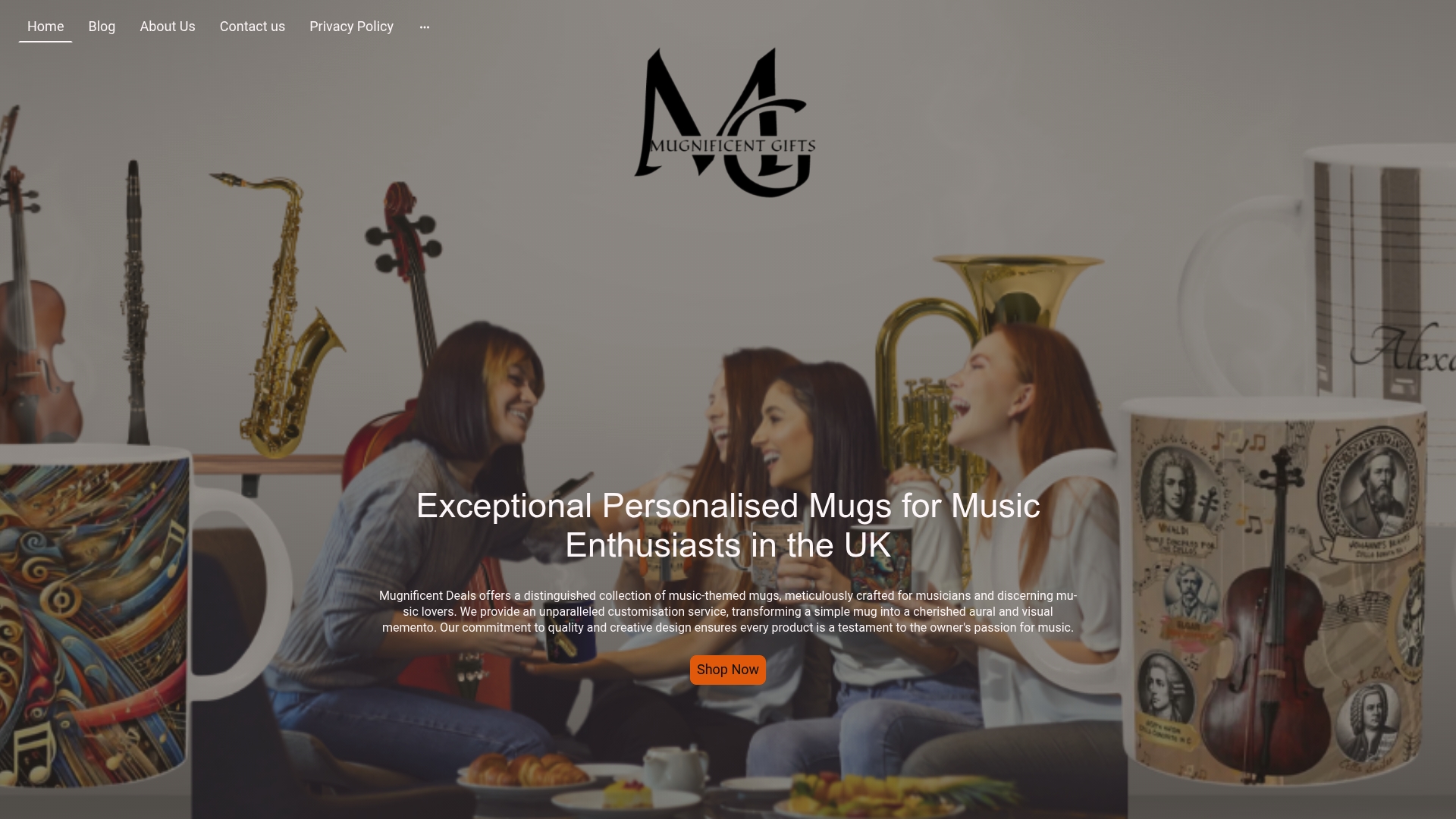
A specialised approach focuses on personalised, music-themed mugs built around original artwork, instrument sketches and short, safe phrasing rather than quoted lyrics that need clearance. That specialism means customers get a design that feels personal without carrying a hidden licensing risk.
- Browse the full personalised music mugs collection for designs built around instruments, names and original quotes.
- Explore instrument sketch mugs or composer and music history mugs for gift-ready, licence-safe alternatives.
- Get in touch directly if you have a custom commission in mind and want to talk through wording before you order.
If you already have a cleared lyric you would like printed, or you simply want a music gift that skips the licensing question altogether, start with the personalised music mugs collection and go from there.
Essential GOV.UK, IPO and PRS pages to consult
Keep these bookmarked before you start any clearance work.
- How long copyright lasts: the core GOV.UK reference on copyright duration.
- Music licences for physical products: GOV.UK guidance specifically on merchandise and physical goods.
- Copyright notice: duration of copyright term: the IPO's detailed breakdown, including the 2039 rule and orphan works route.
- MCPS limited manufacture FAQs: PRS for Music and MCPS guidance on reproduction licensing.
For general merchandising and design tips beyond the legal side, D&K Bean and Leaf's guide to branded coffee merch is a useful practical companion.
Sources
FAQ
Is there a copyright law for music in the UK?
Yes, music in the UK is protected under the Copyright, Designs and Patents Act, which covers musical works, lyrics, sound recordings and performers' rights separately. Each of these can require its own permission before commercial use on merchandise.
What is the 2039 rule in UK copyright law?
The 2039 rule is a transitional provision affecting certain unpublished works, extending their protection regardless of how long ago the author died. The IPO's duration guidance sets out exactly which works it applies to, and it is worth checking directly rather than assuming a work has fallen out of copyright.
How do I avoid copyright infringement with T-shirts?
Use original wording, commissioned artwork or text that has genuinely entered the public domain rather than quoting song lyrics. Where you do want to use a specific lyric, trace and contact the publisher or songwriter for written permission, since collective licences rarely cover printed reproduction.
How many seconds of music can I use without copyright permission?
There is no set number of seconds that is automatically free to use in the UK, and this applies equally to printed merchandise. Fair dealing exceptions are narrow and are unlikely to cover commercial products, so any recognisable lyric or notation still in copyright needs clearance regardless of length.
Do PRS for Music or MCPS cover printing lyrics on mugs?
No, PRS for Music, MCPS and PPL administer performance, mechanical and recording rights, but their standard licences do not typically extend to printing lyrics or notation on consumer goods. For that, you need to approach the music publisher or songwriter directly.