

Buy from a personalised mug maker that issues a proof before printing, and confirm ceramic safety documentation and clear care instructions before you pay. These three checks, a British spelling proof, safety paperwork, and honest care guidance, separate a mug you will treasure from one that lands with "colour" where "color" should be.
TL;DR:
- Buyers should confirm that the seller provides a UK-English proof and safety documentation before finalizing a personalised mug order.
- Ensure the seller ships from within the UK and uses consistent British spellings such as colour, favourite, and organise in their listing.
- Reputable UK sellers will have safety test documentation and a clear reprint or refund policy if spelling errors occur after approval.
- Hand-washing is generally recommended for personalised mugs with intricate designs to preserve the print and safety compliance is regulated for all food-contact ceramics.
- Using precise British spelling and phrasing, and requesting explicit final sign-off during proofing, minimizes errors and ensures the mug's tone suits UK audiences and safety standards.
Table of Contents
- How to find UK-available mugs and sellers that use British spelling
- British spelling, phrasing and ready-to-use mug text examples
- A practical proofing checklist and ordering workflow
- UK ceramic safety requirements and practical care advice
- Typical UK pricing, lead times and delivery expectations
- Designing for authenticity: why proofing is personal
- How Mugnificent Deals helps with proofing and musician-focused design
- Sources
- FAQ
How to find UK-available mugs and sellers that use British spelling
Start with sellers based in the UK, or ones who clearly state UK fulfilment, rather than relying on where a marketplace happens to list the item. A seller's registered location often shows up in the shop policies or "About" section, and UK-based shops are far more likely to write and spell in British English by default.
When you are browsing listings, a few signals tell you quickly whether a seller understands UK conventions:
- The listing copy itself uses British spellings consistently, not just in the product title.
- The seller mentions a proofing or mockup step before printing.
- Returns and exchanges are described in terms that make sense for UK buyers, including who pays for a reprint if there is an error.
- Shipping is marked as dispatched from within the UK, which usually means faster delivery and fewer customs complications.
If you find a listing from an overseas shop that still looks appealing, do not assume British spelling by default. Many templated personalisation tools default to American English unless you specify otherwise, so ask directly whether the seller can produce a UK-English proof before committing. A shop offering a curated selection of personalised music mugs for gift buyers is worth comparing against generic marketplace listings precisely because the spelling and tone are built for a UK audience from the start.
British spelling, phrasing and ready-to-use mug text examples
British English has its own rhythm, and a handful of words trip up templates built for American audiences. The most common swaps to check on any mug order are colour (not "color"), favourite (not "favorite"), and organise (not "organize"). On the ise versus ize question, UK retail convention leans towards "ise" endings such as organise, realise and personalise, so use that consistently unless the seller specifically tells you otherwise.
A few ready-to-adapt lines show how this plays out on an actual mug:
- "My favourite sound is the one right before the applause."
- "I practise until it sounds like improvisation."
- "Keep calm and tune your violin."
- "World's most organised drummer (allegedly)."
- "Humour me, I'm a musician."
Pro Tip: Write out the exact phrase you want, spell-checked in British English, and paste it into the order form rather than typing it fresh on the seller's site, where autocorrect can quietly switch it back to American spelling.
Word choice matters as much as spelling. "Mug" itself carries a double meaning in British slang: a Cambridge Dictionary entry confirms that beyond the drinking vessel, "mug" can mean a fool or someone easily deceived, and "muggins" is a jocular, self-deprecating version of the same idea. That makes for a good joke on a mug intended for yourself, but check the tone carefully before putting it on a gift for someone else, since the line between "cheeky" and "insulting" is thinner than it looks in a text box.
A practical proofing checklist and ordering workflow
Getting British spelling right on a personalised mug is less about luck and more about process. A sensible order sequence looks like this:
- Write out your exact wording first, including capitalisation and punctuation, and save it somewhere outside the order form.
- Request a UK-English proof or digital mockup before the seller prints anything.
- Check line breaks on the mockup, since text that looks fine in a straight line can wrap awkwardly on a curved mug.
- Confirm any special characters, such as accented names or musical symbols, render correctly in the chosen typeface.
- Give explicit written sign-off on the final proof rather than a verbal "looks good".
Ask the seller about revision limits and how long a proof typically takes to turn around, particularly if you are ordering close to a birthday or a recital. Confirm that production prints exactly what appears in the approved mockup, not a "close enough" interpretation of it.
Pro Tip: Save a copy of the approved mockup and any care or safety notes the seller sends. If a mug arrives with the wrong spelling, that saved proof is the fastest way to prove the error was on their end, not yours.
UK ceramic safety requirements and practical care advice
Ceramic mugs sold in the UK are not just a design choice, they are a regulated food-contact product. Under The Ceramic Articles in Contact with Food (England) Regulations 2006, ceramic items placed on the UK market must meet defined migration limits for lead and cadmium, and sellers are expected to keep documentation proving compliance. A related rule, The Materials and Articles in Contact with Food (England) Regulations 2012, requires a written declaration at the retail stage for ceramic articles not yet in contact with food, with test documentation available on request.
A mug that will touch your lips every morning should come with the same paper trail as any other food-contact product, even if it also has a joke about violins on it.
If a product page does not mention safety compliance, it is reasonable to ask the seller directly for a Declaration of Conformity or test report, including the lab name and test date. Reputable UK sellers, including guidance published by Mugnificent Deals on proving mug safety, explain what documentation buyers should expect and how to request it.
Migration limits for lead and cadmium are defined by UK ceramic safety regulation, and sellers must be able to show test evidence or documentary proof that their materials fall within those limits. On care, "dishwasher-safe" claims vary by print method, so for mugs with heavy personalisation or speciality finishes, hand-washing tends to keep the design looking sharp for longer, a point covered in more detail in care guidance for personalised mugs.

Typical UK pricing, lead times and delivery expectations
Personalised mug prices in the UK depend on finish, complexity and delivery speed, so it pays to compare sellers on value rather than the headline price alone.
- Expect extra cost for rush proofs, individual gift packaging, or speciality finishes such as metallic or colour-change coatings.
- Standard proofing and production usually takes longer than rush options, and UK shipping costs scale with speed, not just distance.
- A reliable seller should offer a clear reprint or refund policy if a spelling error makes it through to the final printed mug, provided the error was not on the approved proof.
Designing for authenticity: why proofing is personal
Designing mugs for musicians has taught me that the smallest detail, a word, an instrument name, a tuning joke, is often the whole gift. Get "fiddler" right instead of "violinist" for the cousin who plays folk sessions, and the mug lands exactly as intended.
That is why I treat a UK-English proof and a safety check as non-negotiable steps, not formalities. A gift only works if it is both correct and safe to use every morning.
— Lasse
How Mugnificent Deals helps with proofing and musician-focused design
Some personalised mug makers build every personalised order around a language proof, so the spelling, phrasing and layout you approve is exactly what gets printed, not a template's best guess. The focus stays narrow and deliberate: musicians, music teachers, students and anyone who wants a gift that speaks the language of rehearsal rooms and recitals rather than generic sentiment.
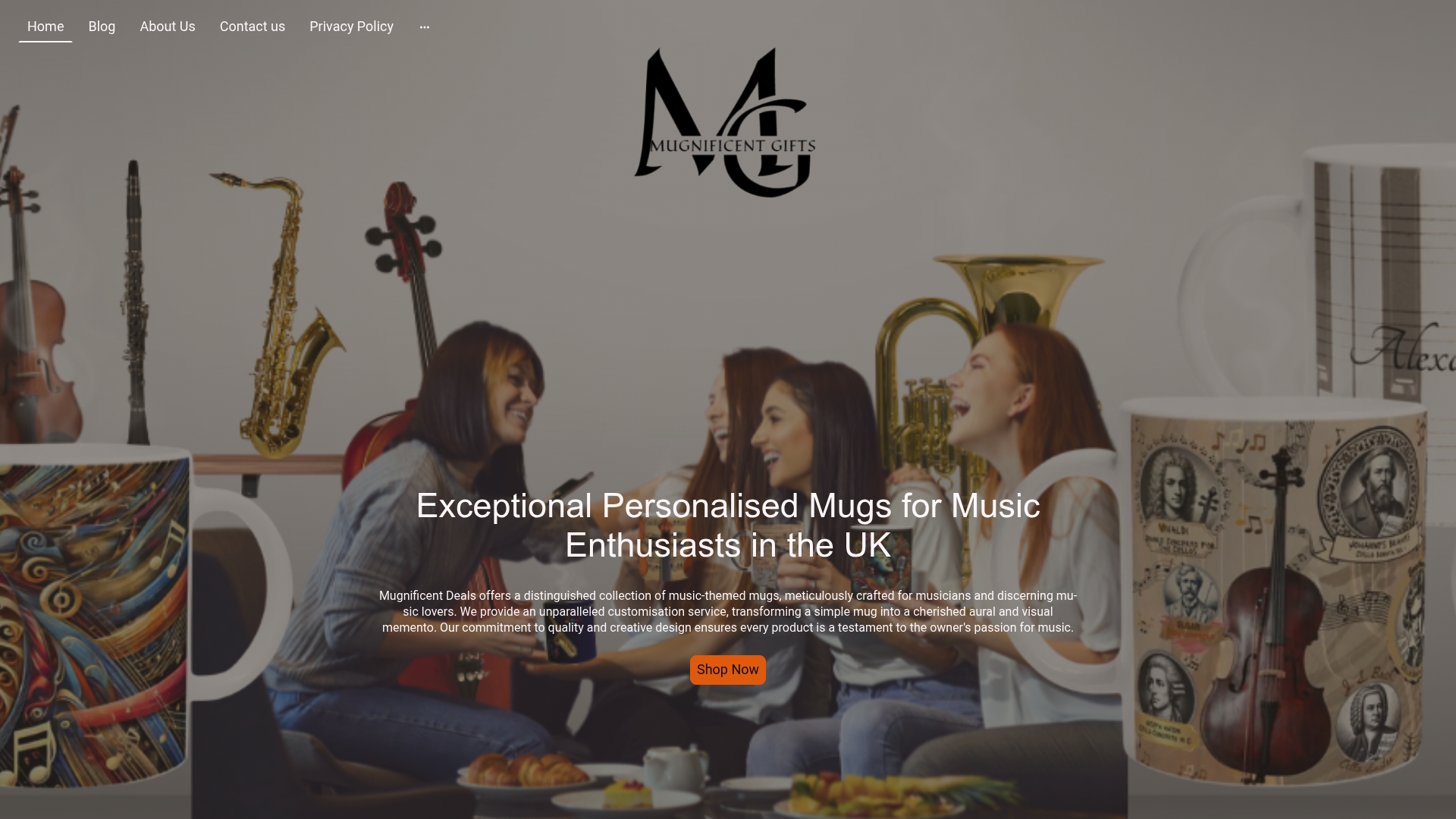
What that looks like in practice:
- Music-specific lines and designs, such as hand-drawn instrument sketches or composer history references.
- Personalised names, instruments and inside jokes checked against your wording before printing.
- Care guidance supplied alongside orders to advise on preserving the personalised finish.
Browse the personalised music mugs collection to see current designs, including instrument personalised sketch mugs and Composer Music history Mugs, or start from the full collection if you are choosing a gift rather than a specific instrument.
Sources
For spelling itself, the Cambridge Dictionary and Oxford Learner's Dictionaries confirm British usage and slang senses of "mug". For safety, UK ceramic migration limits and documentation duties sit in the regulations already linked above. For general gift comparison across price bands, WantThis's home and kitchen gift guide is a useful outside reference.
- MUG | English meaning - Cambridge Dictionary
- The Ceramic Articles in Contact with Food (England) Regulations 2006
FAQ
What do the British call a mug?
The British call it a mug, the same word used elsewhere, describing a large, deep cup with straight sides and a handle, typically used for hot drinks and usually without a saucer, as defined by the Cambridge Dictionary. It is the everyday word, with no regional alternative in common use.
What does "mugs" mean in UK slang?
In UK slang, "mugs" can mean fools or people who are easily deceived, a secondary meaning alongside the drinking vessel. The Cambridge Dictionary lists this usage, which is why some novelty mugs lean into the joke deliberately.
What does "mugg" mean in Cockney slang?
There is no separate Cockney term spelled "mugg". The standard British slang sense of "mug", meaning a fool, is the one typically referenced, and "muggins" is a related jocular, self-referential form noted in UK dictionaries.
What is the difference between a cup and a mug in the UK?
A cup is generally smaller, often used with a saucer for tea or coffee in more formal settings, while a mug is larger, sturdier and used without a saucer for everyday hot drinks. Dictionary definitions of "mug" from sources like Oxford Learner's Dictionaries describe it specifically as a tall cup for hot drinks, distinct from the more formal cup and saucer pairing.