
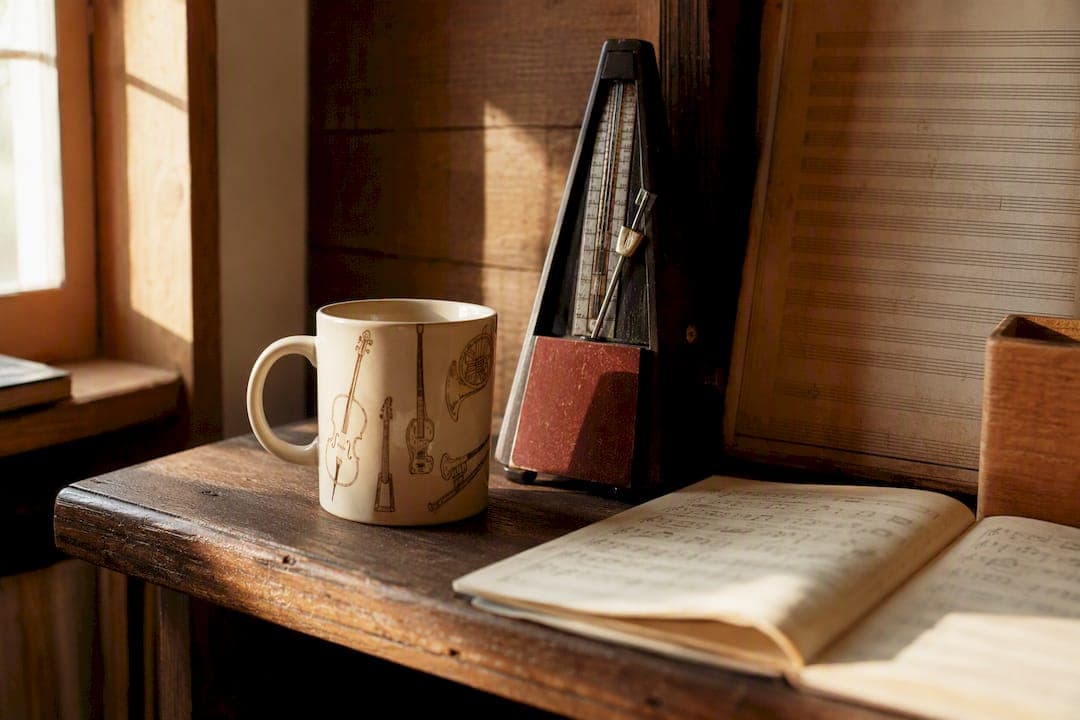
Personalised music mugs and a handful of small themed accessories are the fastest way to give a practice room or studio genuine character. This article walks through nine purchase-ready ideas, shows you how to display and personalise them so they read as intentional rather than cluttered, and covers gifting scenarios, care notes, and where to find pieces worth buying, including options from Mugnificentdeals.
TL;DR:
- Personalised music mugs should feature specific, meaningful artwork and well-chosen messages to ensure they stand out as deliberate decor rather than clutter.
- Proper scaling, font selection, and grouping items in odd numbers enhance intentionality and visual harmony in a music room display.
- Care and material notes are crucial; sublimated designs last longer, but all personalised ceramic mugs typically require hand washing and separate microwave safety checks.
- Neutral, muted color schemes based on natural instrument tones create a timeless, cohesive backdrop that suits most practice spaces better than bright or overly themed decor.
- Subtle, understated decor choices like line art, black-and-white photos, and small DIY projects outperform loud statements in creating a respectful, personalized music environment.
Table of Contents
- Nine music room decor ideas built around personalised mugs
- How do you personalise and place mugs so they look intentional?
- Choosing gifts for teachers, students and performers
- What care and material notes matter before you order?
- Which colour schemes suit a music room?
- Acoustic treatment and soundproofing decor ideas
- Furniture and storage that actually suit instruments
- Lighting choices that set the right mood
- What wall art fits a music-themed room?
- DIY projects for personalising a music space
- Why subtle details beat loud statements in a music room
- Where to find personalised music mugs worth buying
- Sources
Nine music room decor ideas built around personalised mugs
A shelf full of generic band merchandise looks like a teenager's bedroom. A shelf with two or three considered, personalised pieces looks like someone who actually plays. The difference is almost always specificity: a name, an instrument, a private joke, rather than a stock treble clef bought off a shelf. Here are nine small items that do the job well, each suited to a different recipient or moment.
- Instrument-illustration mug. A hand-drawn violin, trumpet, or upright bass rendered in simple line art suits a serious musician who would find a cartoon guitar juvenile. Display it on an open shelf next to the instrument case it echoes, so the artwork and the real object sit in visual conversation.
- Teacher appreciation mug. A short, warm message ("Thank you for years of patient scales") works better than a generic "Best Teacher" print because it names the actual gift. Give it wrapped with a note rather than loose, so the personalisation is the first thing they see.
- Lyric quote mug. A line from a piece the recipient performs or teaches, printed in a clean serif rather than a novelty font, feels literary instead of gimmicky. Keep it on a desk rather than a shelf, somewhere it gets used daily.
- Photo memory mug. A recital photo or a shot of a first instrument works well for milestone gifts, particularly graduations. Pair it with a small frame holding the same image so the mug does not have to carry the sentiment alone.
- Mug and pick holder combo. A small dish or magnetic strip for guitar picks sits naturally beside a mug on a practice desk. This suits guitarists and bassists specifically, and the two items together read as a considered set rather than two random purchases, a pairing gift-mug guides consistently recommend for exactly this reason.
- Enamel pin display on a small cork board. For students who collect ensemble or festival pins, a cork board no bigger than a sheet of paper turns loose pins into a proper display. Position it above the mug shelf so the eye travels naturally from one to the other.
- Mini framed sheet-music print. A single page from a favourite piece, framed small and placed beside the mug rather than on a busy wall, adds texture without competing for attention.
- Personalised coaster set. Practical and low-cost, a coaster with the recipient's name or instrument protects a piano lid or desk while doubling as décor. It is a sensible add-on gift rather than a standalone present.
- Themed trinket bowl. A small ceramic bowl for spare guitar strings, valve oil, or rosin keeps clutter contained and gives the shelf a finished look. Choose one that echoes the mug's colour rather than matching it exactly.
The common thread across all nine is restraint. One strong personalised piece, given room to be noticed, beats five decorative items competing for the same three square feet of shelf.
How do you personalise and place mugs so they look intentional?
Getting the personalisation right matters more than the number of items you buy. A single well-chosen mug with the correct name spelling and a proportionate illustration will outperform three mismatched pieces every time.
- Match illustration scale to the mug. An instrument drawn too large looks cramped against the handle; too small and it disappears when the mug is picked up. Look at proofs before approving, not just thumbnail previews.
- Choose a font that fits the recipient's taste. A cellist who performs Baroque repertoire will likely prefer a restrained serif over a playful script, whatever the quote says.
- Group displayed items in odd numbers. Three pieces (mug, small frame, trinket bowl) read as arranged; two or four often look accidental.
- Match tones to one focal piece. Pick your instrument illustration or a framed print as the anchor, then choose supporting colours from within it, a rule gallery-wall specialists apply at full wall scale that works just as well shrunk down to a shelf.
- Use a small stand or riser. Elevating the mug on a low riser, even a simple wooden block, separates it visually from flatter items like coasters.
- Build a vignette, not a display case. Combine the mug with one small prop, a pick, a miniature metronome, a framed photo, rather than several unrelated objects.
Pro Tip: Always ask for a colour proof before final approval, not just a design mockup. Screen colours and printed ceramic colours can differ noticeably, particularly with deep reds and true blacks.
On ordering logistics, factor in realistic turnaround. Personalised items typically need a design approval step before production starts, so build in a few extra days beyond the stated shipping window if the gift has a fixed date, a recital or graduation, for instance.
Choosing gifts for teachers, students and performers
The right personalised mug depends entirely on who is receiving it and what the occasion calls for. A single message can read as warm for one recipient and oddly formal for another, so matching tone to context matters more than the design itself.
- Teacher appreciation: keep the message specific but brief, referencing the school or choir by name if appropriate, and present it wrapped rather than in a plain bag. Institutional gifts benefit from neutral, school-approved phrasing, and it is worth checking policy on gift value before personalising anything for a teacher, since some schools cap what staff can accept from families and students.
- Student milestones: pair an exam-pass or graduation message with a small practice accessory, a metronome or a tuner, so the mug marks the occasion rather than standing alone. A classroom-specific gift guide is worth a look for wording that lands well with younger students.
- Performers and bands: an inside joke or engraved lyric works if you know the group well; if you don't, a neutral instrument illustration is the safer choice over anything that assumes a genre or a specific song.
What care and material notes matter before you order?
Most personalised ceramic mugs hold up well with sensible handling, but the finish determines exactly how sensible you need to be. Sublimated prints, where the design is baked into the glaze, tend to outlast surface transfers, which can fade or lift after repeated dishwasher cycles.
- Check the listing before ordering: many sellers explicitly recommend hand washing over dishwasher use to preserve the printed finish long term.
- Confirm microwave safety separately from dishwasher safety. Some finishes tolerate one but not the other, and the listing should state both clearly.
- Ask for a visual proof before production and get a confirmed delivery window in writing if the mug is tied to a specific date.
A surprising number of buyers assume "ceramic mug" means "dishwasher safe" by default. It doesn't. The printing method, not the ceramic itself, is what determines whether it can go through a hot cycle without dulling.
Which colour schemes suit a music room?
Warm, muted palettes tend to suit a practice space better than bright primaries, largely because instruments themselves, wood tones on guitars and pianos, brass on horns, black on a cello's fittings, already carry a natural colour story worth working with rather than against. Deep browns, cream, and a single accent colour (burnt orange or forest green both work well) create a backdrop that reads as considered rather than themed for the sake of it.
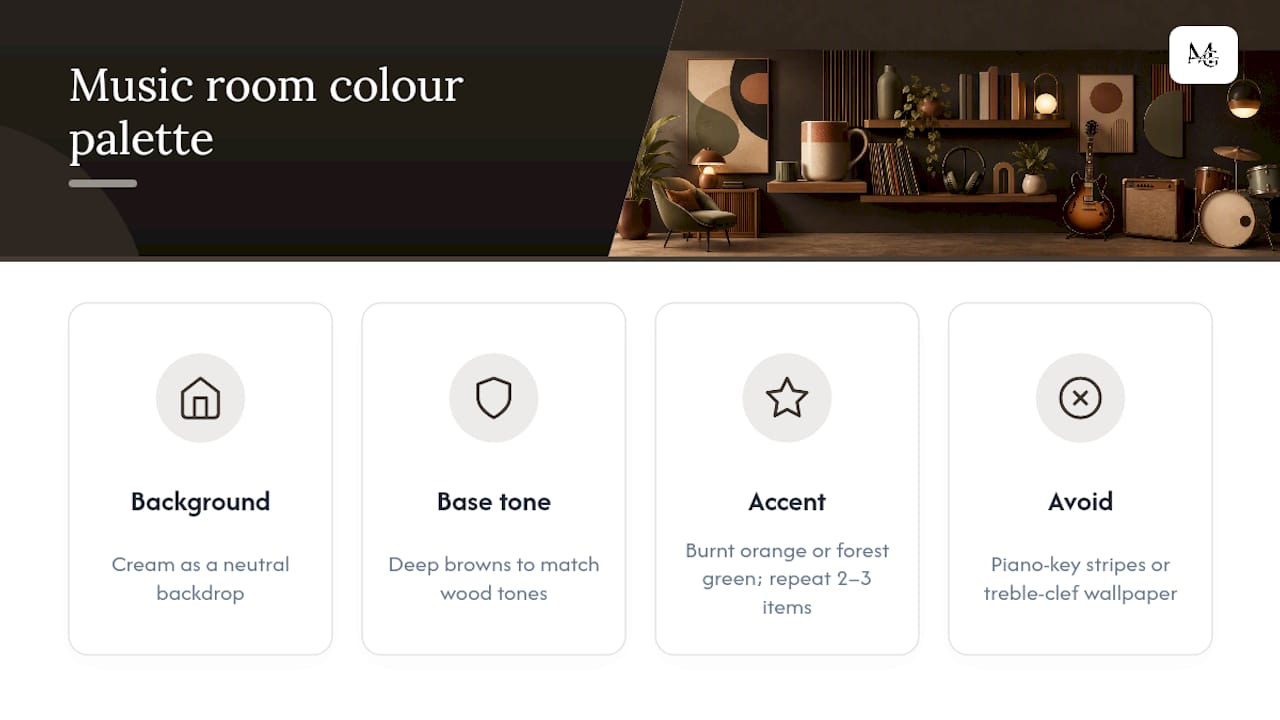
Avoid literal "music note" colour schemes, black and white piano-key stripes or all-over treble clef wallpaper, which date quickly and can start to feel like a novelty gift shop rather than a working space. A single strong accent colour, repeated across two or three small items (a mug, a trinket bowl, a picture frame) does more for cohesion than any patterned wallpaper or themed textile.
If the room already has a dominant instrument colour, a black upright piano, a honey-toned acoustic guitar, let that dictate the palette rather than choosing decor first and hoping it matches. A cream mug with dark brown instrument line art sits comfortably against almost any wood tone, which is part of why understated illustration styles outperform bold colour prints in a working music space.
Acoustic treatment and soundproofing decor ideas
Soft furnishings do double duty in a music room: they soften harsh reflections and add warmth to the palette at the same time. A thick area rug, heavy curtains, and an upholstered chair or two all reduce the slap-back echo that makes small rooms sound harsh, without requiring specialist acoustic panels.
Bookshelves packed with actual books, sheet music binders, or box files create irregular surfaces that scatter sound more effectively than a bare wall, which is a useful excuse to display method books and scores rather than hiding them away. A cork board used for pin displays or a framed fabric-backed print both contribute a small amount of absorption too, alongside their decorative role.
For anyone recording at home, foam panels or fabric-wrapped acoustic tiles remain the standard fix for flutter echo, but they needn't dominate the room visually. Positioning two or three panels behind the microphone position, rather than covering every wall, keeps the space looking like a room someone lives in rather than a padded cell. Dense, heavy fabric hung a few inches off the wall performs a similar job to a foam panel and can double as a design feature rather than an obvious treatment.
Furniture and storage that actually suit instruments
Open shelving beats closed cabinets for most music rooms, mainly because instruments and accessories need to be seen and grabbed quickly rather than hunted for. A low, sturdy shelf at a consistent height across the room also gives you a natural surface for the personalised mugs and small accessories discussed earlier, so storage and decor end up doing the same job.

Wall-mounted guitar hangers free up floor space and turn the instrument itself into a decorative object, particularly effective with a guitar that has an attractive wood grain. String instruments and brass benefit from proper stands rather than being left in cases on the floor, both for the instrument's condition and for how the room looks day to day.
A dedicated sheet-music storage solution, a slim file box or a set of magazine files, keeps paper mess contained without hiding scores behind closed doors where they're easy to forget. Adjustable-height stools or chairs matter more than they get credit for; a room that looks good but doesn't support long practice sessions comfortably will get used less over time, whatever is on the shelves.
Lighting choices that set the right mood
Warm-toned bulbs, generally in the 2700K to 3000K range, suit a practice room far better than cool white daylight bulbs, which can make a small space feel clinical rather than inviting. A dimmer switch on the main overhead light lets the room shift between bright practical lighting for reading music and softer ambience for evening playing.
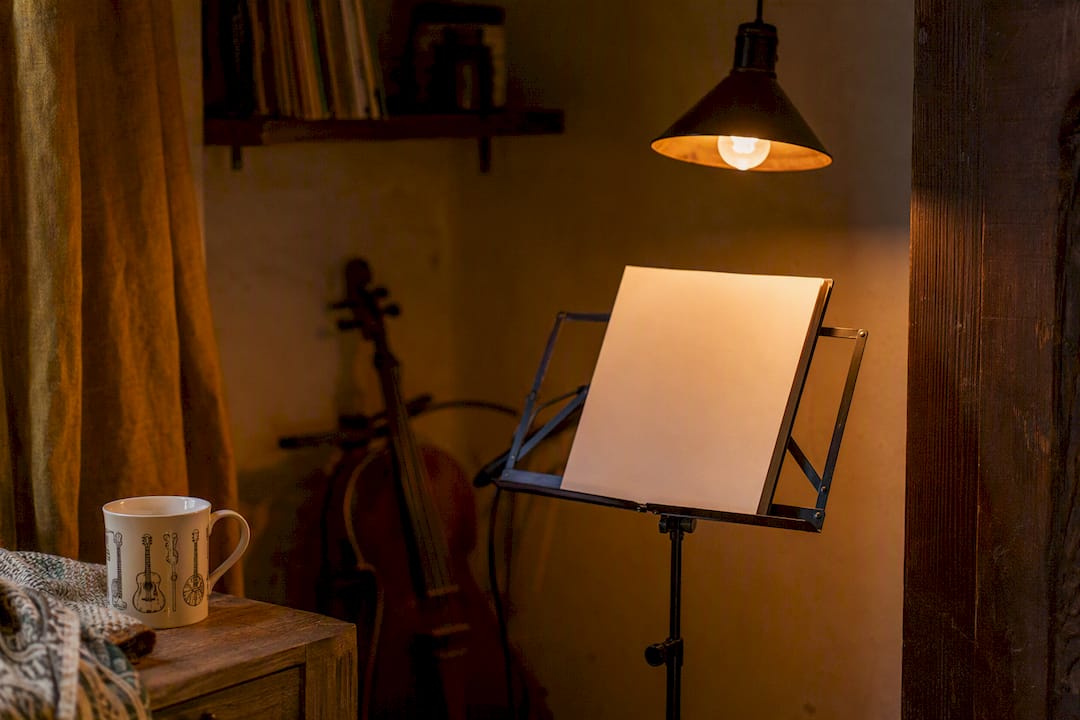
A single well-placed desk lamp beside a music stand solves the practical problem of reading sheet music without overhead glare, and it doubles as a decorative object if chosen with some care, a brass or matte black fixture tends to suit the same palette as instrument wood tones and ceramic mugs sitting nearby. String lights or a small LED strip behind a shelf can highlight a mug and trinket display without needing an extra lamp cluttering the surface.
Natural light matters too, if the room has a window, positioning the practice area to make use of daylight during the day reduces reliance on artificial lighting altogether. Where blackout or heavy curtains are needed for evening practice or recording, choose a fabric that echoes the room's colour scheme rather than a plain functional black, since that curtain is likely to be the largest single surface in the room.
What wall art fits a music-themed room?
Restraint matters most here. Music-inspired interior guidance consistently recommends limiting music-themed wall art to one or two focal areas rather than covering every wall, which keeps the effect intentional instead of overwhelming.
A single framed print, a piece of sheet music, a vintage concert poster, or an abstract instrument illustration, works better as a focal point than a cluster of small unrelated pieces. If you do want a grouping, the same anchor-and-repeat logic that applies to the mug and trinket vignettes on the shelf applies at wall scale: choose one strong piece, then repeat its colour or subject loosely across two or three supporting frames.
Black-and-white instrument photography ages well and sits comfortably against almost any wall colour, which makes it a safer long-term choice than a brightly coloured print that might clash if the room's palette changes later. A framed vinyl record sleeve, particularly one tied to a specific performer or genre the room's owner actually loves, tends to feel more personal than generic music-note artwork bought purely to fill a gap on the wall.
DIY projects for personalising a music space
Not every piece of decor needs to be bought. A cork board covered in fabric that matches the room's palette, then used for enamel pins or postcards from concerts attended, costs very little and adds a genuinely personal touch that a shop-bought item can't replicate.
Framing programme booklets or ticket stubs from memorable performances turns paper that would otherwise end up in a drawer into a small gallery of lived experience. A simple shadow box works well for this, and grouping three or four together on a wall follows the same odd-number, repeated-colour logic used elsewhere in the room.
Repainting an old chair or stool in a colour pulled from the room's palette is a low-cost weekend project that ties mismatched furniture together. For anyone reasonably comfortable with a paintbrush, stencilling a single simple motif, a treble clef, a stave line, onto the inside of a shelf or drawer front adds a personal detail that only the owner really notices, which is often exactly the right level of subtlety for a room used daily rather than shown off.
Why subtle details beat loud statements in a music room
The mugs that get kept for years are never the loudest ones. A cartoon guitar with a pun printed in bubble letters gets a laugh once and then sits in the back of a cupboard. A clean line drawing of the actual instrument someone plays, paired with their name in a font that doesn't shout, gets used every morning for a decade.
That's the pattern worth trusting when choosing decor for a practice room or studio: understatement reads as respect for the craft, while novelty reads as an afterthought. Mugnificentdeals' collections and classroom gift guidance lean into that same instinct deliberately, favouring instrument line art and short, well-chosen phrasing over loud graphics. It's a small design choice, but it's the one that determines whether a gift becomes a fixture on someone's shelf or gets forgotten within a month.
— Lasse
Where to find personalised music mugs worth buying
Once you know which idea suits your recipient, the next step is finding a source that actually delivers on the personalisation rather than a generic template with a name bolted on. Mugnificentdeals is built specifically around that gap: every mug starts from hand-drawn instrument art rather than clip-art, and the name, quote, or message you add is genuinely designed around the piece, not printed as an afterthought.

The Personalised Music Mugs collection covers most of the instrument-illustration and lyric-quote ideas from earlier, with names and short messages added at checkout. For gift buyers specifically, the best personalised music mugs for gifts collection groups teacher-appreciation and graduation-friendly designs together, so you're not scrolling through a full catalogue to find the one that fits a specific occasion. Browsing either collection and picking one design to personalise is a faster route to a finished gift than sourcing a mug and a printing service separately.
Sources
- Personalised Musician Mug – Any Name – Guitar & Microphone Design by Cuttingedgecraftsuk | Numonday
- How to build a music gallery wall that actually looks curated – Fab
- Creative Gift Ideas: Music Lover Gift Mugs