
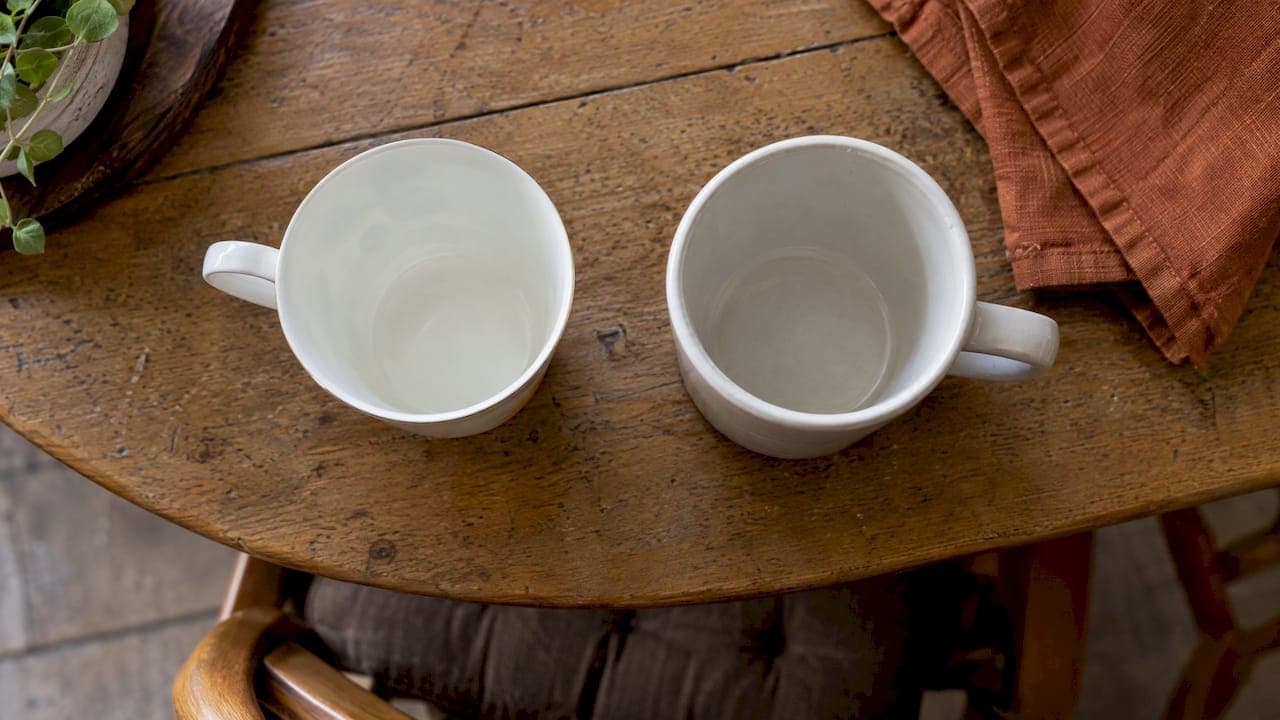
For most everyday drinkers, a well made ceramic mug is the more practical choice, while bone china earns its place for gifting, display, or anyone who prefers a lighter, finer cup. Both materials can be entirely safe and durable when properly manufactured and tested, so the right pick comes down to how you use a mug day to day. The sections below walk through what each material is, how they handle heat and knocks, and how to choose with confidence.
TL;DR:
- Bone china’s flexural strength is roughly 100 to 150 MPa, and its crystalline body resists edge chips, though sudden temperature changes can stress either material.
- Check explicit dishwasher and microwave labels, and ask sellers for a declaration of compliance confirming lead and cadmium migration limits.
- Avoid abrupt temperature swings and harsh abrasives; they can stress the mug or wear down its glaze over repeated washes.
- Bone china costs more because its narrow firing window demands careful production, while ceramic’s lower cost often offers better value under rough daily handling.
- Bone china’s translucency supports fine lines and soft gradients, while ceramic’s textured glaze can make printed colors look richer and more saturated.
Table of Contents
- What are bone china and ceramic mugs made from?
- How do weight and warmth differ between the two?
- Which material handles chips, cracks and knocks better?
- How do appearance and print quality compare?
- Are these mugs safe for dishwashers, microwaves and daily use?
- Which mug suits your everyday use or gifting needs?
- How we think about material choice for personalised mugs
- What does each material cost, and is it worth it?
- Is bone china or ceramic the more sustainable choice?
- What actually matters when choosing between these two
- Personalised music mugs that bring design and durability together
- FAQ
- Sources
What are bone china and ceramic mugs made from?
The differences you notice when you pick up a mug, its weight, its glow against light, its sturdiness, all trace back to what the material is made from.
Bone china is produced from a mix of bone ash, kaolin, and feldspathic material. The bone ash content allows manufacturers to fire bone china into thin, translucent walls while maintaining strength, so fine bone china cups often feel delicate but are mechanically strong.
Ceramic, as a term for mugs, usually covers earthenware and stoneware bodies. These are built from clay fired at various temperatures, and they tend to have thicker, heavier walls than bone china.
- Bone china: bone ash, kaolin, and feldspathic material, fired thin and translucent.
- Ceramic (earthenware/stoneware): clay-based bodies, typically thicker and heavier for everyday resilience.
- Composition drives both strength and appearance, not just looks on the shelf.
How do weight and warmth differ between the two?
Pick up a bone china mug and a stoneware mug side by side, and the difference is immediate. Bone china's thin walls make it feel almost weightless in comparison, and because there's less material between your hand and the drink, it transfers heat to your fingers and lips a little faster.
Heavier ceramic mugs feel sturdier in the hand and, thanks to their thicker bodies, often hold warmth a touch longer before the outer surface heats up. Neither effect is dramatic, but it shapes how a mug feels during a slow morning coffee versus a quick tea break.
Bone china's flexural strength sits at roughly 100 to 150 MPa, which explains how it can be fired so thin without becoming fragile in normal use.
Which material handles chips, cracks and knocks better?
Thinness does not mean weakness here. Bone china's crystalline microstructure, built from anorthite and beta-tricalcium phosphate within a glassy matrix, gives it strong edge-chip resistance even at a fraction of the thickness of a standard ceramic mug.
Ceramic mugs lean on bulk rather than microstructure. Their thicker walls resist a hard drop reasonably well, but the same thickness can make edges and handles more prone to chipping on a sharp knock against a tap or worktop.
- Bone china resists edge chips well due to its dense, crystalline body.
- Thicker ceramic bodies absorb drops but can chip at exposed edges.
- Sudden temperature swings, such as pouring boiling water into a cold mug, stress both materials and shorten their lifespan.
How do appearance and print quality compare?
Bone china's translucency and bright whiteness make it the natural choice for delicate, fine-line artwork, soft colour gradients, or text that needs crisp edges to read well. Light passes through the thin body in a way no ceramic mug can replicate.
Ceramic surfaces, by contrast, often carry a touch more texture under the glaze, which can give printed colours a slightly deeper, more saturated look rather than a glowing one.
- Choose bone china when the design relies on fine detail or a premium, gift-ready finish.
- Choose ceramic when you want bold, saturated colour that holds up to daily knocks.
- Both can showcase personalised designs well when the glaze and print are properly fired.
Are these mugs safe for dishwashers, microwaves and daily use?
Material alone does not decide whether a mug is dishwasher or microwave safe. What matters is whether the glaze and any printed decoration were fired correctly, a point reinforced by testing protocols such as ISO 5644:2024, which cover how ceramic articles are assessed for durability under normal use.
Safety also has a regulatory side. UK rules set migration limits for lead and cadmium from ceramic articles; for example, defined maximum migration levels for these metals apply to filled articles, under the Materials and Articles in Contact with Food Regulations. Retailers and manufacturers should be able to produce a declaration of compliance confirming a mug meets these limits.
A few habits help any mug, bone china or ceramic, last longer and stay safe:
- Check the product page or packaging for explicit dishwasher and microwave labelling rather than assuming by material.
- Ask the seller for a declaration of compliance if lead or cadmium testing isn't mentioned.
- Avoid sudden temperature changes, such as moving a mug straight from the microwave into cold water.
- Use mild detergents rather than harsh abrasives, which can wear down glaze over repeated washes.
- Test any newly decorated mug on a gentler wash cycle before relying on it daily.
Our care and safety guides cover these steps in more depth, including what to check before a mug goes into daily rotation.
Which mug suits your everyday use or gifting needs?
The right material depends less on which is "better" and more on how you plan to use the mug.
- Choose bone china if you value lightness, elegance, and a premium feel for display or special occasions.
- Choose ceramic if you want a rugged everyday mug that shrugs off daily knocks and frequent washing.
- For gifting, bone china suits formal or sentimental occasions, while ceramic is the pragmatic choice for someone who'll use it hard every day.
- Before buying, check for clear dishwasher and microwave markings, a declared safety standard, and a handle shape that feels comfortable for regular use.
Pro Tip: If you're torn between the two, think about where the mug will actually live: a display shelf favours bone china, while a busy kitchen cupboard favours ceramic.
How we think about material choice for personalised mugs
As a brand built around personalised, music-themed mugs, material choice matters to us because it affects how crisp a custom instrument sketch or name print turns out. We look at how a material holds fine detail and withstands daily handling before it reaches our product pages.
Before listing a design, we note material type, check for available safety documentation, and run basic in-house care tests to see how prints hold up over repeated washes. For readers who want to go deeper, our dishwasher durability tests and safety standards guide cover what to look for before buying.
What does each material cost, and is it worth it?
Bone china typically carries a higher price tag than standard ceramic mugs, and the reason lies in how it's made rather than in branding alone. Its narrow vitrification window demands tighter firing control than most whiteware bodies, so manufacturers need more experience and more careful monitoring to avoid warping or microcracking during production.
That extra labour and precision show up in the price you pay. Ceramic mugs, built from more forgiving clay bodies fired at a wider range of temperatures, are generally quicker and cheaper to produce at scale, which keeps everyday ceramic mugs more affordable.
Value for money depends entirely on what you need from the mug. A bone china piece bought for occasional, careful use can last for years and justify its cost through longevity and presentation. The same piece used daily, washed roughly, and knocked against taps will wear out its advantage faster than a ceramic mug built for exactly that kind of handling.
For everyday use, ceramic tends to deliver better value simply because its lower cost matches its higher tolerance for rough treatment. For gifting or special-occasion pieces, bone china's higher price often reflects a finish and feel that's harder to replicate in a standard ceramic body, which can make the premium worth paying.

Is bone china or ceramic the more sustainable choice?
Sustainability in mugs comes down to two things: how long the mug lasts, and how much energy and material went into making it in the first place.
Bone china's production process, with its narrower firing tolerances and higher failure risk during manufacture, tends to be more resource-intensive per finished piece. On the other hand, a well made bone china mug that survives for decades spreads that initial impact over a long lifespan, especially if it's used occasionally rather than daily.
Ceramic mugs are generally less resource-intensive to produce, and their durability under regular use means fewer replacements over time for a daily-use item. Buying fewer mugs overall, choosing pieces built to survive repeated washing and handling, and avoiding unnecessary replacements remain the most meaningful steps either material offers towards a lower footprint. Neither material has a clear sustainability edge on its own; how long you keep and use the mug matters more than which type you choose.
What actually matters when choosing between these two
The conventional advice on this topic tends to frame bone china as "the delicate one" and ceramic as "the practical one," as though the choice were purely about fragility. That framing undersells both materials. Bone china's strength comes from its microstructure, not its thickness, and a poorly fired ceramic mug can chip just as easily as a poorly fired bone china one.

What actually matters is whether the specific mug in front of you was made and tested properly, not which broad category it belongs to. A cheap, undertested ceramic mug can underperform a well made bone china piece, and the reverse is just as true. Readers should prioritise checking for declared safety compliance and clear care labelling over assuming one material is automatically safer or sturdier.
The second thing worth prioritising is matching the mug to its actual job. A mug chosen for a loud, busy kitchen has different needs from one chosen to sit on a shelf as a keepsake, and the material that suits one rarely suits the other equally well.
— Lasse
Personalised music mugs that bring design and durability together
We feature personalised music mugs, from instrument sketches to composer tributes, on ceramic bodies chosen for how well they hold fine print detail through repeated washing. That combination of personalisation and everyday durability is what we build every design around.

| What to check | Why it matters |
|---|---|
| Material noted on the product page | Confirms what you're actually buying |
| Declared safety documentation | Confirms migration testing has been carried out |
| Care instructions listed | Tells you how to keep prints looking sharp |
- Browse our personalised music mugs collection for instrument, name, and photo designs.
- See detailed material and print options on our instrument sketch mugs page.
- Explore our gift-ready collection for a design that suits the occasion.
Pro Tip: Check the material and care notes on any product page before buying, whatever the mug and wherever you shop.
Readers who want more background on related materials can also see how porcelain compares in our partner's porcelain versus bone china guide.
Ready to find a design that fits your morning routine or your next gift? Visit our personalised music mugs collection to see the full range.
FAQ
Which cup is better, bone china or ceramic?
Neither is universally better: bone china suits lighter, finer cups for gifting or display, while ceramic suits heavier, everyday use that takes daily knocks and washing. The right choice depends on how and where you'll use the mug.
Is bone china better than ceramic?
Bone china is stronger than its thinness suggests, with a flexural strength around 100 to 150 MPa, but "better" depends on your priorities. It excels at elegance and fine detail, while standard ceramic tends to handle rough daily use more affordably.
What are the downsides of using ceramic mugs?
Ceramic mugs are generally heavier and can be more prone to edge chipping at exposed points like handles, though their thicker bodies resist drops reasonably well. Checking for proper glaze firing and dishwasher labelling before buying helps avoid early wear.
What is the healthiest mug to drink out of?
Any mug that meets UK migration limits for lead and cadmium and carries a declaration of compliance is considered safe for regular use. Checking for this documentation matters more than choosing one material over another.
Sources
- Bone china — Wikipedia
- The Materials and Articles in Contact with Food (England) Regulations 2012 — regulation 10
- ISO 5644:2024 — standards catalogue entry
- Characterisation of biscuit fired bone china body microstructure. Part II — ScienceDirect