
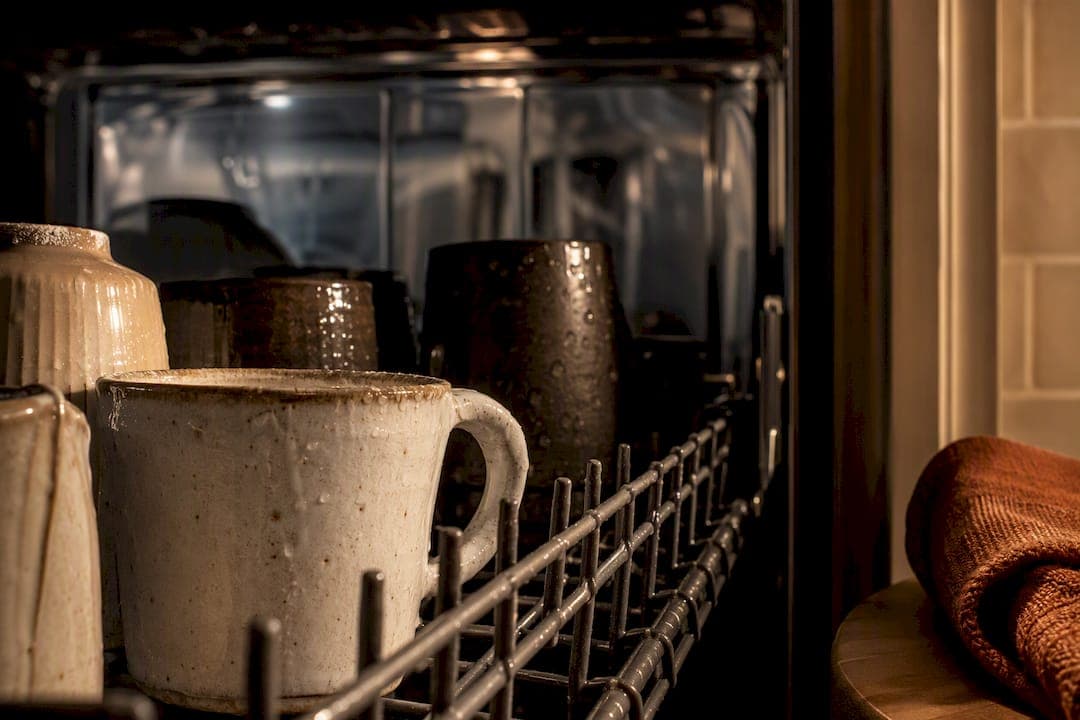
Ceramic mugs are not automatically dishwasher safe, and the material name on a listing tells you almost nothing on its own. What actually decides the outcome is the maker's care statement, the clay body, and the glaze, since vitrified stoneware and some porcelain usually cope well while earthenware and hand-decorated pieces often don't. The rest of this guide shows you how to check a specific mug and how to machine-wash it with less risk.
TL;DR:
- Dishwasher safety is primarily determined by the maker’s care instructions, firing temperature, glaze composition, and decoration type, not just the material name.
- Vitrified stoneware and porcelain generally withstand dishwasher conditions better than earthenware, but decoration and existing damage can still cause failure.
- Always look for a dishwasher-safe symbol or statement from the maker, and avoid using a mug with cracks, crazing, or glued attachments in the dishwasher.
- Gentle loading, using low-alkali liquid detergent, and avoiding temperature shocks significantly extend a ceramic mug’s lifespan in machine washing.
- Hand-washing is recommended for porous, decorated, or repaired mugs, especially with metallic lustres, on-glaze paint, or visible damage.
Table of Contents
- Quick checklist: decide for a specific mug right now
- Why some ceramics survive dishwashers and others don't
- How to tell if a mug is dishwasher safe: labels, tests and questions for the maker
- Practical dishwasher-use tips to reduce risk if you machine-wash
- When to hand-wash, repair or retire a mug
- How Mugnificentdeals approaches dishwasher suitability for personalised mugs
- A brief author perspective: valuing convenience and craft
- Give your mug the care it deserves
- Sources
- FAQ
Quick checklist: decide for a specific mug right now
Before you load a favourite mug, run through a short set of checks. Handmade and artisanal pieces vary far more than factory tableware, so a quick inspection saves you from losing a mug you actually like.
- Maker statement first. A printed dishwasher-safe symbol or a line in the product description or care card overrides anything you assume from the material.
- Material check. Vitrified stoneware and porcelain typically resist water absorption better than earthenware, which remains somewhat porous.
- Decoration check. Metallic lustres, hand-painted on-glaze designs, and applied transfers wear faster than an underglaze finish fired as one layer with the clay.
- Condition check. Chips, hairline crazing, or a repaired handle are all weak points that dishwasher heat and pressure will find eventually.
- Fit and loading check. A handle wedged against another mug or a bowl rim is one of the most common, and most avoidable, causes of chips.
Pro Tip: If a mug has no care label and you bought it from a small studio or a craft fair, treat the absence of information as a hand-wash instruction, not a green light.
Why some ceramics survive dishwashers and others don't
The difference comes down to how the clay was fired, not how the mug looks on a shelf. Earthenware is fired at lower temperatures and stays somewhat porous, meaning it absorbs water through tiny gaps even under a glaze layer. Stoneware and porcelain are fired hot enough to vitrify, turning the clay body into something closer to glass, which resists water absorption and holds up better against repeated heat cycles.
Glaze is the second variable, and it matters just as much as the clay underneath. A glaze is essentially a thin layer of glass melted onto the surface, and its chemistry determines how well it survives the alkaline detergents and prolonged heat inside a dishwasher. Potclays' guidance on food-safe and dishwasher-proof glazes explains that earthenware is generally not recommended for dishwasher use, while vitrified stoneware is usually appropriate, provided the glaze and any decoration can tolerate dishwasher conditions.
Decoration is often the actual point of failure, even on a well-fired stoneware body. On-glaze painting, metallic lustres and transfers sit on top of the fired glaze rather than fusing into it, so repeated dishwasher exposure gradually wears them down.
Thermal shock and physical impact cause the rest of the damage. A mug taken straight from a hot cycle and plunged into cold water, or one that gets knocked against cutlery mid wash, can crack even when the clay and glaze were perfectly sound.
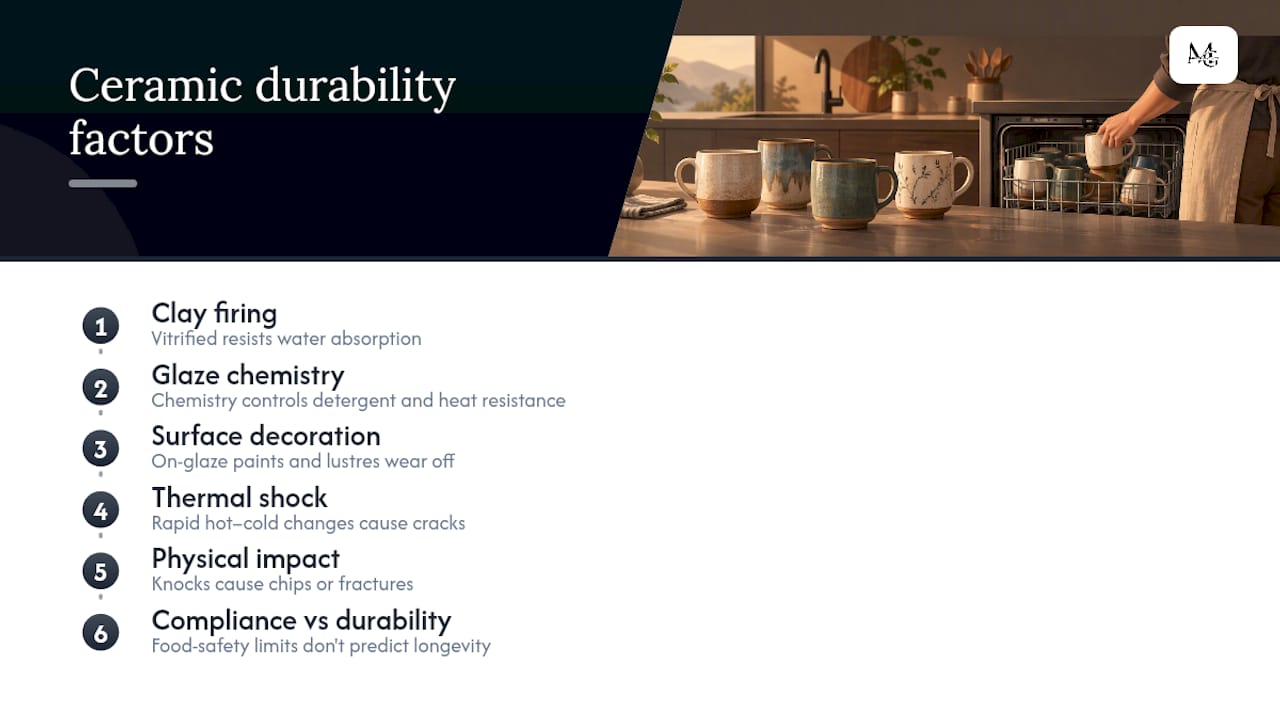
One distinction matters for anyone worried about safety rather than just appearance: food-contact compliance and dishwasher durability are not the same test. UK regulation sets migration limits for lead and cadmium and requires a declaration of compliance, but passing that standard says nothing about how the glaze will hold up after fifty trips through a dishwasher.
How to tell if a mug is dishwasher safe: labels, tests and questions for the maker
Working out dishwasher suitability is mostly a process of elimination, starting with the clearest evidence and working down to your own judgement.
- Read the symbol, not just the material name. A stamped or printed dishwasher-safe symbol on the base or packaging is the strongest signal you'll get; "stoneware" or "porcelain" alone doesn't guarantee it.
- Try a controlled comparison test if you're unsure. Potclays describes a soda-ash simmer test that studios use to expose weak glazes, though it's a specialist check rather than something to try on a mug you already love.
- Ask the maker directly. Firing temperature, glaze chemistry, and whether they hold a declaration of compliance for food contact materials are all fair questions for a small studio or Etsy seller.
- Default to hand-washing when information is missing. No label, no listing detail, no reply from the maker means you treat the mug as hand-wash only.
Statistic Callout: UK ceramic food-contact rules require documented migration testing for lead and cadmium before a piece can be sold for food use according to regulation, yet that testing process has no bearing on whether the glaze survives dishwasher heat and detergent, which is a separate, unregulated question the maker alone can answer.
Practical dishwasher-use tips to reduce risk if you machine-wash
If a mug has passed the checks above, a few habits keep it looking sharp for years rather than months.
- Top rack only. Heating elements and stronger jets sit lower down, so the top rack is gentler on both glaze and decoration.
- Space mugs so handles can't touch anything. Loading a mug against a bowl or another mug's handle is one of the most common causes of chipped rims.
- Use liquid, low-alkali detergent. Studio care guidance from Dorset Pottery recommends liquid detergents over harsher powders to reduce chemical stress on the glaze.
- Run eco or low-temperature cycles where possible. Lower heat reduces the thermal stress that gradually dulls a finish.
- Hand-wash occasionally even if the mug is rated safe. Rotating in hand-washing preserves fine surface details on hand-finished pieces.
- Avoid sudden temperature swings. Let a mug cool before rinsing it in cold water, and prefer air-drying to a forced heated dry cycle.
Pro Tip: If you're gifting a personalised or hand-painted mug, mention these steps to the recipient. A five-second note saves a keepsake from an accidental first-wash disaster.
When to hand-wash, repair or retire a mug
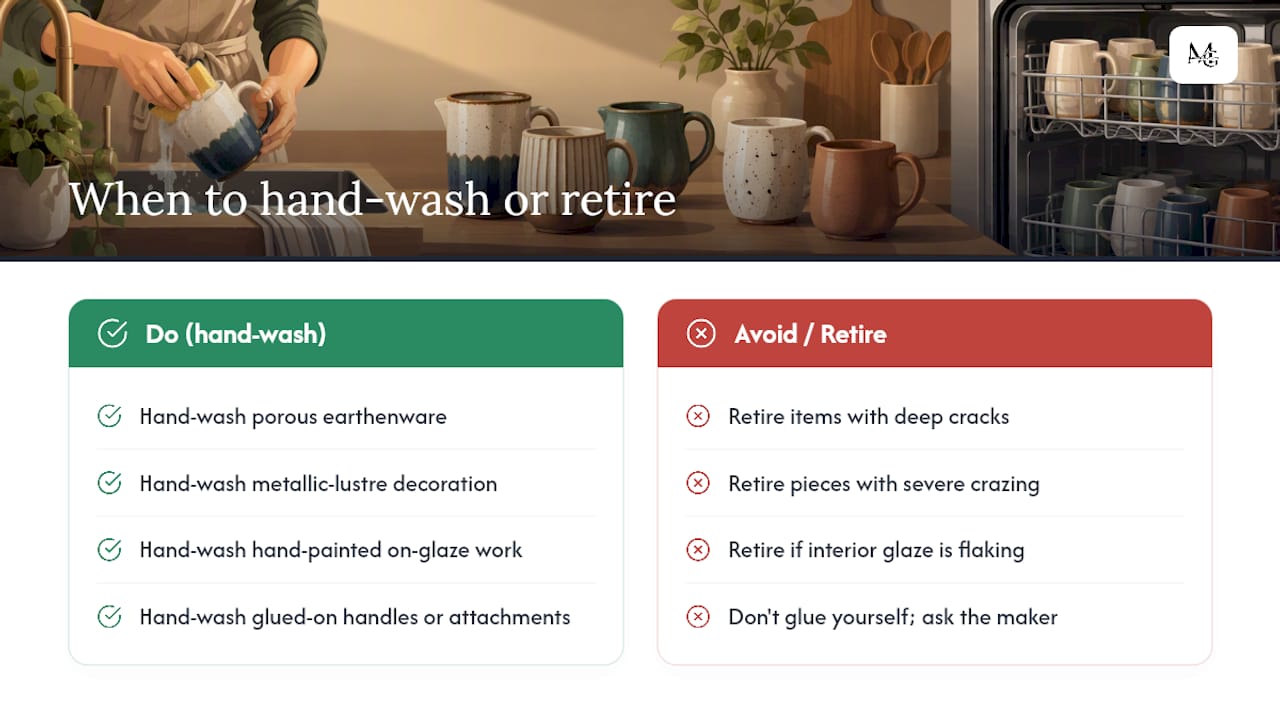
Some categories should never see the inside of a dishwasher, regardless of how sturdy they look. Porous earthenware, metallic-lustre decoration, hand-painted on-glaze work, and anything with a glued-on handle or attachment all belong on the hand-wash list, alongside mugs with visible crazing or a repaired crack.
Deep cracks, severe crazing, or a flaking interior glaze are a different problem entirely: they're a food-safety issue, not just a cosmetic one, and the mug should be retired from everyday use. If a piece means enough to keep, ask the original maker about repair options before reaching for glue yourself. A comparison of ceramic and porcelain mugs can help you judge whether a replacement piece will hold up better long term.
How Mugnificentdeals approaches dishwasher suitability for personalised mugs
Every personalised mug carries a decision about clay body, firing, and glaze before a single design goes near it, and that decision shapes how the finished piece copes with daily use. Some sellers include care information in product listings to help buyers understand how to care for their mugs.
- Dishwasher suitability, where it applies, is stated on the relevant product pages rather than assumed from the material.
- Buyers can check mug care instructions for guidance on hand-washing personalised and photo-printed pieces.
- Sellers and gift-givers can review mug safety standards and declarations of compliance for background on UK food-contact requirements.
| What to check | Where to find it |
|---|---|
| Dishwasher-safe symbol or statement | Product page or care card |
| Material and firing details | Product description |
| Hand-wash guidance for photo/personalised prints | Mug care instructions |
A brief author perspective: valuing convenience and craft
Most people don't need to treat every mug like an heirloom, and I'm not going to pretend otherwise. A plain everyday mug earns its place in the dishwasher. But a hand-painted or personalised piece bought as a gift deserves a different standard, because the decoration is usually the first thing to fade, not the clay underneath. Follow the maker's guidance where it exists, and when it doesn't, hand-washing costs you thirty seconds against losing something you can't replace.
— Lasse
Give your mug the care it deserves
There are other routes to a decorative mug, including generic printed tableware from mass retailers, but they rarely tell you anything about firing or glaze durability beyond a vague "dishwasher safe" sticker. Mugnificentdeals builds personalised music-themed mugs, from instrument sketch designs to composer and music history pieces, with care information stated on the product page rather than left for you to guess.

If you're choosing a mug for a musician, teacher, or fellow music lover, browse the personalised music mugs collection and check the care notes on the design you like before it goes in the basket. For a more general porcelain option with a lid, Noble Abode's porcelain mug range is worth a look too. Pick your design, read the care line, and order with a clearer idea of how it'll hold up at home.
Sources
For deeper reading beyond this guide, Potclays' technical notes on glaze and dishwasher durability cover the chemistry in more detail, while the Ceramic Articles in Contact with Food Regulations 2006 set out the UK's legal migration limits. Dorset Pottery's care guide offers a good example of maker-level washing advice.
- Glaze: what makes ceramics food safe and dishwasher proof — Potclays
- Legislation
- Gov
- Product care guide — Dorset Pottery
FAQ
Which mugs are not dishwasher safe?
Porous earthenware, mugs with metallic lustre or hand-painted on-glaze decoration, pieces with glued-on handles or attachments, and anything already cracked or crazed should stay off the dishwasher rack. Potclays' guidance lists these as the categories most likely to fail under dishwasher conditions.
How can I tell if a mug is dishwasher safe?
Look for a printed dishwasher-safe symbol or a direct statement from the maker, since material names like "stoneware" or "ceramic" alone don't guarantee it. When no label exists, contacting the maker or defaulting to hand-washing is the safer choice.
What are the downsides of using ceramic mugs?
Handmade and decorated ceramic mugs can lose their finish faster than mass-produced tableware, particularly where lustres, transfers, or hand-painted glazes are involved. Repeated dishwasher cycles, according to studio care guidance, can cause gradual discolouration even on pieces rated as dishwasher safe.
What are things I should never put in the dishwasher?
Alongside unlabelled handmade pottery, avoid putting cast iron, wooden items, sharp knives, delicate glassware, non-stick pans, and anything with adhesive parts through a dishwasher cycle. Ceramic pieces with crazing or chips belong on that same avoid list, since heat and pressure can widen existing damage.