
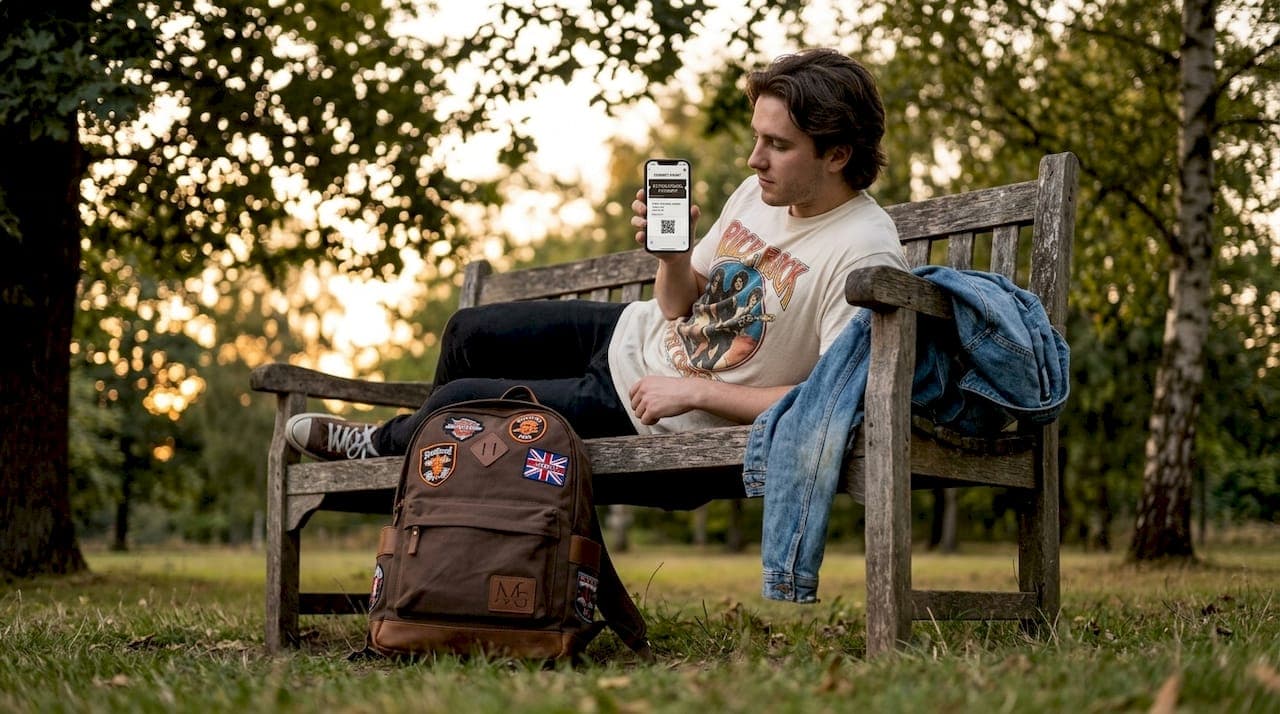
Music-themed merchandise is defined as branded products and collectibles that fans purchase to express their connection with a favourite artist, band, or music culture. Known in the industry as "music merch," this category spans everything from concert T-shirts and vinyl records to personalised lifestyle items like mugs and tote bags. Berklee Online identifies merch as a central pillar of any artist's brand strategy, sitting alongside streaming and live performance as a core revenue channel. For fans, it is far more than a purchase. It is a statement of identity.
What is music-themed merchandise and what does it include?
Music-themed merchandise refers to any physical or wearable product that carries the branding, imagery, or spirit of a musical artist, genre, or music culture. The industry term "music merch" covers both mass-produced items sold at scale and limited-edition collectibles made in small runs. Berklee Online lists T-shirts, pins, vinyl records, posters, mugs, and water bottles as the most common categories, which tells you how broad the definition really is.
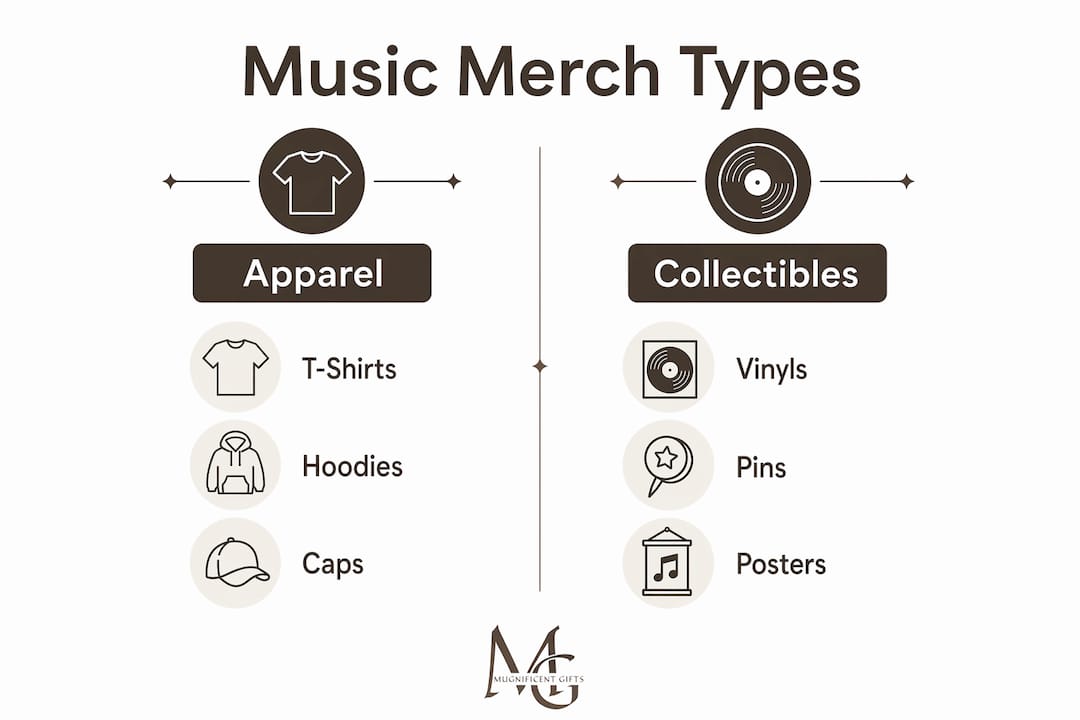
The products fall into five clear categories:
- Apparel: T-shirts, hoodies, caps, and jackets featuring artist artwork, tour dates, or band logos. This is the most visible category and the one most fans encounter first.
- Accessories: Enamel pins, patches, lanyards, phone cases, and tote bags. These items allow fans to personalise everyday objects with their musical identity.
- Music collectibles: Vinyl records, CDs, cassettes, and limited-edition pressings. These are the items serious collectors prize most, often kept in protective sleeves and displayed rather than played.
- Lifestyle products: Mugs, water bottles, candles, and notebooks. This category has grown significantly as artists look to reach fans in their daily routines rather than only at concerts.
- Unique and limited-edition items: Signed prints, tour-exclusive bundles, and artist collaborations with fashion or lifestyle brands. These carry the highest perceived value and often appreciate over time.
The table below shows how these categories differ in terms of typical use and collector appeal:
| Category | Primary use | Collector appeal |
|---|---|---|
| Apparel | Worn publicly as identity signal | Moderate, especially tour-dated pieces |
| Accessories | Daily personalisation | Low to moderate |
| Music collectibles | Display and listening | High, particularly limited pressings |
| Lifestyle products | Everyday functional use | Low to moderate, rising with personalisation |
| Limited-edition items | Display and investment | Very high |
How has music merch evolved culturally and economically?
Music merchandise began as a simple souvenir. Fans bought a T-shirt at a gig to remember the night. That model has changed completely. Modern music merch blends fandom and fashion, with fans now seeking wearable pieces that act as cultural capital and reference an artist's aesthetic rather than just their logo. The shift is significant because it means merch now competes with mainstream fashion, not just other band tees.
Economically, the numbers make the case clearly. A single £25 T-shirt generates roughly the same revenue as 8,750 Spotify streams. That comparison reframes how artists and fans should think about merchandise. Buying a piece of merch is, in practical terms, one of the most direct ways a fan can financially support an artist they love.
"Merch works best when it nurtures fandom rather than simply extracting money from it. Fan co-creation and community engagement are what separate lasting merch programmes from forgettable ones." — MusicTech Lab
The social dimension matters just as much as the financial one. Wearing a Joy Division shirt or carrying a Radiohead tote bag signals membership in a community. It starts conversations, builds connections, and communicates taste without a word being spoken. Demand has shifted towards fashion-led, creative designs that authentically reference artist aesthetics and fandom in-jokes, moving decisively away from generic, mass-produced graphics.
Pro Tip: If you are an artist or small band, consider artisanal production methods such as hand-printed apparel or heat-press techniques. These approaches add a layer of authenticity that fans recognise and value, particularly in indie and alternative music communities.
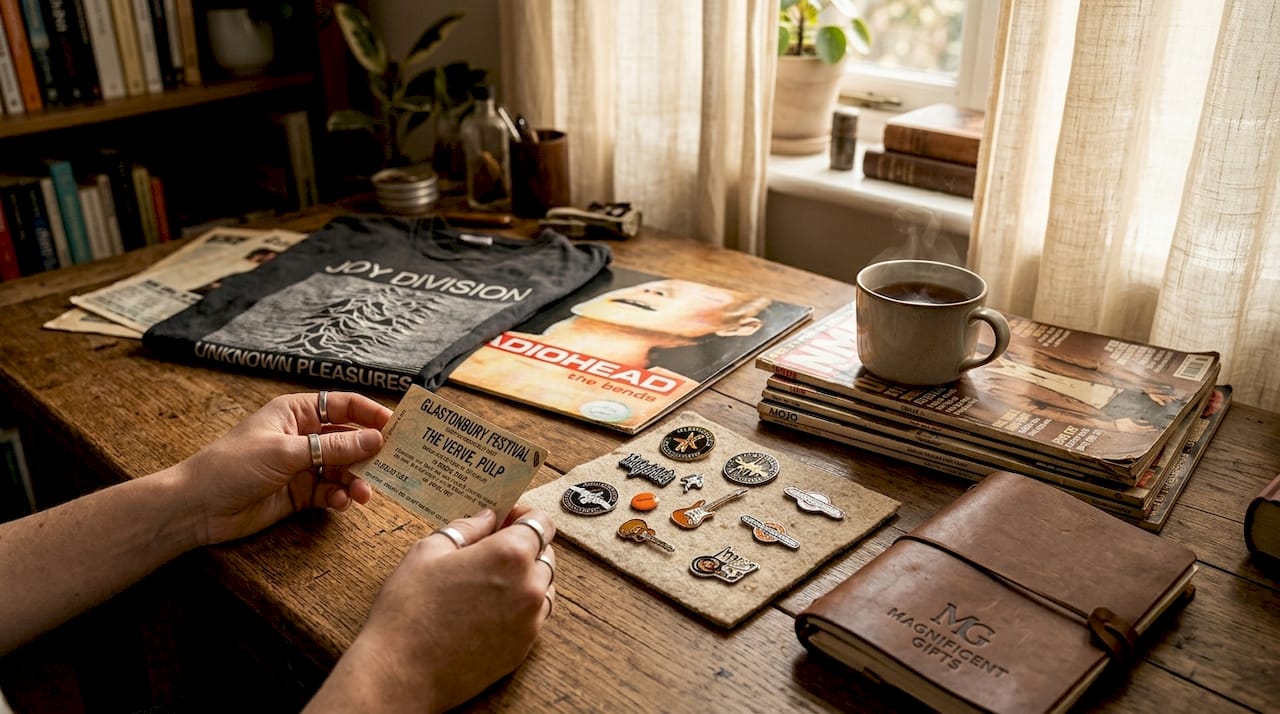
How to choose, gift, or collect music-themed merchandise
Selecting the right piece of music merch, whether for yourself or as a gift, comes down to one principle: specificity beats generality every time. A mug printed with a violin and a clever inside joke lands far better than a generic "I love music" item. Billboard's gift guides organise music merchandise by genre, from K-Pop and rock to hip hop, precisely because genre alignment is what makes a gift feel personal rather than perfunctory.
Follow these steps to make a confident choice:
- Identify the recipient's primary artist or genre. A jazz enthusiast and a metal fan have entirely different aesthetic sensibilities. The merch should reflect their world, not a generalised version of "music lover."
- Consider the occasion and format. Concert merch for concerts, collectibles for birthdays, lifestyle items for everyday gifting. Matching the format to the occasion shows thought.
- Assess collectible versus functional value. Limited-edition and era-specific merch functions as an artefact. If the recipient is a serious collector, prioritise rarity and packaging quality over price.
- Check authenticity signals. Official artist stores, reputable retailers, and established platforms are the safest sources. Unofficial merch often uses lower-quality materials and generic designs that serious fans notice immediately.
- Personalise where possible. Adding a name, instrument, or personal reference transforms a product from merchandise into a memento. This is where music gift ideas tailored to enthusiasts genuinely outperform off-the-shelf options.
Pro Tip: Matching gifts to musical personalities rather than just genres produces the most memorable results. A drummer and a pianist may both love rock music but will respond to entirely different imagery and humour.
Popular and innovative music merch ideas and examples
The most talked-about music merch in 2026 demonstrates how far the category has moved from the standard tour T-shirt. Nike collaborated with BTS to create the ARIRANG collection for their world tour, featuring exclusive T-shirts, hoodies, caps, and a Nike By You customisation experience. This collaboration illustrates the direction the market is heading: merch as co-created fashion, not just branded product.
Beyond major artist collaborations, the following ideas represent the range of what music fan products can look like today:
- Instrument-specific lifestyle items: Mugs, notebooks, and phone cases featuring detailed drawings of specific instruments. These appeal to practising musicians as much as fans.
- Lyric-printed apparel: Hoodies and tees featuring a single meaningful lyric rather than a full band logo. The subtlety is the point; only those who know, know.
- Collectible vinyl variants: Coloured pressings, picture discs, and hand-numbered editions. These sit at the intersection of music format and visual art.
- Fan-designed limited runs: Small-batch merch produced by fan communities, often through print-on-demand platforms. Fan co-creation models reduce inventory risk while deepening community engagement.
- Personalised music mugs: Items featuring instrument illustrations, musician humour, or custom names. These occupy the lifestyle category but carry strong emotional resonance for daily users.
| Merch type | Best suited for | Price range (approx.) |
|---|---|---|
| Tour apparel | Concert attendees, casual fans | £20 to £50 |
| Vinyl collectibles | Serious collectors, audiophiles | £25 to £150+ |
| Artist collaborations (e.g. BTS x Nike) | Fashion-forward fans | £50 to £120 |
| Personalised lifestyle items | Gift buyers, everyday fans | £15 to £40 |
| Fan-designed limited runs | Niche fandom communities | £10 to £35 |
Key takeaways
Music-themed merchandise is most valuable when it combines personal relevance, authentic design, and a clear connection to the fan's musical identity rather than generic branding.
| Point | Details |
|---|---|
| Definition and scope | Music merch covers apparel, accessories, collectibles, and lifestyle items tied to artists or music culture. |
| Economic significance | One £25 T-shirt generates the equivalent revenue of approximately 8,750 Spotify streams for an artist. |
| Cultural shift | Merch has moved from souvenir to fashion statement, with fans seeking authentic, aesthetically specific designs. |
| Gift selection | Match merchandise to the recipient's specific genre, instrument, or musical personality for maximum impact. |
| Collectible value | Limited-edition and era-specific items function as artefacts and tend to appreciate in perceived and monetary value. |
Why merch is the most honest form of fan expression
I have spent years watching how people relate to music, and the thing that strikes me most about merchandise is how accurately it reveals what someone actually cares about. A streaming playlist is private. A concert ticket is temporary. But a well-chosen piece of merch sits on a shelf, hangs in a wardrobe, or gets used every morning with a cup of coffee. It is a daily declaration.
What I find underappreciated is the role of specificity. Generic music merchandise, the kind that says "music is life" without referencing anything real, misses the point entirely. The pieces that resonate are the ones that reference a specific instrument, a particular era, or an inside joke that only fans of a certain artist would understand. That specificity is what separates merchandise from product.
The future of music merch lies in personalisation and co-creation. Tech-enabled print-on-demand models mean that even small independent artists can offer fans something that feels made for them rather than manufactured for everyone. That shift benefits fans and artists equally. It turns a transaction into a relationship. And in a world where streaming has made music feel abundant and disposable, a physical object that carries genuine meaning is worth more than its price tag suggests.
— Lasse
Discover personalised music mugs from Mugnificentdeals
If this article has clarified what music-themed merchandise can be at its best, the next step is finding pieces that genuinely reflect your musical world or the world of someone you want to gift.
Mugnificentdeals specialises in exactly this kind of merch. Each design in the personalised music mugs collection is crafted for musicians and music lovers, featuring instrument illustrations, musician humour, and custom name options that make every mug feel commissioned rather than mass-produced. Whether you are buying for a violinist, a drummer, or someone who considers air guitar a serious discipline, the range covers it. For gift buyers looking for something that lands with genuine thought, the best personalised music mugs for gifts collection is a strong starting point.
FAQ
What is music-themed merchandise exactly?
Music-themed merchandise is any branded or collectible product tied to a musical artist, band, or music culture. It includes apparel, accessories, vinyl records, and lifestyle items like mugs, all designed to help fans express their musical identity.
What are the most popular types of music merchandise?
The most popular types include T-shirts, hoodies, vinyl records, enamel pins, and personalised lifestyle items. Berklee Online confirms that apparel and tangible music formats consistently rank as the top-selling categories across genres.
Where can you buy authentic music-themed goods?
Authentic music merch is available through official artist websites, reputable music retailers, and specialist gift shops. For personalised music fan products, dedicated stores like Mugnificentdeals offer custom designs tailored to specific instruments and musical personalities. For guitarist-specific gifts, guitar-focused retailers are also worth exploring.
Is music merchandise a good gift for fans?
Music merchandise makes an excellent gift when it is matched to the recipient's specific genre, favourite artist, or instrument. Billboard's gift curation approach confirms that genre and personality alignment is what makes music gifts feel personal rather than generic.
Why do artists sell merchandise?
Artists sell merchandise because it provides a more reliable income than streaming royalties. A single T-shirt sale generates revenue equivalent to thousands of streams, making merch a financially significant channel that also deepens the relationship between artist and fan.