

Mugs serve a dual role in teacher appreciation: they function as practical drinkware and, when thoughtfully personalised, as meaningful tokens of genuine gratitude. The significance of mugs in gifting has never been more nuanced. A 2025 Custom Ink survey found that 62.5% of teachers receive mugs most often, yet only 7% actually want them. That gap tells you everything about the difference between a convenient gift and a considered one. School administrators and educators who understand this distinction give gifts that teachers actually cherish rather than quietly relocate to the back of a cupboard.
What is the real role of mugs in teacher appreciation?
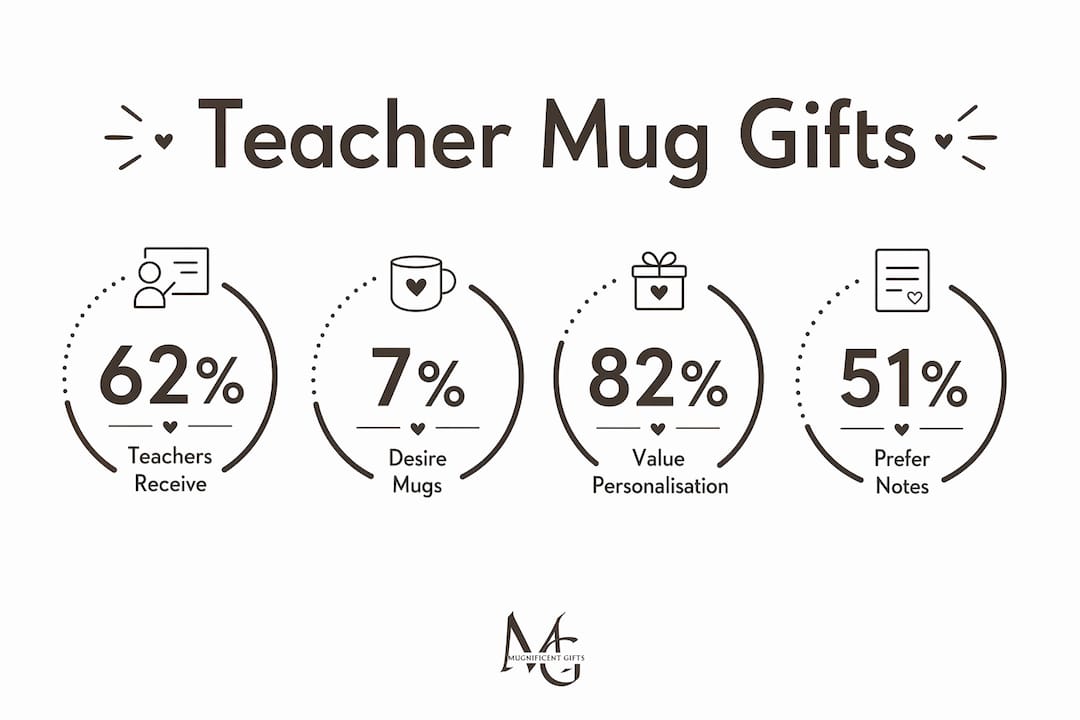
Mugs occupy a complicated position in teacher gift culture. They are the default choice precisely because they feel safe, affordable, and universally applicable. The problem is that safety and universality are the enemies of meaning.

Custom Ink's research shows that only 7% of teachers desire mugs as gifts, even though they receive them more than any other item. That statistic reveals a fundamental mismatch between giver intent and recipient experience. Most teachers already own more mugs than their kitchen shelves can hold.
The same research found that 51.5% of teachers favour heartfelt handwritten notes, and 45.25% prefer versatile gift cards over physical objects. Those numbers confirm that emotional resonance and practical flexibility outrank novelty items. A mug printed with "World's Best Teacher" communicates effort, but not necessarily understanding.
"Teachers want gifts that respect their professional identity and fit their real lives, not merchandise that reduces them to a classroom trope." — Good Housekeeping educator survey, 2026
Where mugs do succeed is when they move beyond the generic. The most appreciated mugs share three qualities:
- Personalisation that references the teacher's name, subject, or a specific shared memory
- Functional quality such as dishwasher safety, durable ceramic, or insulated construction
- Subtle design that the teacher would choose for themselves, not something loudly branded with apples and pencils
How does personalisation transform a mug from cliché to cherished?
Personalisation is the single most powerful variable in mug gifting. Custom Ink's 2025 survey found that 82% of people prefer personalised gifts over generic store-bought ones. That preference is just as strong among teachers as it is in any other group.
The most effective personalisation strategies go beyond printing a name. According to drinkware experts, mugs that incorporate student sentiments or meaningful quotes help teachers feel genuinely appreciated and comfortable using them every day. A mug that carries a phrase the class coined together, or a design tied to the teacher's specific subject, becomes an identity-affirming object rather than a generic token.
Quality materials matter as much as the design itself. Durable, well-made mugs with dishwasher and microwave safety become daily companions. A flimsy mug with a beautiful design still ends up unused. Educators favour high-quality ceramic or insulated tumblers with subtle, considered aesthetics over loud, school-supply-themed branding.
Good Housekeeping's 2026 educator surveys confirm that teachers want gifts they would personally choose, such as high-quality coffee gear or self-care items, rather than clichéd teacher-branded products. A music teacher receiving a mug featuring a hand-drawn violin illustration, personalised with their name, sits in an entirely different category from a mass-produced "Coffee, Because Adulting is Hard" design.
Key personalisation features that elevate a mug's value:
- The teacher's name or initials incorporated into the design
- A quote, phrase, or inside reference meaningful to the class
- Subject-specific artwork (instruments, books, scientific diagrams) rendered with care
- A clean, minimal aesthetic the teacher would actually display on their desk
Pro Tip: If you are organising a group gift, collect short written sentiments from students and work them into the mug's design. A cloud of handwritten words from the class carries far more weight than any pre-printed slogan.
Mugs versus other popular teacher appreciation gifts
Choosing the right appreciation gift requires understanding what teachers actually value. The table below compares mugs with four other common gift types across three dimensions: utility, sentimental value, and teacher preference.
| Gift type | Utility | Sentimental value | Teacher preference |
|---|---|---|---|
| Generic mug | Moderate | Low | Low (7% desire) |
| Personalised mug | High | High | High when well-executed |
| Handwritten note | None | Very high | Very high (51.5% favour) |
| Gift card | High | Low to moderate | High (45.25% prefer) |
| Classroom supplies | High | Low | Moderate |
| Personalised apparel | Moderate | Moderate | Moderate |
The table makes one pattern clear: sentiment and utility rarely come from the same source. Handwritten notes score highest on emotional resonance but offer nothing practical. Gift cards are flexible but impersonal. A well-executed personalised mug is one of the few gift types that can score highly on both dimensions simultaneously.
The risk with generic mugs is accumulation. Teachers with long careers accumulate many mugs that become clutter or effectively useless gifts. That accumulation is the direct result of gifting without thought. A personalised mug with genuine design intention does not end up in that pile.
The strongest approach for school administrators is to combine gift types. A personalised mug paired with a handwritten note from the class, or a gift card tucked inside, addresses both the practical and emotional dimensions at once. That combination costs little more than a single gift but communicates significantly more care.
Creative ways to present mugs that increase their appreciation value
Presentation is the variable most gift-givers overlook. A beautifully personalised mug presented in a plain paper bag sends a different message than the same mug presented as part of a considered gift arrangement. The way you give a mug shapes how it is received.
Industry insights confirm that mugs used as vessels for other meaningful items are a growing trend that enhances appreciation impact. This approach reframes the mug from the gift itself to the container for the gift. The result is a layered experience that feels generous and thoughtful.
Here are five practical ways to present a mug that increase its perceived and actual value:
- Fill it with a gift card. Place a coffee shop or bookshop gift card inside the mug. The teacher receives two useful gifts in one, and the mug becomes the wrapping.
- Add a handwritten note. Roll a personal note from the class and tuck it inside. The note is the emotional core; the mug is the lasting physical reminder.
- Include a quality coffee or tea selection. A small selection of specialty coffee or loose-leaf tea alongside a personalised mug creates a complete morning ritual gift.
- Organise a department or class group gift. Pool contributions from multiple students or staff members to fund a higher-quality personalised mug. A £30 mug from thirty people carries more weight than a £5 mug from one.
- Pair with a self-care item. A small candle, a bar of quality chocolate, or a hand cream alongside a personalised mug signals that you see the teacher as a whole person, not just a professional role.
Pro Tip: When organising a group mug gift for a music teacher, consider a design that references their specific instrument or a phrase from their teaching style. Mugnificentdeals specialises in exactly this kind of personalised music mug design, where the detail does the emotional work.
Key takeaways
Personalised mugs succeed as teacher appreciation gifts when they prioritise quality design, functional durability, and genuine personal relevance over generic teacher-themed branding.
| Point | Details |
|---|---|
| Generic mugs underperform | Only 7% of teachers desire mugs, despite receiving them most often. |
| Personalisation changes everything | 82% of people prefer personalised gifts; teachers are no exception. |
| Handwritten notes lead on sentiment | 51.5% of teachers favour handwritten notes as their top appreciation token. |
| Presentation multiplies value | Using a mug as a vessel for a gift card or note creates a layered, more meaningful gift. |
| Quality materials matter | Dishwasher-safe, durable ceramic or insulated mugs become daily companions; flimsy ones do not. |
Why I think we have been getting mug gifts wrong for years
The default mug gift is not a bad idea. It is an unfinished one. What I have observed, both through research and through watching how teachers actually respond to gifts, is that the mug itself is rarely the problem. The problem is the absence of thought behind it.
A music teacher who receives a mug featuring a hand-drawn cello and their name printed beneath it reacts differently from one who receives a mug that says "Teachers Plant Seeds." The first gift says: I know you. The second says: I bought something. That distinction is felt immediately and remembered long afterwards.
What concerns me about the current state of teacher appreciation gifting is the over-reliance on teacher-branded merchandise that reduces educators to a caricature of their profession. Teachers are professionals with specific identities, interests, and aesthetics. Gifting them something that acknowledges that specificity is a form of respect that generic merchandise simply cannot replicate.
My honest recommendation: if you are going to give a mug, make it earn its place. Choose one that fits the teacher's actual personality, pair it with something genuinely useful, and add a handwritten note. That combination costs the same as a mediocre gift set and communicates something far more lasting. A meaningful mug is not about the object. It is about the attention behind it.
— Lasse
Personalised music mugs: a more considered appreciation gift
For music teachers in particular, a personalised mug that speaks directly to their craft carries a weight that generic gifts simply cannot match. Mugnificentdeals designs mugs with musicians in mind, from hand-drawn instrument illustrations to clever, subject-specific humour that earns a genuine smile rather than a polite one.

Each mug can be personalised with a teacher's name, a meaningful phrase, or a design tied to their specific instrument. The result is a gift that sits on a desk rather than in a cupboard. Mugnificentdeals' personalised music mugs collection offers a range of designs built for exactly this kind of thoughtful gifting. For administrators looking to recognise music staff in a way that feels considered rather than convenient, this is where to start.
FAQ
Why do teachers receive so many mugs?
Mugs are a common default gift because they feel universally safe and affordable. Custom Ink research shows 62.5% of teachers receive them most often, precisely because they require little knowledge of the recipient.
What do teachers actually want as appreciation gifts?
Research shows 51.5% of teachers favour handwritten notes and 45.25% prefer gift cards. Practical, non-clichéd gifts that respect their professional identity rank consistently higher than generic merchandise.
How can a mug become a meaningful teacher gift?
A mug becomes meaningful through personalisation, quality materials, and considered presentation. Incorporating student sentiments or subject-specific design transforms a mug from a generic item into a daily reminder of genuine appreciation.
What makes a good quality teacher mug?
Dishwasher and microwave safe construction, durable ceramic or insulated materials, and a subtle design the teacher would choose for themselves are the defining qualities of a mug that gets used rather than stored.
Should you pair a mug with another gift?
Pairing a personalised mug with a handwritten note or gift card is the most effective approach. Using a mug as a vessel for a gift card or personal note creates a layered gift that addresses both practical and emotional dimensions simultaneously.