

The fastest route to playing the Largo from Dvořák's New World Symphony on piano is to download a free intermediate arrangement from MuseScore or IMSLP, then watch a YouTube tutorial with on-screen notation before you touch the keys. For a printed edition with reliable fingering, Hal Leonard's easy piano reduction (available via Virtual Sheet Music) is the clearest single-source option for UK players.
- Best free score: IMSLP for the public-domain orchestral full score; MuseScore for ready-to-play community piano reductions at various levels.
- Best paid/printed edition: Hal Leonard's easy piano arrangement, licensed and available with sample pages, clear engraving, and suggested fingerings.
One licence note before you print anything: Dvořák's original orchestral score entered the public domain long ago, so downloading it costs nothing and raises no legal issues. Modern piano arrangements, however, are protected by their arrangers' copyright regardless of the underlying score’s status.
Table of Contents
- Where can you download or buy the Largo for piano in the UK?
- Best tutorial and performance videos to learn the Largo on piano
- How do you interpret and play the Largo on piano?
- A staged practice plan to take the Largo from sight-reading to performance
- Choosing between simplified arrangements, piano reductions and full transcriptions
- Edition and licensing notes for UK players
- Key takeaways
- Useful sources and recommended recordings
Where can you download or buy the Largo for piano in the UK?
Free options sit at two reliable addresses. IMSLP holds the original orchestral full score and older historical piano reductions, all freely downloadable under public-domain terms. MuseScore hosts community-uploaded piano arrangements at beginner, intermediate, and near-full-reduction levels; quality varies by uploader, so check the arrangement notes and star rating before committing to a print run.
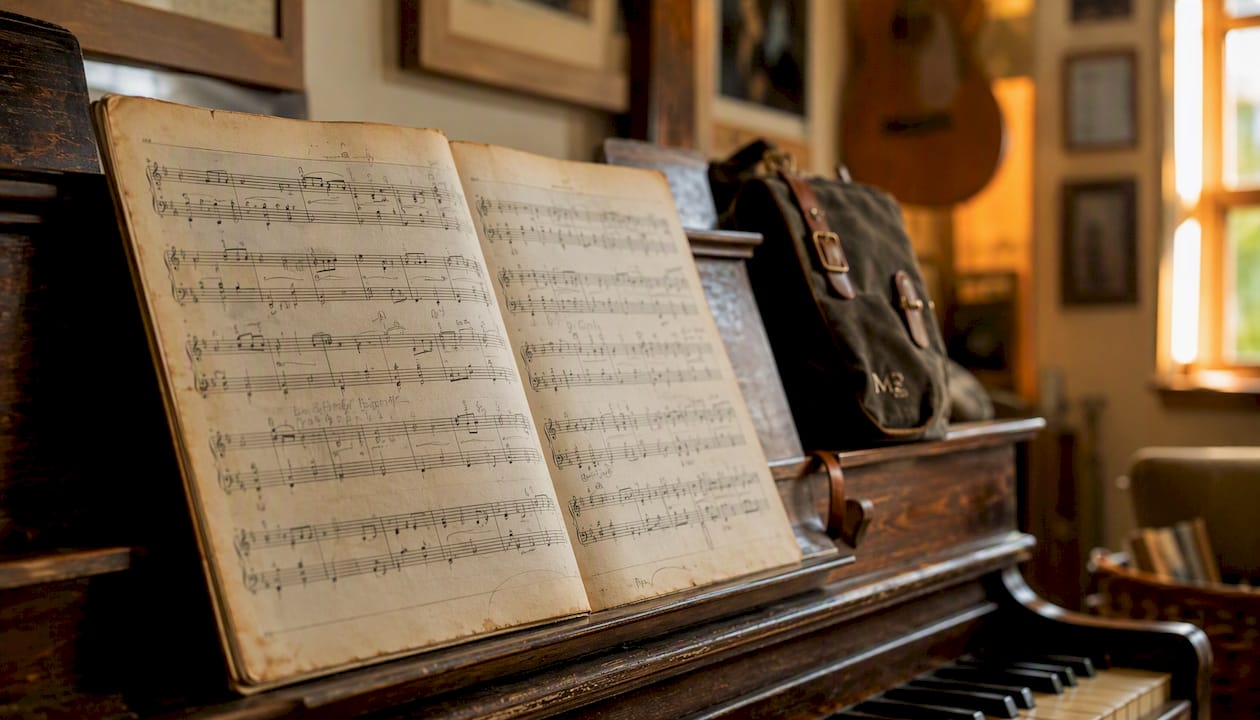
Paid editions offer something the free archives rarely match: consistent editorial markings, printed fingerings, and professionally engraved notation. Publishers such as Henle, Faber, Boosey & Hawkes, and Hal Leonard each produce or distribute piano reductions with these advantages. For UK buyers, Musicnotes sells licensed digital downloads with transposition tools and printable parts for a modest fee, typically a few pounds per piece. Hoffman Academy's intermediate arrangement, arranged by Aron Bernstein across two PDF pages, is another paid option that focuses specifically on pedalling and the dotted rhythms that define the Largo's character.
The practical trade-off is straightforward. A free MuseScore download gets you practising within minutes. A Hal Leonard or Faber edition gives you a score you can annotate, trust, and return to for years.
Best tutorial and performance videos to learn the Largo on piano
YouTube is where most pianists first hear what the Largo should sound like on a keyboard, and the right video makes a real difference to how quickly you internalise the phrasing.
- Easy piano tutorial with on-screen notation: Search for "Largo New World Symphony easy piano tutorial" and filter for videos that display the score on screen alongside the performance. These split-screen formats let you follow notation and hand position simultaneously, which is far more useful than watching fingers alone. Prioritise videos where the teacher names the tempo marking; most recommend a comfortable learning pace in the range of ♩ = 52–60.
- Intermediate teacher walkthrough: Look for uploads from credentialled piano teachers who discuss phrase shaping, voicing, and pedalling explicitly. A walkthrough that pauses to explain why a phrase breathes at a particular bar is worth ten silent run-throughs. Teacher credentials listed in the channel description (ABRSM examiner, conservatoire graduate) are a reliable trust signal.
- Exemplary orchestral or piano performance for musical intent: Listening to a full orchestral recording before you play a single note is one of the most underrated preparation steps. Classical Music's guide to the New World Symphony recommends comparing different conductors' tempi and phrasing choices, which trains your ear to make deliberate interpretive decisions rather than defaulting to whatever the score's printed dynamics suggest.
Watch the exemplary performance first, then the teacher walkthrough, then use the on-screen tutorial as a practice companion.
How do you interpret and play the Largo on piano?

The Largo's emotional core is a long-breathed, plaintive melody originally carried by the English horn, an instrument whose vocal, slightly nasal timbre is unlike anything else in the orchestra. Your job at the piano is to imitate that quality: sustained, singing, and never hurried.
Target tempo: ♩ = 52–60 for practice; aim for ♩ = 44–52 in expressive performance. Most teachers agree that a comfortable beginner pace is ♩ = 52–60, with professional performances often slower to allow the phrase arches to breathe.
- Voice the melody above everything else. The right hand carries the theme; the left hand's accompanying chords should sit noticeably softer. Play the melody at mf and the accompaniment at p, even when the score marks them identically. Music Workshop's artistic director advises aiming for a plaintive, vocal line and using restraint in the accompaniment so the melody can sing freely.
- Handle dotted rhythms with patience. The dotted crotchet-quaver figures that appear throughout the Largo are often rushed by students. Practise them at ♩ = 40 with a metronome until the long note feels genuinely long.
- Pedal for sustain, not blur. Change the sustain pedal on each harmonic shift, not on each beat. Holding the pedal through a chord change muddies the inner voices and obscures Dvořák's clean harmonic writing.
- Shape each phrase like a breath. The melody rises, peaks, and falls in arches of roughly four bars. Swell slightly toward the peak and ease back as the phrase descends, as a singer would.
Pro Tip: Write voicing priorities directly into your score in pencil before you practise. Mark the melody notes with a small circle and the accompaniment with a downward arrow. Your hands will follow the visual cue automatically, even under pressure.
Pro Tip: Pedalling on piano is the closest equivalent to the English horn's natural sustain. If a phrase sounds clipped or dry, the pedal is almost always the fix, not finger legato alone.
A staged practice plan to take the Largo from sight-reading to performance
A realistic plan covers five stages. Expect each stage to take two to four days of 20-minute sessions, depending on your current level.
- Familiarisation (Days 1–2): Listen to a full orchestral recording twice. Then read through the piano score slowly, hands separately, at ♩ = 40, with no pedal. The goal is shape recognition, not accuracy.
- Hands separately, phrase by phrase (Days 3–6): Work in four-bar phrases. Right hand alone at ♩ = 50, focusing on voicing and dotted rhythms. Left hand alone at ♩ = 50, focusing on chord clarity and smooth position changes.
- Hands together, phrase links (Days 7–10): Join phrases hands together at ♩ = 44. Add pedal from this stage. Drill the joins between phrases (the last beat of one phrase into the first beat of the next) as isolated two-bar loops.
- Tempo ramp (Days 11–14): Increase by ♩ = 4 every two sessions until you reach ♩ = 52. Run the full piece at this tempo, recording yourself on a phone. Listen back for rushed dotted rhythms and uneven voicing.
- Musical polish (Days 15 onwards): Restore expressive tempo (♩ = 44–52). Add dynamic shaping, phrase swells, and subtle rubato at phrase peaks. Play through without stopping to correct; mark problem bars and address them separately.
Specific drills for trouble spots:
- Broken-chord voicing drill: play the left-hand chords as arpeggios to hear each voice independently, then reassemble as block chords.
- Dotted-rhythm drill: exaggerate the dot (play as double-dotted) at slow tempo, then normalise.
- Pedal exercise: practise pedal changes alone, without playing notes, to build the reflex of changing on the harmonic shift.
Choosing between simplified arrangements, piano reductions and full transcriptions
Three distinct types of piano score exist for the Largo, and picking the wrong one for your level wastes practice time.
| Difficulty level | Fidelity to orchestral score | Price / free vs paid | Recommended for |
|---|---|---|---|
| Easy / teaching arrangement | Low to moderate: melody and basic harmony only | Free (MuseScore) or paid (Hal Leonard, Musicnotes) | Beginners and early intermediate players |
| Intermediate piano reduction | Moderate: melody, inner voices, and fuller bass | Paid (Hoffman Academy, J.W. Pepper) | Intermediate players building expressive technique |
| Full virtuosic transcription | High: attempts the full orchestral texture | Paid or rare free uploads | Advanced pianists comfortable with complex voicing |
A beginner should start with an easy arrangement that presents the melody cleanly in the right hand and a simple chordal accompaniment in the left. The BBC Teach transposition to D major is a good example of a pedagogical edition that keeps technical demands manageable while preserving the Largo's character. Intermediate players gain more from a reduction that includes inner voices, because those inner lines are where Dvořák's harmonic richness lives. Full transcriptions are rewarding but demanding; they are best approached after the melody and phrasing are already secure.
Edition and licensing notes for UK players
Dvořák died in 1904, so his original orchestral score has been in the public domain for well over a century. You can download it from IMSLP, print it, and perform from it without any licensing obligation. The practical limitation is that an orchestral full score is not a piano score: you would need to make your own reduction, which is a significant undertaking.
Modern piano arrangements are a different matter entirely. When an arranger creates a new piano reduction, that arrangement is their own copyright-protected work, regardless of the underlying Dvořák material. Printing a copyrighted arrangement without purchasing it is an infringement, even if the original symphony is free.
When choosing a published edition, look for four trust signals: the publisher's name (Henle, Faber, Boosey & Hawkes, or Hal Leonard), a named editor or arranger, an ISBN or catalogue number, and sample pages or a preview. These markers confirm you are buying an authorised, professionally edited score rather than an unchecked community upload.
- Check the score's title page for an arranger credit and a publisher name.
- An ISBN or catalogue number confirms the edition is commercially published and licensed.
- Sample pages on the retailer's site let you assess engraving quality and fingering density before buying.
- If a free PDF has no publisher credit and no arranger name, treat it as an unverified upload and verify its licence status before printing for performance.
Key takeaways
The Largo from Dvořák's New World Symphony is most accessible on piano when you start with a simplified arrangement in an easier key, prioritise expressive phrasing over technical completeness, and build tempo gradually across a staged practice plan.
| Point | Details |
|---|---|
| Start with a free score | Download from IMSLP (full score) or MuseScore (piano reductions) to begin practising immediately. |
| Choose the right arrangement level | Beginners: easy/teaching arrangement. Intermediate: piano reduction with inner voices. Advanced: full transcription. |
| Prioritise phrasing over speed | Target ♩ = 44–52 for performance; voice the melody above the accompaniment throughout. |
| Check licences before printing | Dvořák's original score is public domain; modern piano arrangements are copyrighted and require purchase. |
| Use a staged practice plan | Work through five stages: familiarisation, hands separately, phrase links, tempo ramp, then musical polish. |
A note from Lasse
Music like the Largo has a way of stopping you mid-phrase and reminding you why you started playing in the first place. At Mugnificentdeals, we spend a lot of time thinking about what it means to love music practically, whether that is finding the right score, the right teacher, or the right small gift to mark a musical milestone. If you are learning this movement for yourself or helping a student through it, a personalised piano-themed mug makes a genuinely thoughtful companion to the practice room. Browse the full range of personalised music mugs at Mugnificentdeals if you want something that says "I see your dedication" without saying it out loud.

Useful sources and recommended recordings
The Largo typically runs 12–13 minutes in full orchestral performance, which is a useful benchmark when setting practice session lengths and gauging how much of the movement a piano arrangement covers.
| Benchmark | Value |
|---|---|
| Typical orchestral performance length of the Largo | 12–13 minutes |
- IMSLP: Symphony No. 9 (Dvořák) — Wikipedia's entry provides historical context and links to the IMSLP score archive for the public-domain orchestral materials.
- BBC Teach: Largo (2nd movement) — downloadable parts, teacher resources, and a pedagogical transposition to D major for mixed-ability groups.
- Music Workshop: Dvořák Symphony No. 9 — interpretive guidance on the English horn's vocal quality and how to translate it to piano.
- Classical Music: New World Symphony guide and best recordings — curated listening recommendations for studying different conductors' approaches to tempo and phrasing.
- Alex Levin Music: ensembles and soloists — useful if you want to hear the Largo performed live or commission a reference recording for interpretive study.