
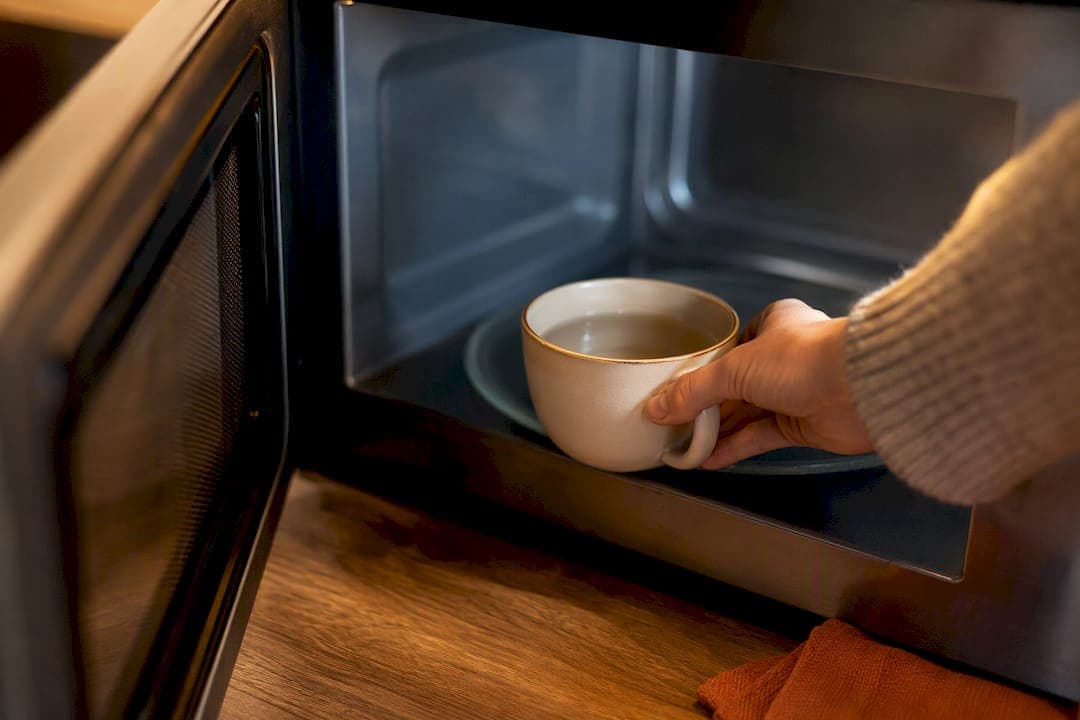
Most modern stoneware, porcelain and tempered glass mugs are microwave safe, and yours almost certainly is too if it has no metallic decoration and no cracks. The safest habit is simple: check the base for a microwave-safe symbol, inspect for damage or metallic trim, then run a one-minute water test before trusting any mug with your morning coffee. Vintage mugs and unknown glazes deserve extra caution.
TL;DR:
- Most high-fired stoneware and porcelain mugs are safe if vitrified with low porosity, but earthenware and some handmade options require testing first.
- Always check for a microwave-safe symbol, inspect for cracks or metallic decorations, and perform a water test to confirm safety before use.
- Metallic trims, glazes with metallic particles, or high porosity increase the risk of arcing, uneven heating, or cracking during microwaving.
- Prefer mugs labeled explicitly microwave-safe, made of vitrified material, with under-glaze designs, and ask manufacturers about compliance with safety standards.
- Proper microwave habits include heating in short bursts, avoiding empty mugs, and checking for cracks or damage after each wash to ensure ongoing safety.
Table of Contents
- Which mug materials are normally microwave safe?
- How do you check if a mug is microwave safe?
- Why do some mugs become unsafe in the microwave?
- How do you choose a genuinely microwave-safe mug?
- What's the safest way to microwave and care for your mug?
- Mugnificentdeals' perspective on choosing safely
- Personalised music mugs built with the safety checklist in mind
- Sources
Which mug materials are normally microwave safe?
Material matters, but it's not the whole story. What really decides whether a mug survives the microwave is how dense and glazed it is, not just what it's labelled as.
Stoneware and porcelain sit at the top of the reliability list because both are fired at high temperatures until they become vitrified, meaning the clay body turns almost glass-like and closes up its pores. Low porosity means less moisture gets trapped inside the walls, which is the main reason most stoneware and porcelain mugs from reputable manufacturers heat evenly and cool down without drama.
Tempered glass mugs usually perform well too, provided the packaging or base actually says so. Thin decorative glass, or glass with painted patterns fired on afterwards, is a different matter. Those decorative layers behave unpredictably under microwave energy.
Earthenware and low-fired pottery are the wildcard. They're fired at lower temperatures than stoneware, which leaves the clay more porous and more likely to soak up moisture during washing. That absorbed water is exactly what causes trouble later, so any earthenware mug should be tested before use in a microwave. For a deeper look at how these bodies differ, Mugnificentdeals' guide to ceramic versus porcelain breaks down why one so often outperforms the other for everyday use.
Plastic mugs only belong in the microwave when the manufacturer says so explicitly, and even then, check the material is BPA-free. Some biodegradable plastics behave very differently under heat than standard polypropylene, which is worth knowing if you're weighing up an eco-friendly option, as this look at PLA's heat resistance explains.
- Stoneware and porcelain: vitrified, low porosity, generally dependable
- Tempered glass: safe when labelled; avoid thin or painted decorative glass
- Earthenware: variable porosity, always worth testing first
- Plastic: only when explicitly marked microwave-safe and BPA-free
- Metal, or anything with metallic trim: never
How do you check if a mug is microwave safe?
Two minutes of checking now saves you a scorched kitchen towel later, and possibly a mug in pieces.
- Flip the mug over. Look on the base for a microwave-safe symbol, usually wavy lines or a small microwave icon with wording underneath. UK food packaging conventions treat this mark as the first, most reliable signal before you heat anything ceramic.
- Inspect the surface. Run your fingers around the rim and base feeling for hairline cracks, known as crazing, and look closely at any decoration. Metallic paint, gilded rims, or raised transfers are the biggest red flags. Even a small gold or silver accent is enough to cause arcing, the sparking you sometimes see when metal meets microwave energy.
- Run the water test. Fill the mug in question roughly two thirds full, and fill a mug you already know is safe the same way. Microwave both together on high for one minute. If your test mug is significantly hotter than the water inside it, or hotter than the known-safe mug, that's your answer: don't use it again.
Pro Tip: Feel the water first, then the mug itself. If the mug is noticeably hotter than the water it just held, the clay body is absorbing energy rather than letting the liquid do the work, and that's the sign to retire it from microwave duty.
Stop using any mug that shows new cracks, a mug that scorches or sparks, or one where the water test flags an obvious temperature mismatch. Mugnificentdeals' guide to checking mug quality before buying covers several of these same checks from a shopping perspective, which is worth a read if you're stocking up.
Why do some mugs become unsafe in the microwave?
Three mechanisms explain almost every microwave mishap involving a mug, and none of them are mysterious once you know what to look for.
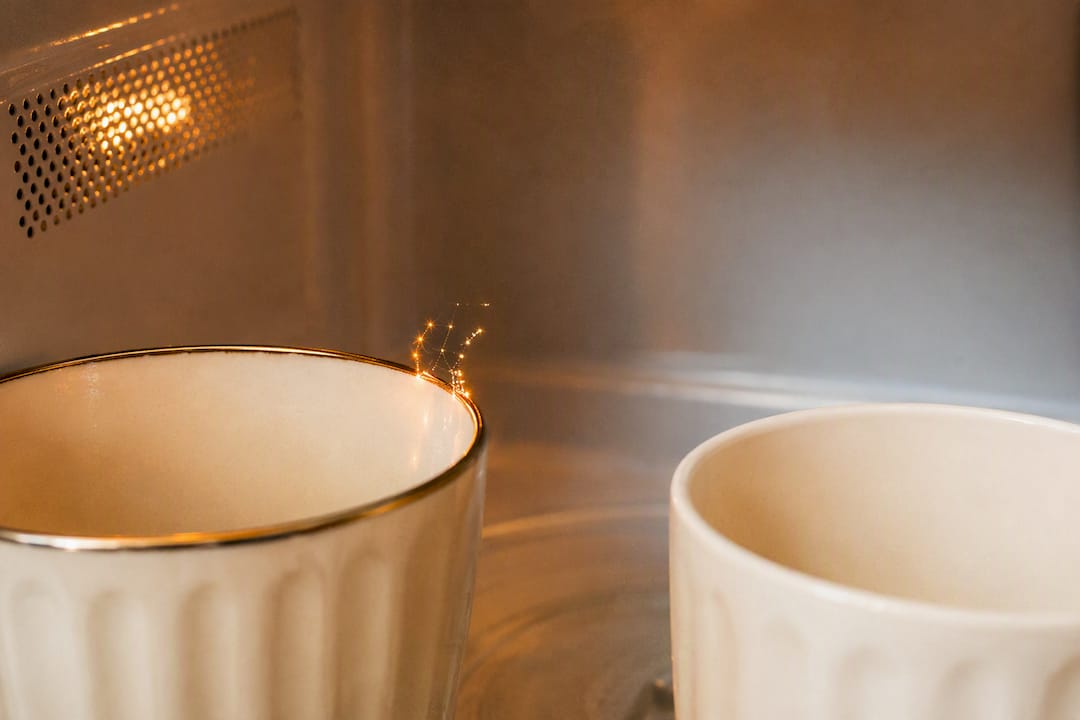
Metallic decoration causes arcing. Even a fine gold rim or a metallic transfer print concentrates microwave energy in a way ceramic and glass can't, producing sparks and sometimes scorch marks on the mug itself. This is why metallic lustre decoration disqualifies a piece regardless of how well it was fired.
Porosity traps moisture, and that moisture overheats. Clay bodies that haven't vitrified fully absorb tiny amounts of water every time they're washed. That trapped water heats up inside the walls and can make the mug hotter than the drink it's holding, which is uncomfortable at best and a burn risk at worst.
Porosity itself has a rough benchmark. Around 1% porosity is often treated as the margin for reliable microwave performance, and plenty of handmade stoneware from smaller studios sits above that line. This is one reason lab specifications alone won't always match how a mug behaves on your kitchen counter.
- Metallic trims and lustre finishes: arcing and sparking risk
- High porosity: moisture absorption, uneven heating, cracking
- Crazing and chips: weak points where thermal stress concentrates
- Lead or cadmium glazes: possible leaching risk with repeated heating
How do you choose a genuinely microwave-safe mug?
Buying well beats troubleshooting later. A few habits, applied before you click "buy" or hand over cash, cut your odds of ending up with a mug that fails the water test.
Look for explicit labelling and a transparent retailer. A mug marked microwave-safe on the base or in the product description gives you a starting point, but so does a retailer willing to answer questions about the glaze used. If a seller can't tell you whether their glaze is food-safe and lead-free, treat that as a warning sign rather than a technicality.
Favour vitrified stoneware or porcelain over thin earthenware. These bodies tend to hold heat evenly and resist absorbing moisture from the dishwasher or sink, which keeps them predictable over years of daily use. Wall thickness matters too. A slightly heavier mug often distributes heat more evenly than a paper-thin one, and a comfortable handle matters just as much once that mug is warm in your hand.
Avoid raised metallic decoration and prefer under-glaze printing. Designs printed under the glaze, rather than fired on top of it, sit flush with the surface and don't introduce the metallic particles that cause arcing. Mugnificentdeals' piece on what makes certain ceramic mug designs popular touches on why under-glaze artwork tends to age and perform better than surface transfers.
Ask about testing. Manufacturers can reference BS EN 15284:2007, the British Standard covering resistance to microwave heating for ceramic, glass and plastic cookware, and some will share batch test data on request if you ask directly. A clear returns policy is a reasonable backup if a mug turns out to underperform once it's in your kitchen.
- Prefer clear microwave-safe labelling over guesswork
- Choose vitrified stoneware or porcelain with reasonable wall thickness
- Avoid raised metallic trim; look for under-glaze prints instead
- Ask about BS EN 15284 testing or batch data if buying in volume
Pro Tip: If a product listing shows a plain glossy finish rather than a metallic-look glaze, that's usually a strong sign the decoration sits under the glaze rather than on top of it, much like this style of gloss mug illustrates.
What's the safest way to microwave and care for your mug?
A few small habits protect both the mug and you, and they take no extra time once they're routine.
- Heat in short bursts. Thirty seconds, stir, check the temperature, then repeat if needed rather than blasting for two minutes straight. This avoids the localised overheating that stresses glazes and clay bodies.
- Never microwave an empty mug. Without liquid to absorb the energy, an empty mug heats unevenly and risks damage far faster than one that's full.
- Avoid sudden temperature swings. Pulling a hot mug straight from the microwave into cold water, or vice versa, is one of the fastest ways to introduce crazing.
- Check after washing. Run a finger around the rim and base after each dishwasher cycle. New hairline cracks or rough patches mean it's time to retire that mug from microwave use, even if it still looks fine from a distance.
- Follow the manufacturer's dishwasher guidance. Repeated harsh cycles, particularly on the top rack near the heating element, can wear down glazes faster than hand washing.
Mugnificentdeals' perspective on choosing safely
Having spent years thinking about what makes a mug genuinely last, from the clay body up, the brand leans firmly towards high-fired ceramics with food-safe glazes and zero metallic trim. That combination consistently performs better in daily use than anything relying on gilded rims or painted-on decoration, however striking it looks on a shelf.
Personalised designs don't have to compromise on safety. Printing a name, an instrument, or a favourite lyric under the glaze rather than over it keeps the surface smooth and predictable in the microwave, which matters more than most gift buyers realise until something goes wrong. For readers who want to go deeper on the material science, the ceramic versus porcelain comparison and the mug quality checklist on the Mugnificentdeals blog cover the finer points in more detail than a single article can.
— Lasse
Personalised music mugs built with the safety checklist in mind
If you've read this far, you already know what to look for: high-fired stoneware, food-safe glazes with no metallic trim, and designs printed under the glaze rather than on top of it. That's exactly the specification the brand builds its personalised music mugs around, so a musician's name, a favourite instrument sketch, or a lyric can sit on a mug you'd genuinely trust with your morning brew.

Every design in the personalised music mugs collection uses the same vitrified stoneware approach covered above, which means no gold rims, no raised metallic transfers, and no guesswork about whether your gift will survive daily reheating. If you're shopping for a violinist, a drummer, or someone who just plays air guitar in the kitchen, the best personalised music mugs for gifts collection narrows things down further. Check the microwave labelling on the specific product page before you buy, then pick the design that matches the person you're buying for.
Sources
- Can you microwave handmade pottery? Read this first — Greasebags
- Why does your favourite mug get so hot? — Ceramic Materials Workshop
- Microwave safe — Digitalfire glossary
- Is ceramic microwave safe? Here's what you need to know — CURVD