

Clever mug messages are short, witty inscriptions that combine wordplay, personalisation, and emotional resonance to create a lasting impression on the recipient. Knowing how to write clever mug messages is the difference between a forgettable gift and one that earns a smile every morning. For music lovers especially, the right phrase transforms a ceramic cup into a personal statement. Mugnificentdeals has built an entire brand around this idea, blending music references, dry wit, and personalised touches into mugs that feel genuinely thought out. This guide covers every step, from concept to final design.
What are the essential elements of clever mug messages?
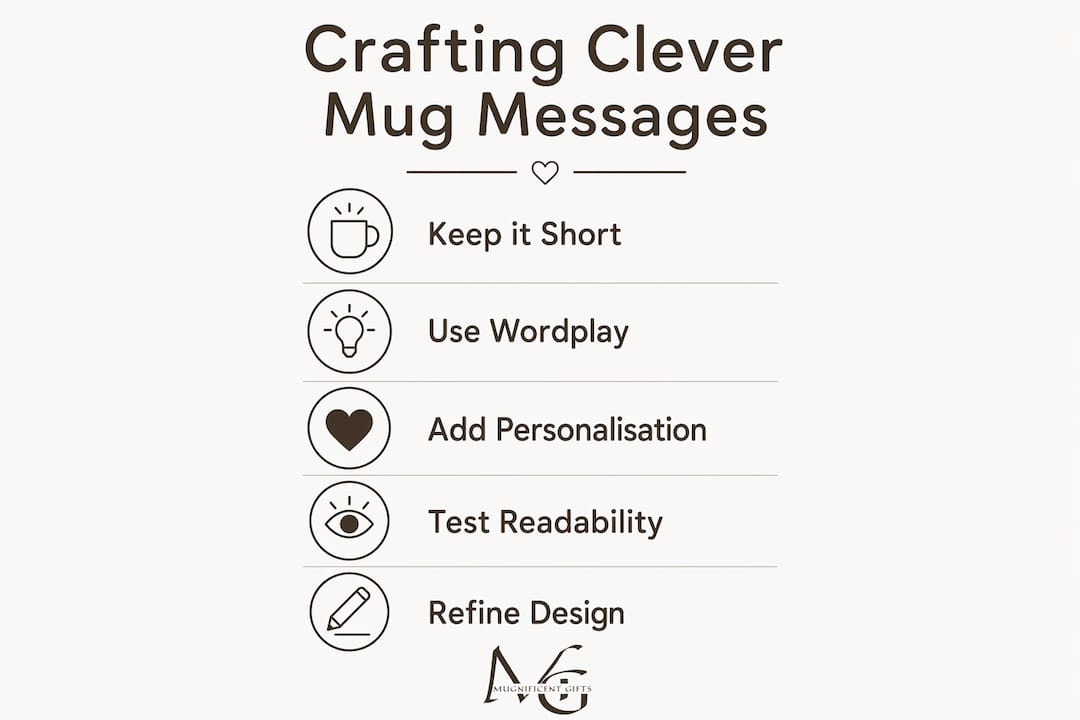
The foundation of any great mug inscription is brevity. Keeping messages under 10 words is the single most reliable rule in mug design. A curved ceramic surface is not a novel. Every extra word competes for attention and risks making the whole thing feel cluttered.
Beyond length, the best clever sayings for mugs share four core qualities:
- Relevance: The message connects directly to the recipient's identity, hobby, or sense of humour. A drummer and a violinist are not interchangeable audiences.
- Relatable humour: Wit that lands without needing explanation. If you have to justify the joke, it is not working.
- Music-specific wordplay: Puns and cultural references drawn from the world of music give the message a niche appeal that generic phrases simply cannot match.
- Legibility: Font style and contrast affect whether a message reads clearly or disappears into the background. Playful sans-serif fonts suit humorous messages; elegant scripts suit sentimental ones.
Pro Tip: Before committing to a font, print the message at actual mug size and hold it at arm's length. If you squint, the font is wrong.
Personalised mugs resonate more than generic alternatives because tailored humour signals that someone actually paid attention. That perceived effort is precisely what elevates a mug from a practical object to a meaningful gift.
How can wordplay and humour work in music-themed messages?
Wordplay is the engine behind the best funny coffee mug quotes. The most effective techniques fall into three categories: puns, double entendres, and cultural nods. Each one works differently, and knowing which to use depends on your audience.
Puns are the most accessible. A phrase like "Espresso Yourself" works because it layers a coffee reference onto a musical concept without requiring specialist knowledge. Similarly, "I've got the blues (and the greens and the reds)" plays on jazz terminology while staying visually playful. Music puns succeed when the connection between the two meanings feels natural rather than forced.
Double entendres carry more risk but greater reward. Humour that acknowledges adult realities with subtlety maintains broad appeal precisely because it offers plausible deniability. "I improvise, not mistakes" works for a jazz musician because it reads as both a musical philosophy and a life motto. The listener decides which layer they prefer.
Cultural nods are the most niche option. Phrases that reference specific genres, instruments, or musical in-jokes create strong emotional resonance with the right audience. Regionally specific references and cultural shorthand spark conversations and signal belonging. A mug that says "Rests are just silent solos" means nothing to a non-musician but everything to someone who has sat through a long orchestral tacet.
The cleverest mug messages work on two levels at once. One meaning is obvious; the other rewards the person who gets it.
Testing your message before printing is not optional. Share your draft with two or three people who represent your intended recipient. If they laugh or nod immediately, you have it right. If they pause to work it out, simplify.
Which tools and design principles help create mug quotes?
Choosing the right tools makes the difference between a professional result and a disappointing one. Several design resources are worth knowing:
| Tool | Best Use | Key Strength |
|---|---|---|
| Canva | Mug mockups and typography layout | Beginner-friendly with mug templates |
| Adobe Express | Custom text and colour work | Strong font library for varied moods |
| Mockey.ai | Realistic 3D mug previews | Visualise curved surface text placement |
| Procreate | Hand-drawn instrument illustrations | Pairs well with Mugnificentdeals-style sketched aesthetics |
Typography decisions carry real weight. A bold, rounded sans-serif like Nunito or Poppins suits a witty one-liner. A flowing script like Playfair Display suits a sentimental dedication. Mixing more than two fonts on a single mug almost always creates visual noise.

Contrast is non-negotiable. Dark text on a light mug, or light text on a dark mug, reads clearly from across a table. Mid-tone combinations fail in both print and photography. When designing for curved mug surfaces, keep important text away from the rim and base. Those areas distort during printing and reduce legibility.
Layout style also shapes the message's personality. Centred focal text feels formal and deliberate. Wraparound text feels playful and energetic. Combining a short text message with a simple instrument illustration, as Mugnificentdeals does consistently, creates a visual hierarchy that guides the eye naturally.
Pro Tip: Use a 3D mug preview tool before finalising any design. What looks balanced on a flat screen often shifts significantly on a curved surface.
How do you write and refine a music mug message step by step?
A reliable process removes the guesswork from creating unique mug message ideas. Follow these steps from first thought to finished inscription:
- Identify the recipient's musical identity. Are they a classical cellist, a bedroom producer, or someone who sings loudly in the car? The more specific your starting point, the stronger the message.
- Brainstorm without filtering. Write down every music-related phrase, pun, or inside joke that comes to mind. Aim for at least ten options before evaluating any of them.
- Draft three to five concise versions. Each should be under ten words. Combine the best humour with the most personal reference you have available.
- Read each draft aloud. Short, punchy phrases outperform convoluted ones in creating immediate amusement or connection. If a phrase stumbles when spoken, it will stumble when read.
- Test with a small audience. Share your top two or three options with people who know the recipient. Their instinctive reaction is your most reliable data point.
- Refine for legibility and emotional effect. Cut any word that does not earn its place. Adjust the message until it feels both clever and clear.
- Pair with a complementary visual. A simple black-and-white instrument sketch alongside the text often strengthens the overall impression without competing with the words.
This process works whether you are crafting a one-off gift or building a catalogue of personalised musical mug messages for a wider audience.
What are the most common pitfalls in crafting mug messages?
Even experienced designers fall into predictable traps. Recognising them early saves time and avoids disappointing results.
- Messages that are too long. Anything over ten words risks becoming illegible on a standard mug. Brevity is not a limitation; it is the format's defining constraint.
- Humour that alienates. Offensive, divisive, or overly obscure references narrow your audience to the point of uselessness. The goal is a smile, not a debate.
- Poor visual contrast. Grey text on a cream mug, or pastel text on a white background, disappears. Strong contrast is mandatory for both readability and print quality.
- Multiple fonts competing for attention. One primary font with one complementary accent is the maximum. More than that creates visual chaos.
- Generic phrases with no personal connection. "Coffee is life" appears on thousands of mugs. It says nothing specific about the person holding it. Originality is what makes the best mug messages for gifts genuinely memorable.
Pro Tip: Search your chosen phrase online before printing. If it appears on dozens of existing products, it is not clever enough. Push further.
Testing messages with sample audiences catches ambiguity before it reaches print. What feels obvious to the creator often reads differently to someone encountering it fresh.
Key takeaways
The most effective mug messages combine brevity, music-specific wordplay, and genuine personalisation to create gifts that resonate far beyond the first morning cup.
| Point | Details |
|---|---|
| Keep it under 10 words | Short messages read clearly on curved surfaces and land faster with the recipient. |
| Use music-specific wordplay | Puns and cultural references tailored to the recipient's instrument or genre create stronger emotional impact. |
| Test before you print | Share drafts with two or three people to catch ambiguity and confirm the humour lands. |
| Prioritise contrast and font choice | High contrast and a single well-chosen font determine whether your message reads or disappears. |
| Avoid generic phrases | Original, personalised messages outperform clichés every time when the goal is a meaningful gift. |
Why specificity is the secret ingredient nobody talks about
Most advice on how to create mug quotes focuses on length and humour. Both matter. But the element that separates a genuinely memorable mug from a merely adequate one is specificity. A message that references the recipient's actual instrument, their specific musical quirk, or an inside joke from a shared experience carries weight that no generic phrase can replicate.
I have seen this play out repeatedly. A mug that says "Violinists do it with more strings" lands differently for a violinist than any broadly worded coffee pun ever could. The specificity signals: someone thought about you specifically. That is the emotional core of a great gift.
The temptation is to write something broadly appealing so it works for everyone. Resist it. A message that works for everyone works deeply for no one. The role of clever quotes in mugs is not decoration. It is identity. When you get it right, the recipient does not just smile. They feel seen.
Experiment freely. Write ten drafts. Throw most of them away. The one that makes you laugh out loud when you read it back is almost certainly the right one. Trust that instinct, then test it with someone who knows your recipient well.
— Lasse
Discover music mugs that already get it right
If this guide has sparked ideas, Mugnificentdeals has the designs to bring them to life.
The personalised music mugs collection covers everything from instrument-specific illustrations to witty one-liners that feel genuinely thought out rather than mass produced. Whether you are buying for a drummer, a classical pianist, or someone who considers air guitar a legitimate skill, the range includes customisation options for names, instruments, and personal messages. For gift buyers who want something that feels commissioned rather than grabbed off a shelf, the best personalised music mugs for gifts selection is the natural starting point.
FAQ
How long should a mug message be?
Mug inscriptions work best under 10 words. Shorter phrases read clearly on curved surfaces and create immediate impact without overwhelming the design.
What makes a music-themed mug message clever?
The most effective messages use music-specific puns or cultural references that resonate with the recipient's instrument or genre. Specificity and a second layer of meaning are what separate clever from generic.
Should i test my mug message before ordering?
Testing with two or three people who know the recipient is strongly recommended. Pre-testing catches unintended ambiguity and confirms the humour lands as intended before any printing commitment.
Which font style suits a funny mug message?
A playful sans-serif font suits humorous messages, while an elegant script suits sentimental ones. Font choice directly affects mood and legibility, so match the typeface to the tone of your message.
Can i use social media to gauge whether a mug message works?
Social platforms favour funny mugs that communicate personality quickly through simple, clever phrases. Sharing a draft image informally and watching the reaction is a practical way to validate your message before committing to a final order.