
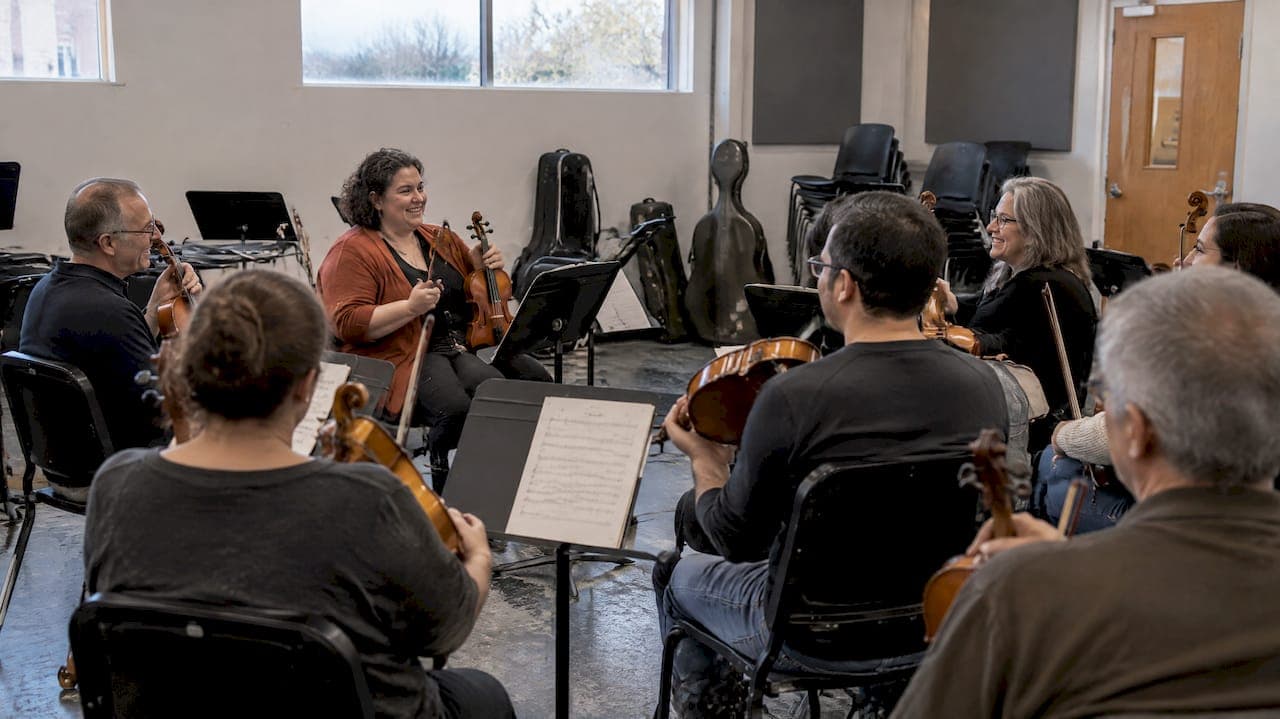
This page is a curated list of shareable viola jokes for musicians and fans, mixing insider technical one-liners with plain riddles anyone can enjoy. After the list, we sort the jokes into categories, trace where the tradition began, and give you simple advice on when to tell them.
TL;DR:
- Use instrument jokes with newcomers, reserve timing and intonation stereotypes for musicians who know the tradition, and save alto clef gags for professionals.
- The earliest known viola gag dates to around 1714; ethnomusicologist and violist Carl Rahkonen catalogued this still active joke cycle in the late 1990s.
- Tell jokes during relaxed moments, not auditions or formal rehearsals; read the room, especially around nervous newcomers, and start by teasing your own section.
- A brief setup and pause before the punchline can soften sharper jokes; calling one an old chestnut also signals affectionate intent.
Table of Contents
- 1. The best viola jokes to tell or share
- 2. Which kinds of viola joke suit which audience?
- 3. Where did viola jokes come from?
- 4. How can you tell viola jokes without causing offence?
- 5. A note on viola humour from Lasse
- 6. How can you turn a favourite joke into a gift?
- FAQ
- Sources
1. The best viola jokes to tell or share
Copy any of these straight into a group chat, a rehearsal break or a card. Some work on almost anyone. Others reward people who have sat through a few long rehearsals.
- What is the difference between a viola and a trampoline? You take your shoes off to jump on a trampoline.
- How do you make a viola sound like a violin? Chop off the player's fingers.
- Why do violists stand for long periods outside people's houses? Their sense of timing is off, and they cannot find the key.
- What is the range of a viola? Anything within an arm's reach of the player.
- How do you keep your violin from being stolen? Put it in a viola case.
- Why did the violist bring a ladder to the concert? To reach the high notes.
- What do you call a violist who has just broken up with their partner? Homeless.
- Why was the viola solo so short? The composer wanted to leave the audience wanting more.
- What is the definition of a minor second? Two violas playing in unison.
- How can you tell the stage is level? The violist's drool is running off both sides of their mouth.
- Why do violists always tune their instruments before the concert? They want to make sure they are not playing in the right key by accident.
- What is the difference between a viola and an onion? Nobody cries when you chop up a viola.
- Why is a viola solo like a good steak? Rare.
- Why do violists never get lost? They always follow the person in front.
- What do you get when you drop a viola into a canal? Wet, mostly.
- What is the difference between a violist and a dog? The dog knows when to stop scratching.
- How many violists does it take to change a light bulb? None. They just wait until the cellos finish and play the same part.
- Why did the violist arrive early to rehearsal? They had heard the second violins were going to be late.
- What is the difference between a viola and a coffin? The coffin has the dead person on the inside.
- How do you get a violist to play a passage pianissimo? Mark it forte.
- Why do viola players get fidgety in the pause between movements? They are checking whether anyone noticed the entry they missed.
- What do you call a violist's idea of a good time? A passage in the alto clef that nobody else has to read.
- Why does the viola section need extra rehearsal time? The conductor keeps saying "last desk, a little more please".
- What is the difference between a violist and a pizza? A pizza can feed a family of four.
- Why do violists make poor spies? Everyone can hear them coming a bar late.
- What do violists use for a mute? A violin.
- How do you tell if a violist is at your front door? They cannot decide whether to knock or come in.
- What is the first rule of viola club? Wait for the second violins, then count again.
- Why did the violist go to the optician? They kept confusing alto clef with treble.
- Why do violists practise with the window open? So the neighbours can enjoy the rests.
2. Which kinds of viola joke suit which audience?
Most of the list above falls into several families. Knowing them helps you pick a joke that lands instead of one that falls flat.
- Instrument jokes poke fun at the viola itself, its size, its tone or its case. They suit almost any audience, including friends who have never held a bow.
- Player-stereotype jokes target timing, intonation and the supposed lack of a solo career. They work best among students and amateur players who already share the in-joke.
- Technical or insider jokes lean on alto clef, divisi parts or rehearsal habits. Seasoned professionals enjoy these most, because they need no explaining.
- Reverse jokes turn the punchline on violinists, as in "How do you keep your violin from being stolen? Put it in a viola case." They are a gentle way to even the score.
Pro Tip: Match the joke to the room. A trampoline riddle suits a family dinner, while an alto clef gag belongs at the back of the rehearsal hall.
3. Where did viola jokes come from?
A gag from around 1714 is thought to be the earliest known viola joke, according to Classic FM, which makes the tradition older than most orchestras. Ethnomusicologist Carl Rahkonen, himself a violist, catalogued these jokes in the late 1990s. As JSTOR Daily's analysis of viola jokes explains, he identified them as a "joke cycle" still in active use among amateur and professional musicians.
A joke tradition that has run for more than 300 years, dating back to 1714. The humour has outlived the orchestras that first inspired it.
The jokes also sit beside real musical substance. Berlioz wrote Harold in Italy to show off the viola's expressive voice, and The Strad notes that simple accompaniment parts in earlier eras helped create the stereotype in the first place.
4. How can you tell viola jokes without causing offence?
Follow these guidelines, then add a little delivery polish.
- Read the audience first. A section of violists will usually laugh along, since many violists tell the jokes themselves, but a nervous new player may not.
- Save them for relaxed moments such as the pub after a concert or a coffee break.
- Skip auditions and formal rehearsals, where a joke can sound like a judgement.
- Keep it short. A single line beats a long set-up.
On delivery, pause before the punchline, and introduce the joke as "an old chestnut" to soften the sting. A good setting is a post-concert social; a poor one is the minute before someone's solo audition.
Pro Tip: Tell a joke against your own section first. Self-deprecation buys goodwill for the next one.

5. A note on viola humour from Lasse
Musician humour is how sections bond. I have watched violists out-joke everyone else in the room, which tells me the jokes are rarely meant unkindly. Our aim here is good humour, the sort that gets a groan and a grin together. If a line makes you laugh, it deserves to be passed on, and sometimes the best way to do that is on something you can hold, like a mug on a desk or a music stand.
— Lasse
6. How can you turn a favourite joke into a gift?
We make personalised music mugs at Mugnificent Deals, so a joke you love can sit beside someone's morning coffee. Pair an instrument sketch with a name, and you have a gift that feels made for one person. Browse our personalised music mugs collection to start.

- An end-of-term thank-you for a section leader
- A birthday present for the friend who sits at the back desk
- A small token for a teacher who survived your alto clef phase
FAQ
Where did viola jokes originate?
They stretch back to around 1714, when an anecdote now thought to be the earliest viola joke was recorded. Classic FM describes it as the precursor to a tradition that has evolved for more than 300 years.
Are viola jokes offensive to violists?
Usually not, because many violists enjoy the jokes and tell them themselves. The humour tends to be affectionate, though it is wise to read the room before you use a sharper line.
Can violists tell viola jokes themselves?
Yes, and many do, since insider jokes rely on shared knowledge that violists have in abundance. Telling one against your own section is often the friendliest way to begin.
Where can I find more viola jokes?
The 10 best viola jokes is a good place to start. For deeper reading, the MIT collection on viola jokes as musician's folklore catalogues many joke types and how they circulate among orchestras and online.
Sources
- This gag from 1714 is thought to be the earliest known viola joke - Classic FM
- Why Did the Violist Cross the Road? - JSTOR Daily
- The 10 best viola jokes