
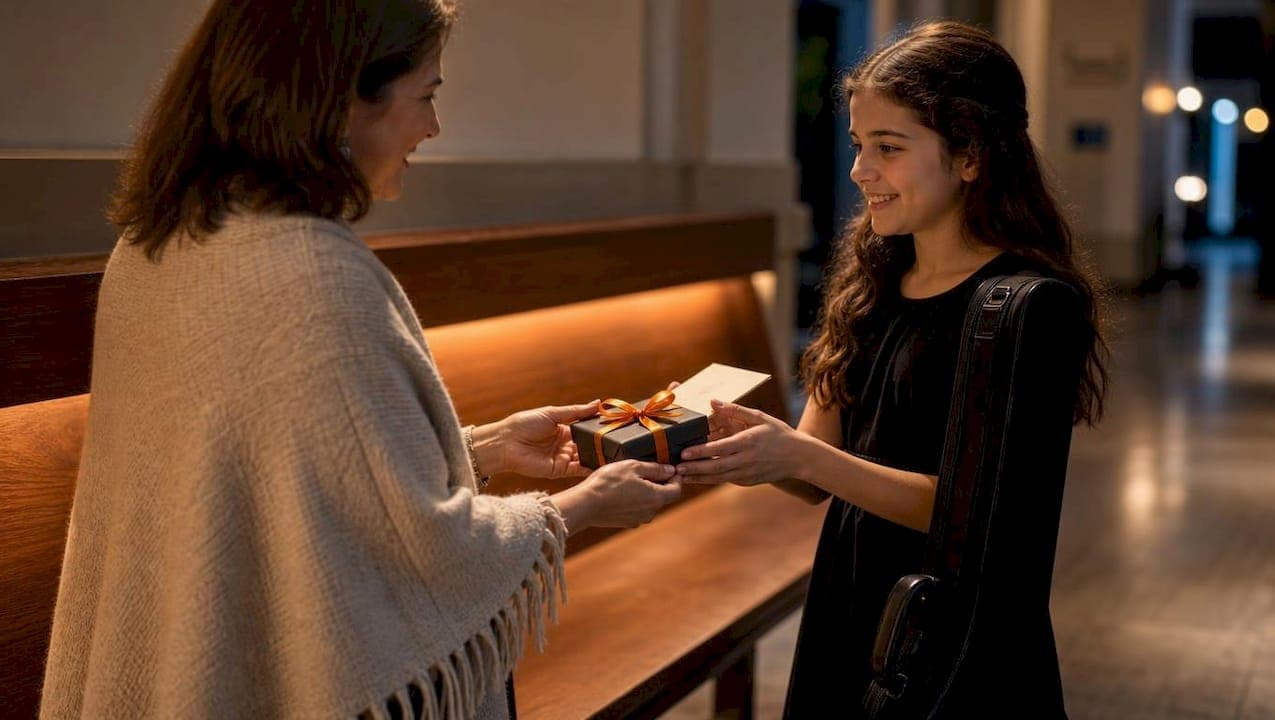
"You showed up, you played your heart out, and it showed. Well done." That single line works for a violinist, a ballet student or a nervous eight year old at their first concert, because it praises effort and presence rather than perfection. Performers often feel emotionally raw the moment they step off stage, and a kind, specific line like this, perhaps paired with a small personalised music mug, does more good than any critique ever could.
TL;DR:
- A personalized mug with an instrument sketch or name enhances the emotional impact of congratulatory messages and serves as a lasting keepsake.
- Sending a specific, effort-focused message immediately after a performance has a stronger effect than general praise or delayed acknowledgment.
- For young children, short and simple congratulatory notes are more effective than longer, technical comments, which may be overwhelming.
- Pairing a heartfelt message with a carefully chosen gift, like a customized mug, creates a more meaningful and memorable gesture.
- Delivery timelines and proof approvals should be considered when ordering personalized gifts to ensure they arrive on time for the recital.
Table of Contents
- Short one-liners for cards and quick notes
- Longer card messages worth writing out in full
- Matching your tone to who you're writing to
- Gift pairings that complement your message
- Common mistakes and clichés worth avoiding
- Adding a quote or a line of poetry
- Why a matched message and gift means more than either alone
- Where to order a personalised music mug to go with your card
- Sources
- FAQ
Short one-liners for cards and quick notes
A one-liner earns its place when it is warm, specific and quick to read, whether it lands on a card, a text message or a caption. The trick is picking the tone that matches the performer and the occasion, then tweaking it with a name, an instrument or the title of the piece they played.
- Celebratory: "You nailed it out there, and it was wonderful to watch."
- Celebratory: "That performance deserved every second of applause."
- Warm: "So proud of you and all the hours that led to tonight."
- Warm: "Watching you play [piece title] tonight meant the world to us."
- Playful: "Officially the best [instrument] player in this family, no contest."
- Playful: "You made that solo look easy. We know it wasn't."
- Formal: "Congratulations on a truly accomplished recital performance."
- Formal: "Your dedication to your craft was evident throughout tonight's programme."
- For children: "You were amazing up there! I loved every minute."
- For children: "Big cheers for the bravest [instrument] player in the room."
- For dancers: "Your joy on stage was impossible to miss tonight."
- For dancers: "Every movement told a story. Beautifully done."
- For musicians: "That tone, that phrasing, that confidence: all yours."
- For adult performers: "Returning to the stage takes real courage. Well played."
- For students: "All that practice paid off tonight, and then some."
Swap in the piece title, the instrument or a nickname to make any of these feel written for that one person rather than pulled from a list.
Longer card messages worth writing out in full
A longer message gives you room to be specific, which is exactly what makes it feel personal rather than generic. Insert the performer's name, their instrument, the piece they played or a nod to their teacher wherever the template leaves space.
- "Congratulations on your recital, [name]. Watching you perform [piece] tonight, I could see every hour of practice you put in, and it showed in every note."
- "You walked on that stage and made [instrument] sound effortless. That kind of confidence doesn't happen by accident, and we're so proud of what you've built."
- "Tonight wasn't just about the music. It was about seeing you trust yourself enough to share something you've worked hard on. Beautifully done."
- "From your first lesson to tonight's performance, the growth has been remarkable. Well done, and here's to the next piece."
- "Your teacher clearly saw something special in you, and tonight proved them right."
- "There's a quiet kind of bravery in performing solo, and you showed it tonight."
- "We came to watch a recital and left having watched you become a performer."
- "The nerves you felt beforehand turned into something wonderful the moment you started playing."
- "Every recital is a small act of courage, and yours tonight was no exception."
- "Whatever comes next in your musical journey, tonight will be one to remember."
Pro Tip: Lead with what you noticed about their effort or presence, not their technique. ABRSM's guidance for teachers points to validation as more helpful than critique in the moments right after a performance.
Matching your tone to who you're writing to
A message that lands well for a shy nine year old will feel oddly formal to a lifelong professional, so it helps to think about age, role and context before you pick your words.
- Children: keep it short, celebratory and free of technical feedback. "You were brilliant!" does more good than a note on posture or timing.
- Students and exam performers: validate the effort and encourage rest as much as achievement. ABRSM guidance notes that performers are often emotionally vulnerable straight after playing, so a kind, low-pressure message helps more than analysis.
- Adult performers: acknowledge the courage it takes to return to a stage as an adult, especially if this was a first recital in years.
- Teachers: thank them for the guidance behind the scenes rather than praising the pupil alone; a line like "your patience clearly shaped this performance" recognises their role directly.
- Accompanists and ensembles: address the group's chemistry rather than singling out one player, since ensemble playing is a shared achievement.
Gift pairings that complement your message
A message says the words, but a gift gives them somewhere to live, and pairing the two thoughtfully makes both feel more considered. A funny one-liner suits a playful gift, while a reflective note calls for something quieter and more lasting.
- Personalised mugs: instrument-themed or name mugs work well with warm or playful messages, especially when they reference the performer's own instrument.
- Keepsake cards or prints: better suited to reflective, formal messages that the performer might want to keep rather than use daily.
- Simple bouquets: pair naturally with celebratory, in-the-moment congratulations, particularly for a first or milestone recital.
- Small practical items: things like rosin, reeds or sheet music folders suit messages that reference ongoing dedication rather than a single event.
- Experience treats: a favourite meal out or a small outing works well alongside messages that celebrate the whole journey rather than just the night.
A card and a small gift, delivered on time, tend to feel far more thoughtful than either would alone, and the Royal Academy of Dance's archives show that written congratulations to performers have a long tradition behind them.
If the gift needs to arrive by a specific recital date, order with margin. Under the Consumer Rights Act 2015, traders must deliver within any agreed period, and where no date is agreed, delivery is expected within the standard legal period unless immediate delivery was essential to the purchase, in which case failing to meet that timing allows the consumer to treat the contract as ended. For anything personalised, confirm the lead time and proof approval well before the recital rather than assuming next-day dispatch.
Common mistakes and clichés worth avoiding
Some phrases show up so often in recital cards that they stop meaning anything, and a few habits can quietly undercut an otherwise kind message.
The biggest one is slipping in feedback disguised as praise: "great job, though you rushed the second movement a bit" cancels out the compliment entirely. Save any notes on technique for lesson time, not for a congratulations card. Generic lines like "you did great" or "so proud of you" aren't wrong, but they say nothing specific, and a specific detail (the piece, the instrument, a moment you noticed) always lands harder than a stock phrase. Comparing one performer to another, even with good intentions ("you were the best one up there"), can feel more competitive than kind, especially among children in the same class. Overloading a young performer with a long, effusive message can also backfire: a simple celebratory line plus a small keepsake tends to land better than several paragraphs a child has to sit through before they can go celebrate. Finally, avoid framing the message entirely around results, grades or comparisons to a previous performance. A recital is a moment of sharing, not a scoreboard, and the message should treat it that way.

Adding a quote or a line of poetry
A well-chosen quote can lift a message without replacing your own words, as long as it stays short and relevant. Musical quotes work particularly well when they touch on courage, sound or the act of performing itself, such as a line about music being a language beyond words, or a brief nod to the idea that every performance is a small act of vulnerability shared willingly. For dancers, a line about movement, presence or joy tends to suit the moment better than anything about competition or perfection, echoing the Royal Academy of Dance's advice to reframe nerves as excitement and focus on the joy of sharing a passion. Keep any quote to one or two lines, place it before your own message rather than instead of it, and choose something that fits the performer's age and the formality of the occasion: a Shakespeare line suits a formal adult recital far better than a children's concert. If in doubt, skip the quote altogether and let your own specific words do the work instead.

Why a matched message and gift means more than either alone
Designing mugs for musicians has taught us that the smallest personal detail, an instrument silhouette, a favourite in-joke, a name, changes how a gift feels entirely. A generic mug says "congratulations." A mug with a cellist's actual instrument sketched on it says "I know exactly who you are and what this meant to you." The same logic applies to messages: a line that names the piece someone played will always outlast one that could have gone to anyone. Pair a warm, specific note with a gift that reflects the performer's instrument, and you've given something that outlasts the applause.
— Lasse
Where to order a personalised music mug to go with your card
A card says the words, and a mug gives them a daily reminder that lasts well beyond the recital itself. Our personalised music mugs let you add a name, an instrument or a favourite quote, and the instrument sketch mugs suit anyone who wants their exact instrument represented rather than a generic music note.

A few ordering notes worth knowing before you check out:
- Mention the recital date in your order notes so the lead time works backwards from the day you need it.
- Personalised items usually need a short proof approval step, so build that into your timeline rather than ordering the night before.
- Under the Consumer Contracts Regulations, bespoke items are often excluded from standard change-of-mind returns, so double-check the design before confirming.
Browse the best personalised music mugs for gifts if you want a curated starting point rather than scrolling the full collection.
Sources
- ABRSM teacherhub — self-care for pupils / post-performance guidance
- Consumer Rights Act 2015 — delivery of goods (section 28)
- Royal Academy of Dance — dance performance tips
FAQ
What is a good message to congratulate someone on their dance performance?
Something like "your joy on stage was impossible to miss tonight" works well, since it celebrates presence and feeling rather than technical perfection. The Royal Academy of Dance recommends framing performance around sharing passion, which makes a message like this feel especially fitting for dancers.
How soon should I send a recital congratulations message?
Sending your message the same evening or the next day tends to feel most meaningful, while the performance is still fresh. A quick, specific note lands better than a delayed, generic one, even if a gift follows a few days later.
Should I mention mistakes I noticed during the performance?
No, a congratulations message is not the place for feedback, even gentle feedback. ABRSM guidance suggests that validating effort works far better than technical critique in the moments right after a performance, so save any notes for lesson time.
What should I write in a card for a child's first recital?
Keep it short, celebratory and simple: something like "you were amazing up there!" says everything a young performer needs to hear. A longer, more technical message can feel like homework rather than a celebration at that age.
Is a personalised mug a good gift to pair with a recital card?
A personalised mug works well because it can reflect the performer's actual instrument or a specific inside joke, which makes it feel considered rather than generic. Pairing it with a specific, warm written message, rather than a stock card phrase, is what makes the two feel like one thoughtful gift.